
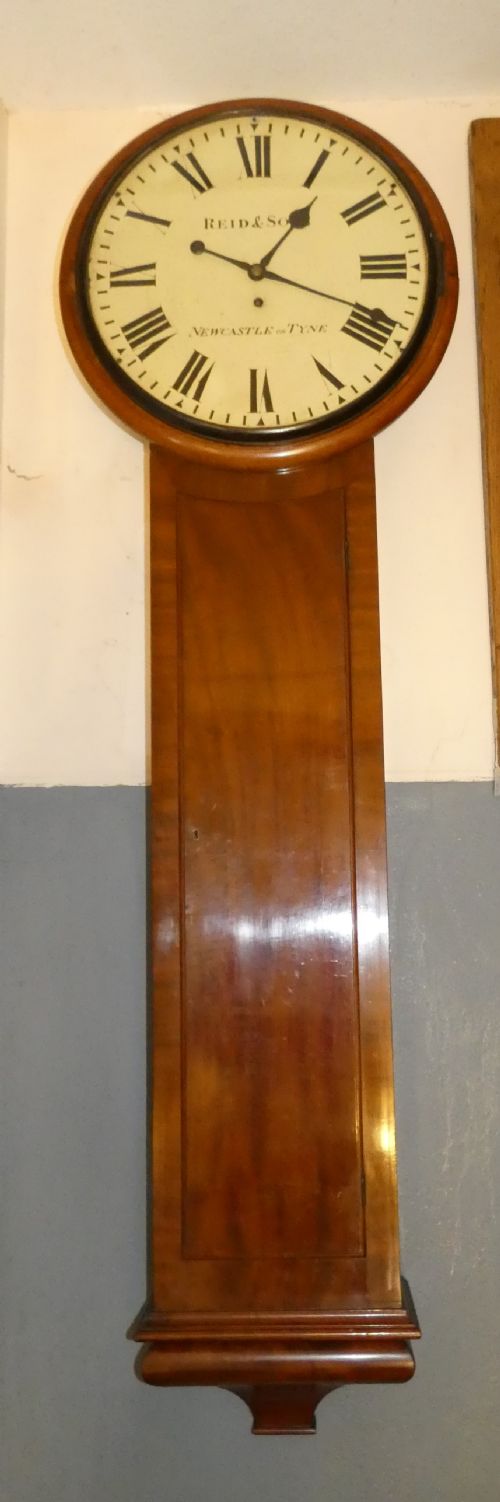


19th Century Wall Timepiece
A 19th century wall timepiece is a mechanical clock designed to hang on a wall, offering precision timekeeping wrapped in period craftsmanship.
19th Century Wall Timepiece
When you search for a 19th century wall timepiece, you encounter a variety of styles spanning the Victorian, Regency, Georgian, and Biedermeier periods. These items range from simple dial clocks housed in mahogany or oak cases to ornate French cartel clocks and Austrian regulators.
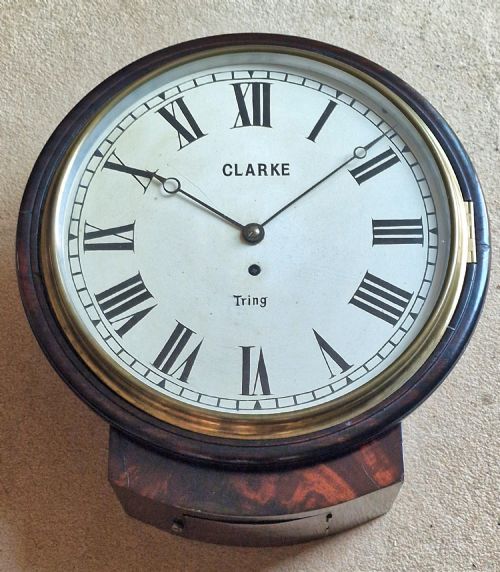
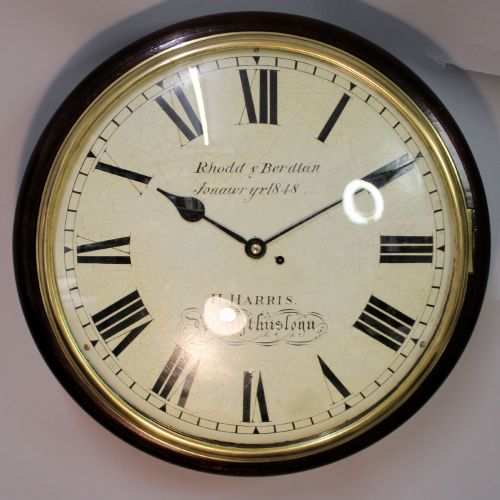
The version you are most likely to meet on this page is the circular fusee wall clock, often featuring a mahogany case and a painted dial behind glass. These practical timepieces were commonly utilised in public spaces, offices, and domestic halls during the nineteenth century.
Other variations appearing here include drop dial clocks, tavern clocks, and elaborate French revival pieces decorated with brass inlay or ormolu. Each type reflects the interior aesthetic and horological preferences of its specific decade of origin.
How they were made
Cabinetmakers utilised dense timbers such as mahogany, walnut, rosewood, and oak to construct sturdy wooden cases capable of housing complex movements. Brass formed a critical component for bezels, inlay work, and intricate internal gear trains, while iron and painted metal provided durable foundations for dials.
Makers employed fusee movements in many English examples, ensuring a constant and even pull from the mainspring as it wound down, which directly improved timekeeping accuracy. Enamel and painted metal dials received careful hand-lettering for numerals, protected behind hinged glass doors set within brass rims.
The selection includes mahogany, walnut, rosewood, and oak cases fitted with either fusee or anchor escapement movements.
What varies in quality
The standard of internal mechanical components dictates the upper tier of these timepieces, particularly the presence of fine-toothed pinwheel escapements and original chain fusee movements. Clocks bearing the signatures of established makers demonstrate superior horological craftsmanship compared to unsigned or mass-produced alternatives.
Cabinetwork quality separates the exceptional pieces from standard examples, visible in the crispness of hand-carved details, matched veneer grains, and original brass inlay. Cases that retain their authentic timber patination and untouched dial paint preserve a higher degree of historical integrity.
George Clarke Tring·Henry Harris Monythusloyn·Dent of London·Haley and Milner London·Valiant Paris
The 19th Century Wall Timepiece Glossary
- Fusee
- A conical pulley used in mechanical clocks to equalise the torque of the mainspring as it unwinds. This mechanism ensures consistent energy delivery to the escapement for accurate timekeeping.
- Drop dial
- A clock case featuring a circular dial at the top mounted above an extended lower wooden box, which often accommodates a longer pendulum or simply balances the visual weight.
- Cartel clock
- An ornamental wall clock enclosed in a decorative frame, highly popular in French interior design during the eighteenth and nineteenth centuries. They are frequently cast in ormolu or carved wood.
- Pinwheel escapement
- A precise mechanical linkage where pins on the escape wheel interact with the pallet arms. This design allows for minimal friction and finer adjustments in high-grade movements.
- Vienna regulator
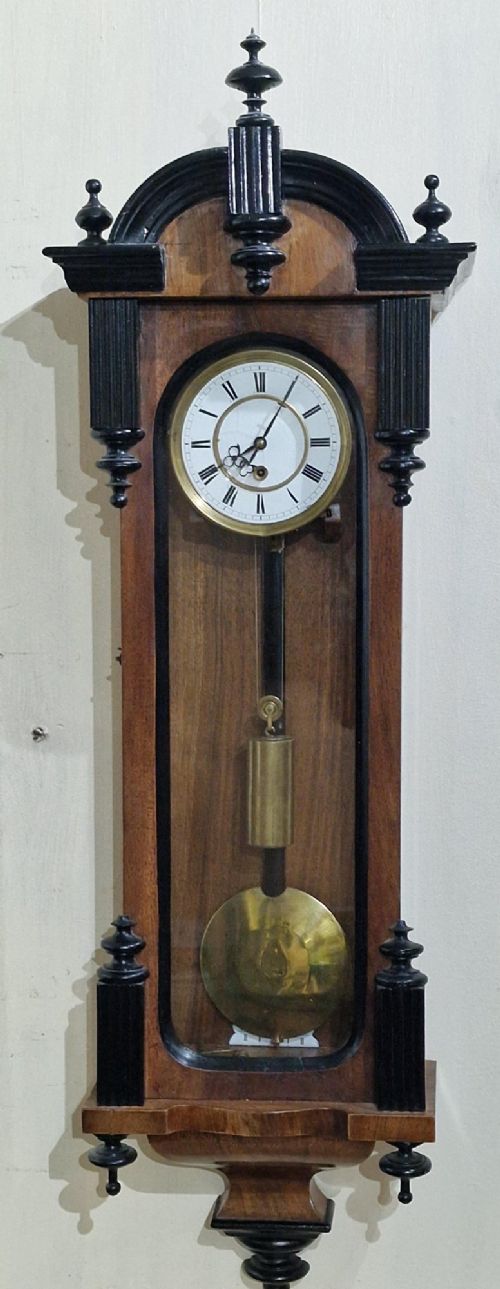
- A precision wall clock originating in Austria, characterised by a weight-driven movement, a gridiron pendulum, and a clean glass-fronted case designed to display the internal mechanics.
19th Century Wall Timepiece: Frequently Asked Questions
How do I wind a fusee wall clock?
Winding requires inserting a key into the dial aperture and turning it gently until the spring feels fully tensioned. Care must be taken not to overwind the mechanism.
Most eight-day fusee movements need attention once a week, ideally at the same time to maintain a regular rhythm.
Where should I hang a wall timepiece?
Choose an interior wall that is stable, free from heavy vibrations, and protected from direct sunlight or damp conditions. Solid masonry walls provide the best support for heavier mahogany or rosewood cases.
Ensure the clock hangs completely vertical so the pendulum swings evenly and the escapement ticks in a steady beat.
What is the difference between a timepiece and a clock?
In horological terms, a timepiece indicates the current hour and minute but lacks a striking mechanism or chiming train. A clock traditionally includes additional gear trains to sound the hours.
Many office, railway, and dial models listed as timepieces were built strictly for visual reference without auditory interruptions.
How do I tell a Victorian clock from a Regency one?
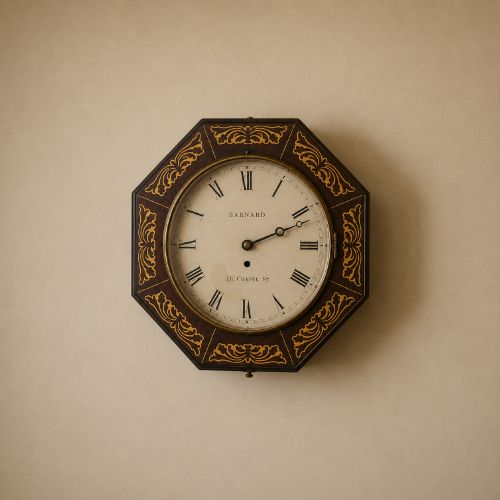
Regency timepieces often incorporate cleaner lines, brass inlay, and geometric octagonal mahogany surrounds reflecting neoclassical tastes. Victorian examples frequently embrace larger proportions, drop dial formats, and heavier carvings.
Examining the internal movement construction, dial typography, and secondary timber helps confirm the manufacturing era.