


19th Century Treen Holder
A 19th century treen holder brings useful domestic timber into focus, offering turned and carved utility through classic wooden containers.
19th Century Treen Holder
A 19th century treen holder encompasses diverse wooden implements designed to dispense or display household items such as string, spills, tapers, and cards. Buyers searching this phrase encounter utilitarian turned treen shaped for domestic tasks across the Georgian and Victorian eras.
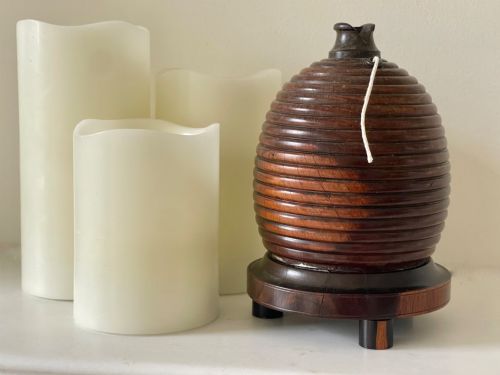
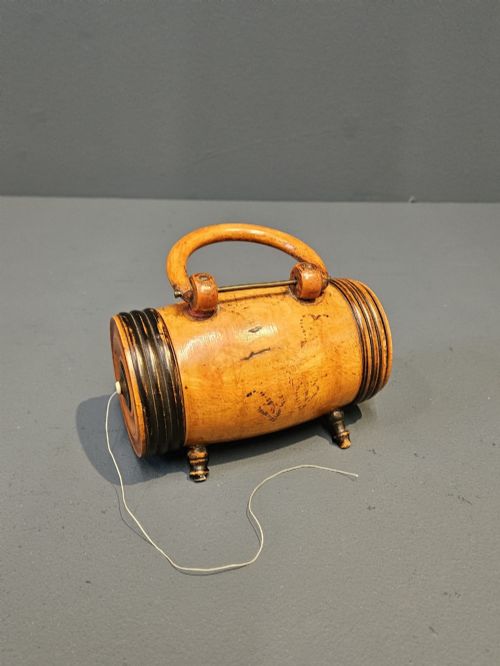
The objects take various functional forms, including spherical string dispensers, slender spill vases, chamber candlesticks, and revolving egg cup stands. English folk art examples appear frequently alongside pieces bearing precise regional origins like Durham.
Most items date from the nineteenth century, though earlier Georgian examples also emerge in denser hardwoods. These domestic wooden objects survive as functional desk accessories and hearthside helpers.
Materials and turning methods
Makers utilised dense timbers such as lignum vitae, mahogany, fruitwood, sycamore, walnut, and yew wood to ensure durability in everyday handling. Lignum vitae provides weight and stability for turned string holders and candlesticks.
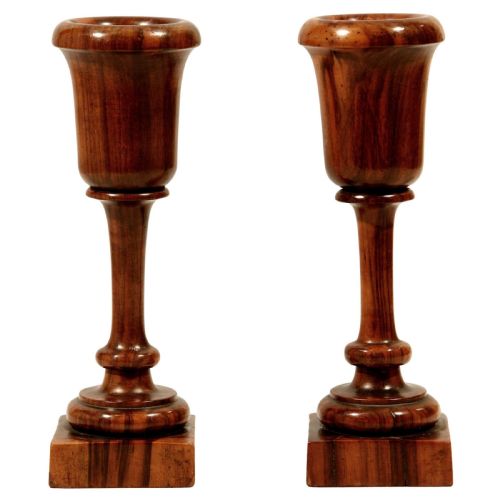
Lathe turning shapes the cylindrical profiles of spill stems and urn vases, while punchwork and incised lines decorate fruitwood knitting sheaths. Certain pieces incorporate glass, paper, and gold leaf additions alongside brass hardware.
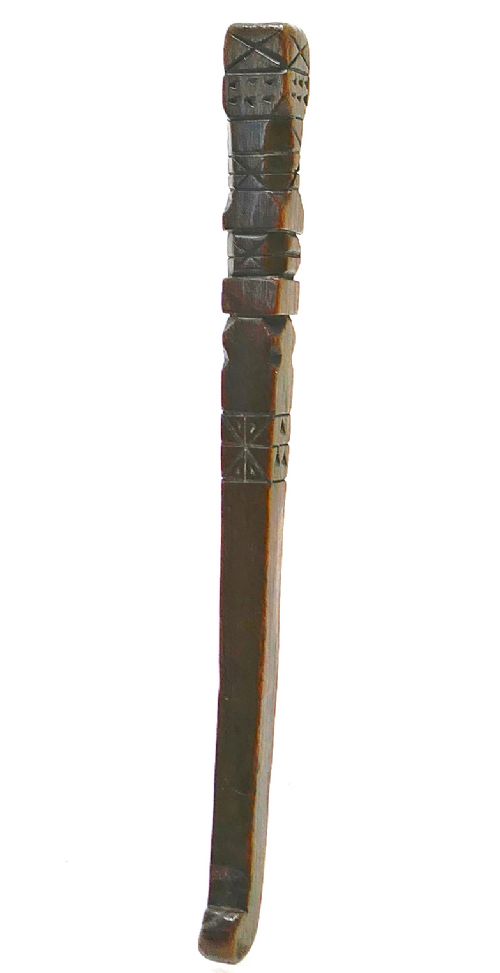
Folk art carving traditions influence surface patterns on utilitarian treen, balancing structural turning with hand-chiselled detail.
Listings feature periods from the Georgian era through to the Victorian period, utilising materials including lignum vitae, fruitwood, and gold leaf.
Differentiating quality in wooden treen
Superior examples demonstrate crisp lathe work with balanced proportions, particularly in urn-shaped spill vases and heavy lignum vitae barrels. The choice of timber dictates the visual depth, with richly figured grain elevating standard utilitarian forms.
Surface finish and patination separate exceptional pieces from ordinary ones, showing deep handling wear accumulated over centuries. Intricate hand-applied decoration, such as punchwork on knitting sheaths, distinguishes individual craftsmanship from mass production.
The 19th Century Treen Holder Glossary
- Treen
- Small handmade wooden domestic objects. These items range from kitchen implements to desk accessories.
- Lignum vitae
- A dense and heavy imported hardwood. This timber was frequently selected by turners for weighted bases and string barrels.
- Spill vase
- A small container for holding rolled paper spills. These tapers transferred flames from the hearth to candles or pipes.
- Knitting sheath
- A carved wooden holder tucked into a belt or apron. The device secured a knitting needle while working on the go.
- Chamber stick
- A low candlestick fitted with a handle. This portable light source aided movement through nineteenth-century rooms.
19th Century Treen Holder: Frequently Asked Questions
What is treen?
Treen describes small, functional wooden objects made for everyday domestic use.
These items were shaped by hand or turned on a lathe from local and exotic hardwoods.
How were string holders used?
String holders dispensed twine from a central opening during domestic parcel wrapping.
Spherical wooden containers kept the cord clean and untangled on desks and counters.
What are spill vases?
Spill vases held thin rolled papers used for lighting fires and candles.
These turned wooden vessels sat on mantelpieces near the hearth for quick access.
How do I date a piece?
Dating relies on timber choice, turning style, and known historical forms.
Georgian pieces often display simpler profiles, while Victorian examples introduce brass fittings and varied hardwoods.