




19th Century Tavern Oil Painting
These 19th century tavern oil painting works capture sociable gatherings and domestic interiors from the Victorian era.
19th Century Tavern Oil Painting
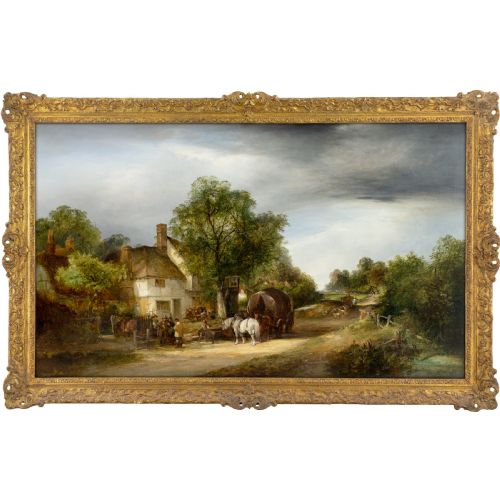
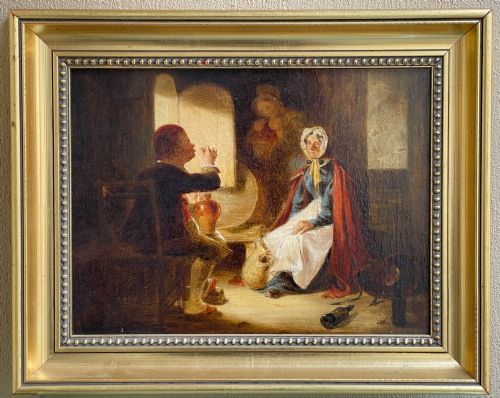
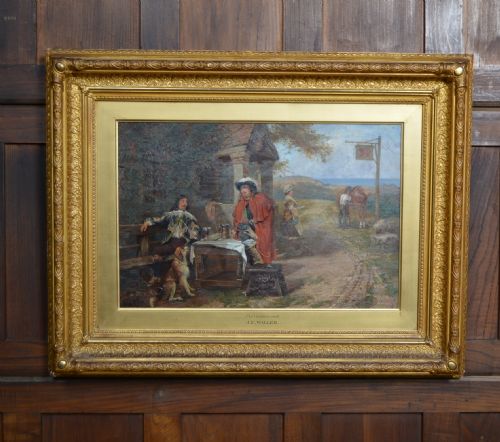
A 19th century tavern oil painting brings the social life, card games and card players of the Victorian period directly onto canvas, wood or metal panels. Buyers searching this phrase look for works depicting interior scenes, village pubs and Dutch school tavern studies.
The pieces on this page span British, Italian and Dutch styles of 19th century genre painting and genre realism. Most examples show everyday figures drinking, smoking or playing cards inside historic settings.
The selection includes framed works featuring giltwood, gesso and gold leaf alongside unframed panels. Artists recorded indoor pub life and pastoral village taverns with windmills using oil paint.
How They Were Made
Makers applied oil paint onto stretched canvas, copper panels, metal panels and wood panels to produce these works. Artists often laid canvas onto wood panels for added stability.
Finished paintings received frames built from wood, giltwood and gesso with leaf cast details and gold leaf application. These traditional materials define the period frames surrounding the canvases.
Card-playing topers and startled boys tapping barrels populate these Victorian pubs.
What Varies in Quality
Quality rests in the precision of the brushwork and the expressive detail rendered on the faces of the figures. Works showing lively card players and musicians with distinct character sit above generic interior studies.
The preservation of the original canvas, panel and frame influences the character of each piece. Surviving period giltwood and gesso frames with original leaf cast ornamentation complement the oil paintings.
Johann Hamza·Hermann Armin Kern·J. E. Waller·Francesco Bergamini·John Holland Snr
The 19th Century Tavern Oil Painting Glossary
- Genre painting
- Artwork depicting scenes from everyday life, typically involving ordinary people engaged in common activities. These tavern scenes are classic examples of 19th century genre realism.
- Oil on canvas
- Pigments bound in a drying oil applied to a woven fabric support. This method underpins the majority of Victorian paintings on this page.
- Giltwood
- Wood carved and prepared with gold leaf or gold paint. Many frames in this collection utilise this technique.
- Gesso
- A paint mixture consisting of a binder mixed with chalk, pigment, or plaster. It forms the smooth base on frames before gilding.
- Dutch School
- A term describing artists working in the Netherlands or following Dutch painting traditions. These works frequently depict tavern interiors and topers.
19th Century Tavern Oil Painting: Frequently Asked Questions
What periods do these paintings date from?
The listings span the 19th century, with specific pieces dated around 1860, 1890 and 1894. Victorian era examples sit alongside earlier works.
Dutch school influences and British school approaches appear across the selections.
What surfaces were used?
Artists painted on canvas, copper panels, metal panels and wood panels. Some canvases were laid down on wood panels.
Frames incorporate wood, giltwood, gesso and gold leaf.
Where were these scenes set?
The artworks depict village taverns, indoor pub rooms and rustic Dutch interiors. Figures include card players, topers, musicians and smokers.
Some compositions feature village landscapes with windmills alongside the tavern buildings.
How do I care for an oil painting?
Keep the artwork out of direct sunlight and away from rapid changes in temperature and humidity. Dust the canvas and frame gently with a dry, soft cloth.
Avoid using water or chemical cleaners on the paint surface or the giltwood frame.