


19th Century Table Box
The 19th century table box spans utilitarian sewing tables, delicate silver trinket receptacles, and sturdy desk pieces designed for practical containment and display.
19th Century Table Box
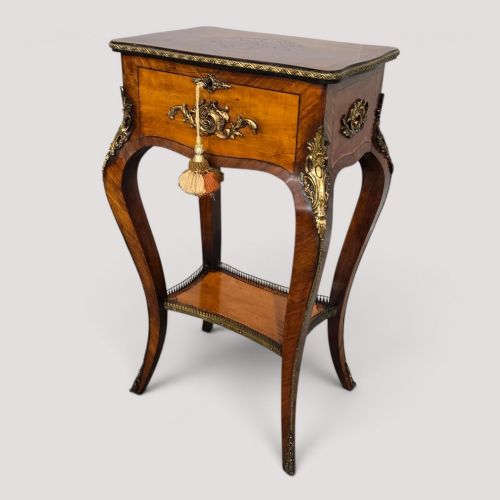
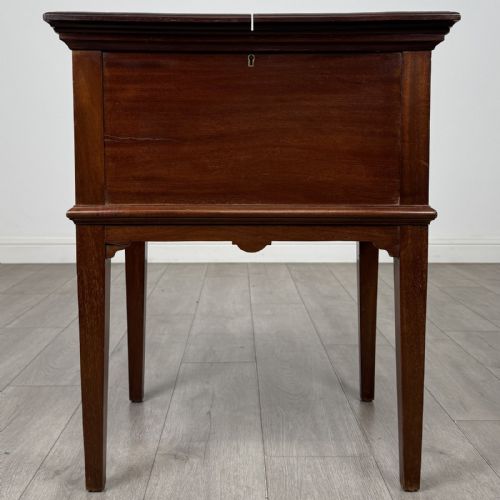
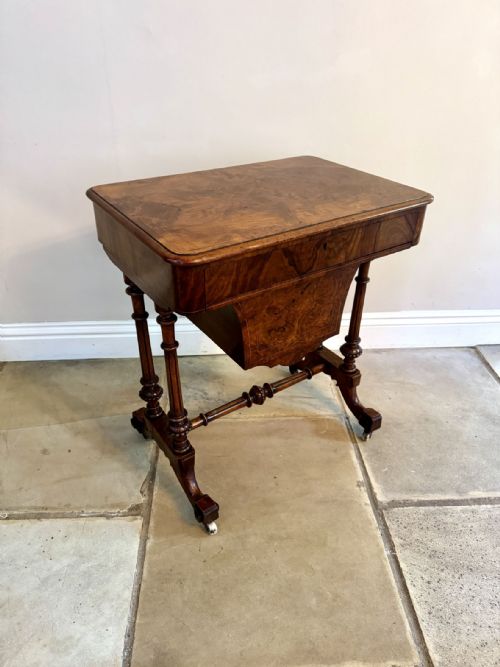
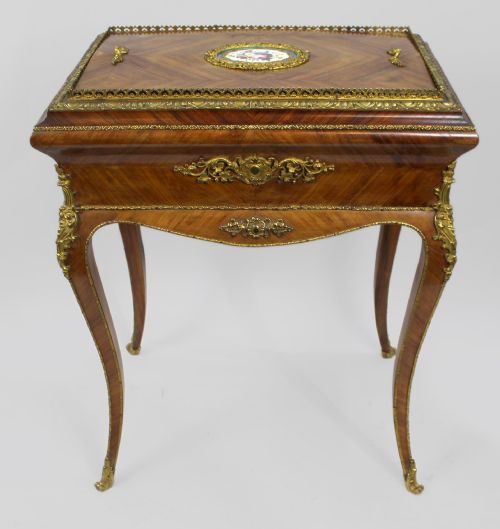
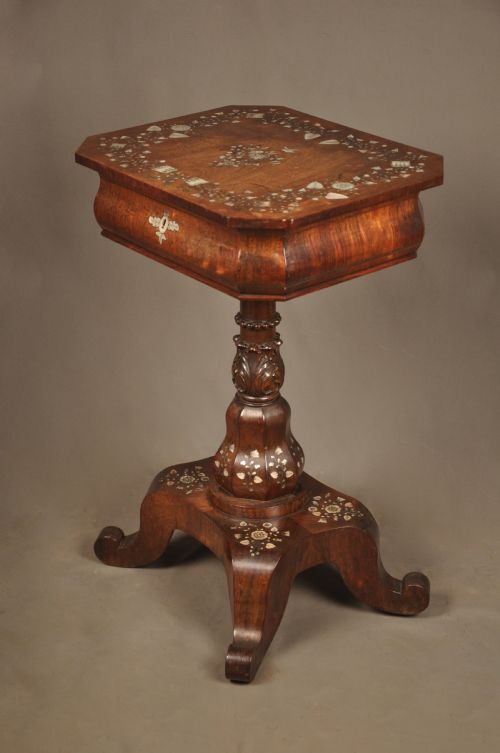
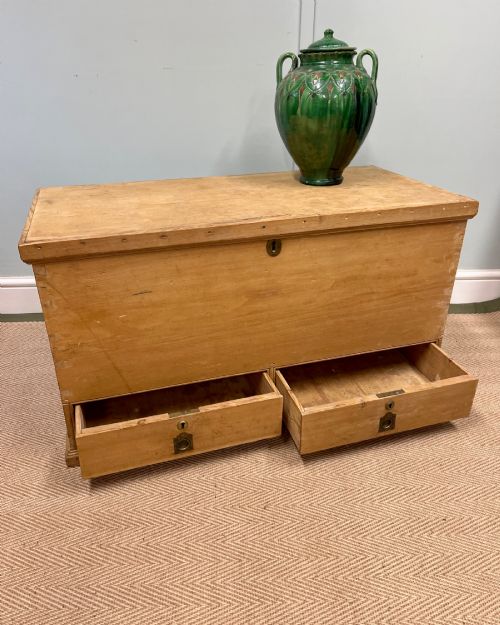
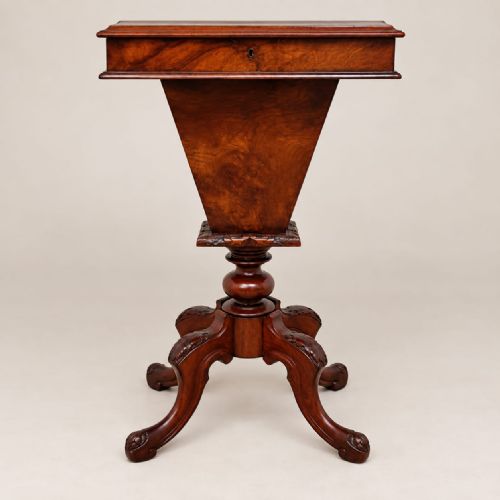
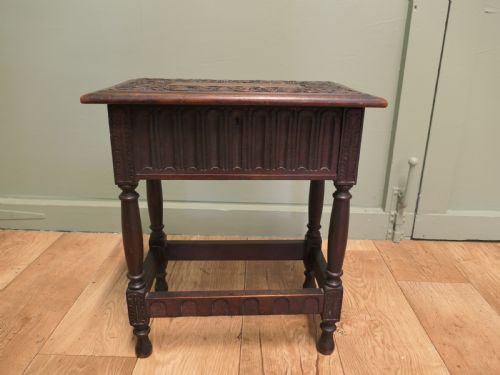
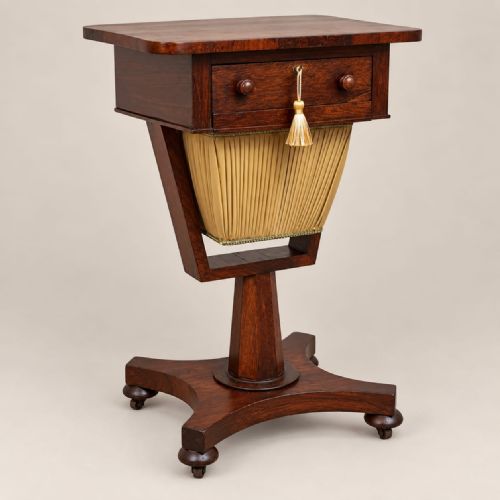
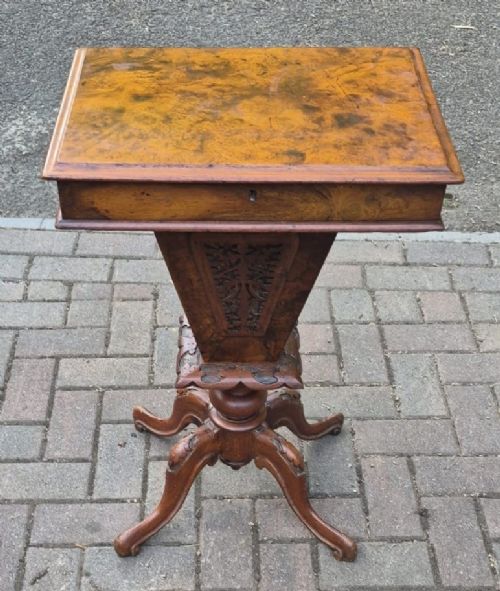
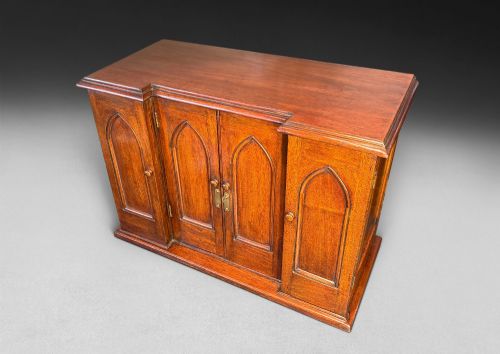
A 19th century table box encompasses a wide variety of furniture and small decorative objects intended to sit on tables or function as compact tables themselves, including sewing tables, work tables, and tabletop cabinets. Buyers seeking these items will find pieces spanning the Georgian, Regency, William IV, and Victorian periods.
The category bridges the gap between small handheld containers like snuff boxes and larger pieces of case furniture. Many items incorporate compartments, fitted interiors, or drop leaves designed for specific domestic hobbies such as needlework and correspondence.
Originating from English, French, Chinese Export, and Austro-Hungarian workshops, these objects frequently utilise exotic and domestic timbers alongside precious metals and glass.
Materials and construction
Makers utilised solid and veneered timbers including mahogany, walnut, burr walnut, rosewood, and satinwood, frequently employing fine marquetry, boxwood line inlay, and brass bindings for structural reinforcement and visual contrast.
Smaller tabletop boxes and snuff boxes were constructed from papier mache, silver, tortoiseshell, and carved treen, while larger work tables and cabinets often featured fitted interiors with multiple compartments for writing and sewing implements.
Evaluating craftsmanship and execution
The calibre of a piece is determined by the precision of its joinery, the selection and matching of wood veneers such as burr walnut and kingwood, and the delicacy of any surface decoration like hand-painted motifs or silver engraving.
Superior examples retain their original fitted internal compartments, working locks with keys, and uncompromised internal silk or leather linings, whereas lesser pieces often show signs of later alterations or replacement hardware.
Mappin and Webb·Emile Langlois·Stobwasser
The 19th Century Table Box Glossary
- Teapoy
- A small stand or table fitted with a box or caddy for holding tea, popular during the Georgian and Regency periods.
- Bijouterie
- A glass-topped display table or box designed for exhibiting small valuable items, jewellery, and trinkets.
- Work table
- A small domestic table fitted with a drawer, bag, or internal compartments specifically designed for sewing and needlework.
- Treen
- Small handmade wooden domestic objects and utensils fashioned by turning or carving.
- Campaign trunk
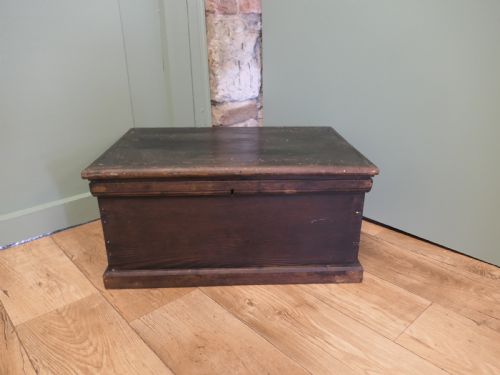
- A portable storage chest constructed with brass corners and recessed handles for military transport during the nineteenth century.
19th Century Table Box: Frequently Asked Questions
What is a 19th century table box?
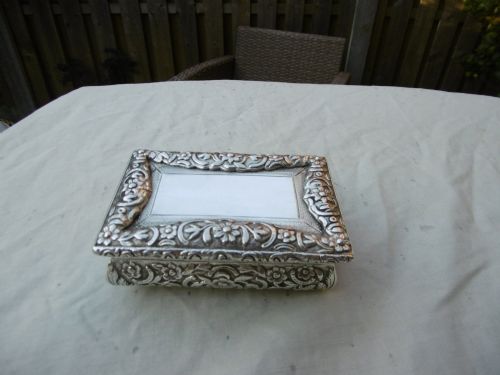
A 19th century table box is a broad descriptor covering everything from small silver snuff boxes and papier mache trinket cases to larger freestanding work tables and tabletop collectors cabinets.
These pieces were produced across Europe and Asia to serve specific domestic functions, combining storage with decorative presence in the parlour or dressing room.
How were table boxes used?
Many table boxes were designed for specialised tasks such as sewing, writing, or storing tobacco and snuff.
Larger work tables featured fitted interiors to organise threads and needles, while smaller silver and lacquered boxes sat on desks or dressing tables to hold personal trinkets and letters.
How do I identify Regency pieces?
Regency table boxes and work tables typically feature classical proportions, dark timbers like mahogany and rosewood, and restrained brass or boxwood inlay.
They often incorporate pedestals with splayed legs or sarcophagus-shaped lids reflecting the neoclassical taste of the early nineteenth century.
How do I live with antique boxes?
These pieces integrate easily into modern interiors as coffee table storage, bedside cabinets, or desktop organisers.
Placement should avoid direct sunlight and extreme humidity to protect sensitive wood veneers, paper mache finishes, and original fabric linings.