


19th Century Stick Rack
These 19th century stick rack designs bring practical organisation to hallways through robust metal frames and carved timber hall furniture.
19th Century Stick Rack
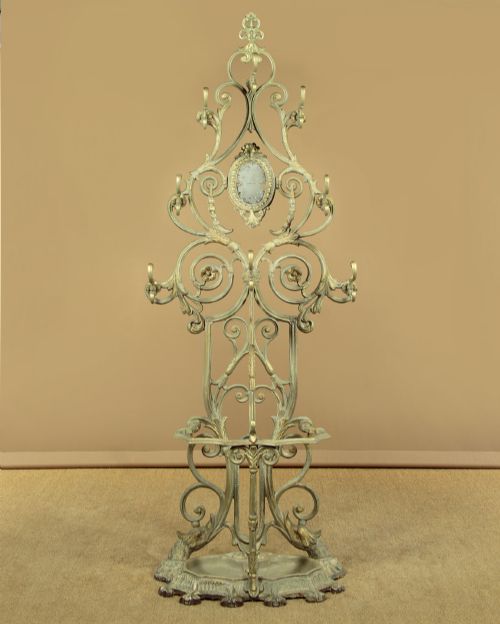
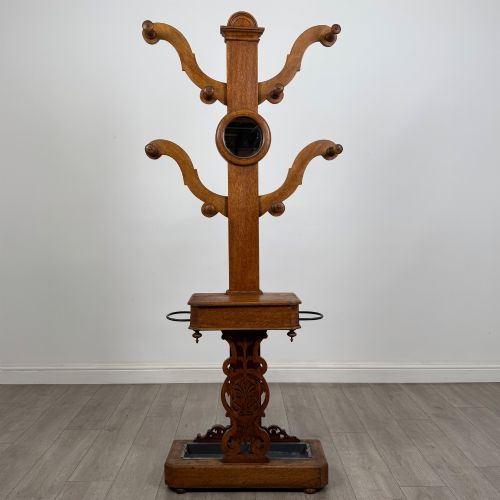
A 19th century stick rack functions as a dedicated hallway receptacle for walking canes, umbrellas and coats. These pieces range from compact metal holders to elaborate multifunctional furniture incorporating mirrors, marble shelves and hat hooks.
The versions most commonly met on this page span the Victorian period, utilising timber and metal structures intended for everyday domestic use. Many combine umbrella storage with bench seating or upright frames suitable for narrow hallways.
How they were made
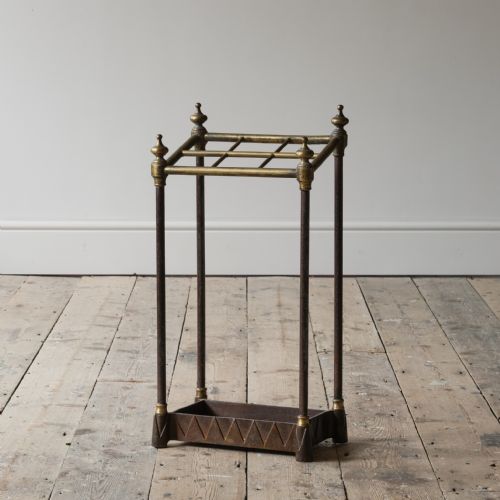
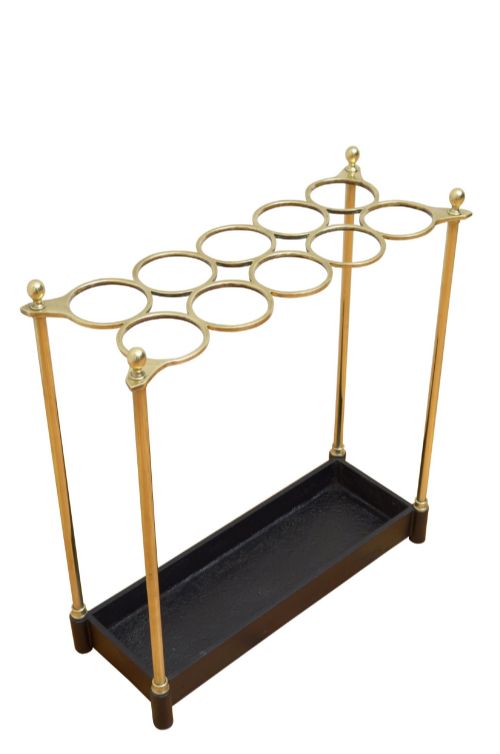
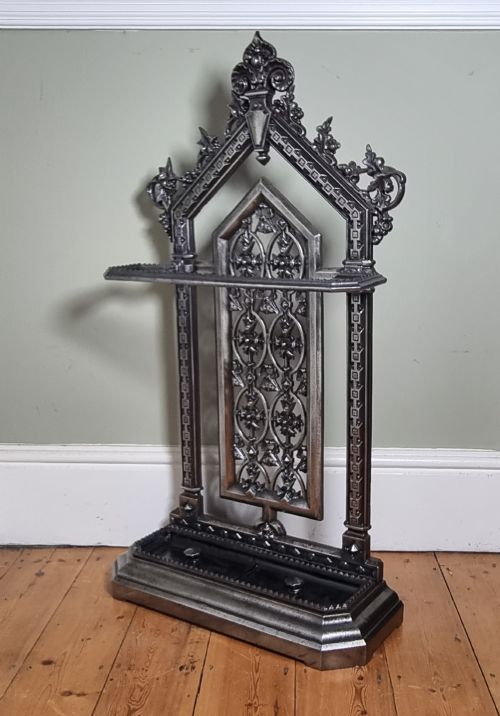
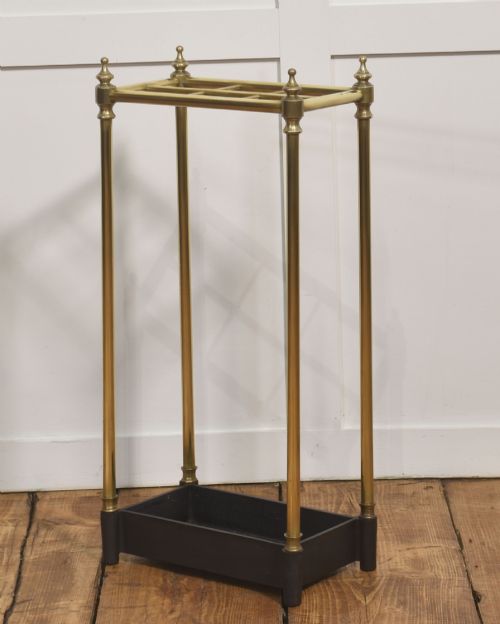
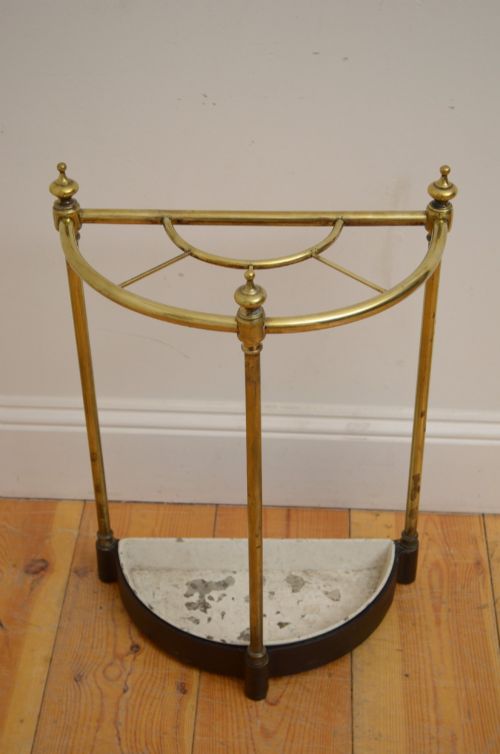
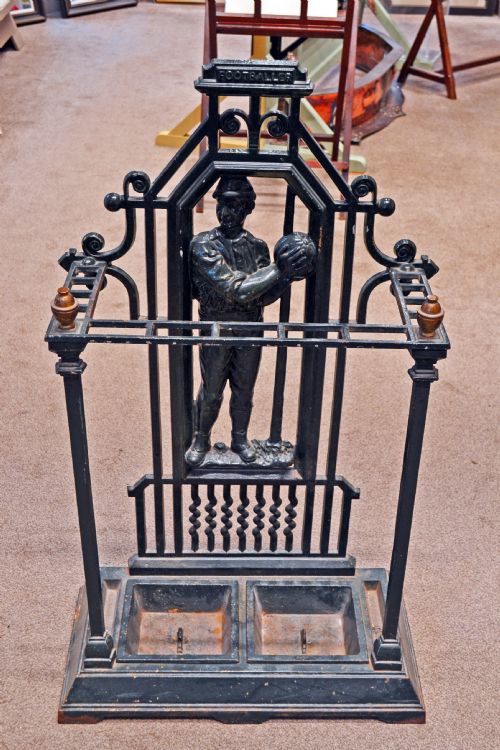
Makers utilised cast iron and brass for structural rigidity and decorative moulding, often creating complex figurative designs or geometric division rails. Foundry work allowed for intricate patterns in metal stands intended to catch water drips.
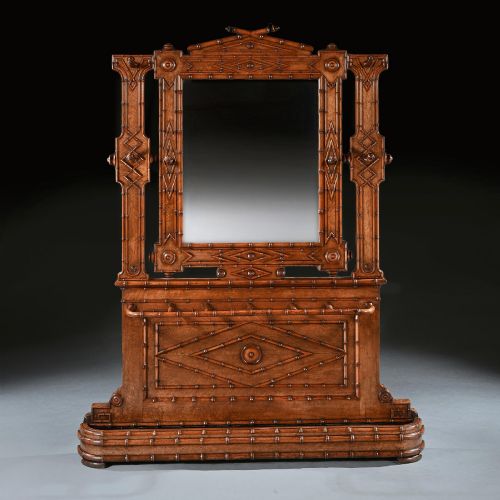
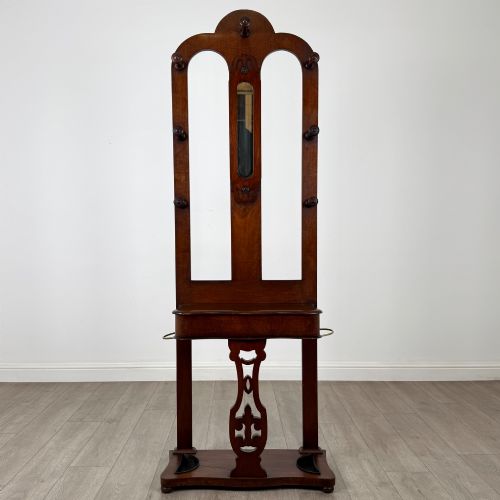
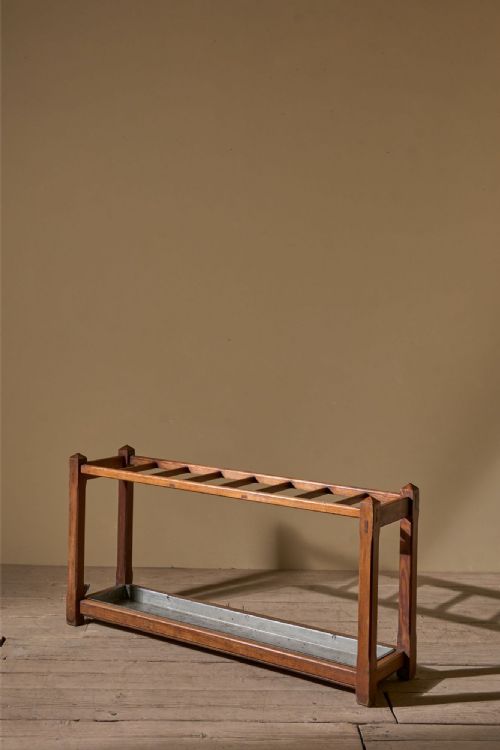
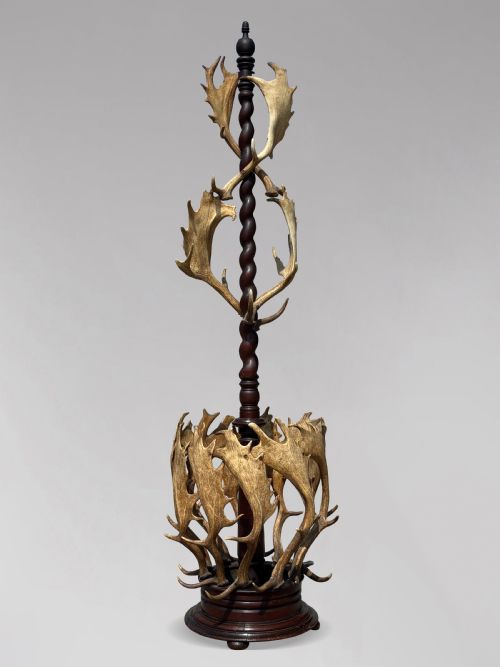
Timbers such as mahogany, oak, walnut and pine provided sturdy frames for larger hall stands, frequently shaped through turning and carving. Natural materials like antler, horn and lindenwood also appear in specialist regional pieces.
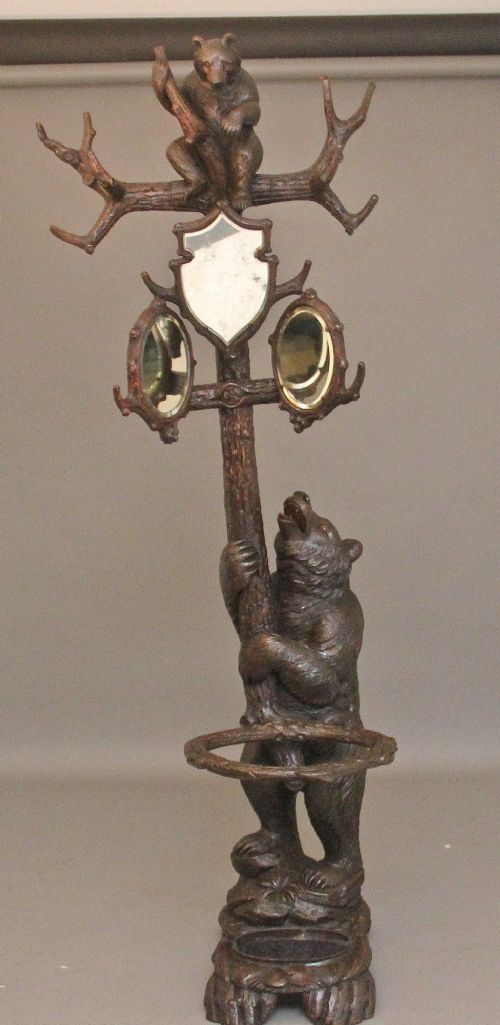
Carved bears clutching walking sticks emerge from the woods to guard umbrellas in whimsical Black Forest hall stands.
What varies in quality
The depth of carving and precision of metal casting separate standard utility items from exhibition pieces. Finer examples display crisp detail in figural elements and secure joinery that withstands the weight of wet timber and heavy walking sticks.
The integrity of original mounts, drip pans and secondary timbers dictates the standing of a piece. Retaining original brass fittings and uncompromised structural elements marks the upper tier of surviving examples.
J. Parker of Woodstock·Falkirk Ironworks·Falkirk Foundry
The 19th Century Stick Rack Glossary
- Hall stand
- A composite piece of hallway furniture combining a stick rack, coat hooks, mirror and sometimes a glove drawer or marble shelf.
- Japonisme
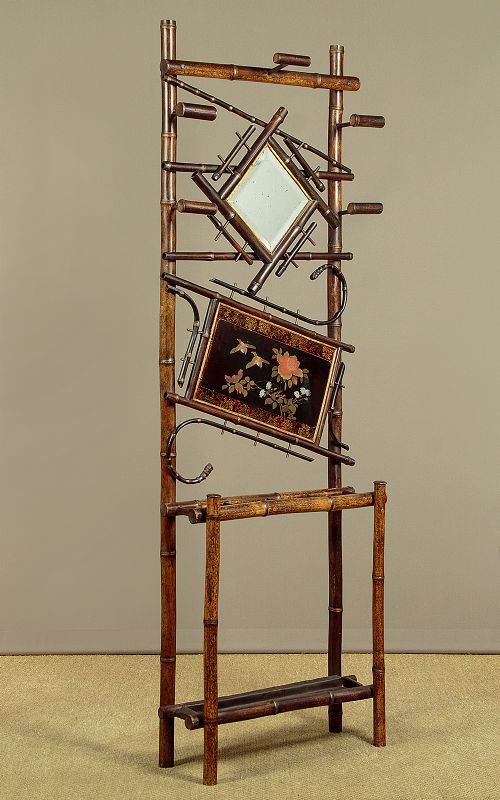
- A late 19th-century design style influenced by Japanese art, visible in bamboo-turned frames and faux bamboo finishes.
- Black Forest carving
- Highly detailed Swiss or German woodcarving depicting natural subjects, frequently bears, rendered in lindenwood.
- Majolica
- Opaque tin-glazed earthenware with colourful lead glazes, often utilised for the removable drip pans in ceramic stick stands.
- Finial
- A decorative terminal ornament, typically spherical or pointed, used to cap the uprights of brass and iron racks.
19th Century Stick Rack: Frequently Asked Questions
Where were stick racks placed?
These items stood directly inside domestic entrance halls and vestibules. They provided an immediate drop-off point for visitors entering from wet weather.
Their placement near the main entrance protected interior flooring from damp umbrellas and kept walking sticks accessible for outdoor excursions.
How do I clean a metal stand?
Cast iron and brass components require gentle dusting and occasional dry wiping to remove surface debris. Avoid harsh chemical cleaners that strip patination.
Brass parts may be treated with non-abrasive metal polishes if brightening is desired, while iron surfaces benefit from light wax protection.
Can these hold heavy walking sticks?
Structural integrity varies by material, but sturdy iron and hardwood frames were built to support substantial weight. Division rails keep long items upright without straining the base.
Heavier cast iron and oak examples handle multiple heavy canes securely, while lighter bamboo or pine versions suit standard umbrellas.
How do I identify Victorian pieces?
Victorian examples often feature registration marks, foundry stamps or characteristic Gothic and Aesthetic Movement stylistic motifs. The predominant use of cast iron, mahogany and oak points to mid-to-late 19th-century manufacturing methods.
Construction details such as hand-cut screws and heavy brass mounts further distinguish pieces from later reproductions.