

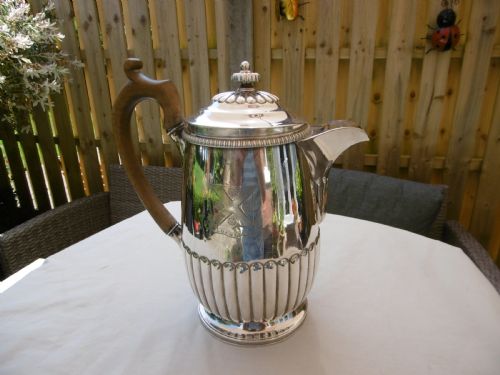


19th Century Silver Server
These pieces of 19th century silver server equipment bring functional elegance to the table, combining period craftsmanship with practical utility for modern hosts.
19th Century Silver Server
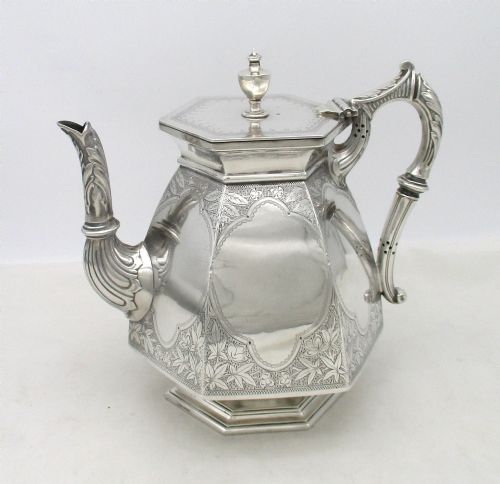
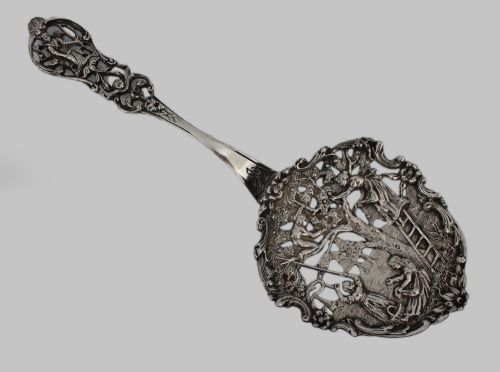
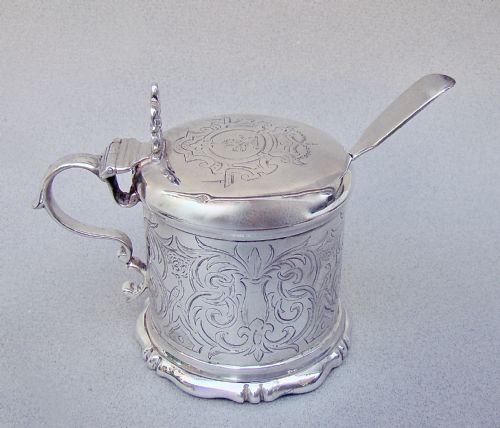
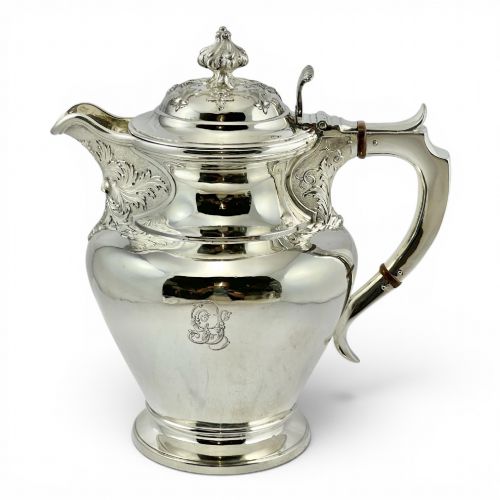
A 19th century silver server covers a diverse range of utensils and vessels designed for food and drink service, spanning serving spoons, fish servers, pastry servers, and sardine servers alongside larger hollowware like coffee pots, teapots, tureens, and wine flagons. The material composition varies from solid sterling silver to silver plate, Old Sheffield plate, and electroplated nickel silver, occasionally paired with wood, ebony, horn, ivory, copper, or porcelain.
The objects originate across various periods within the nineteenth century, encompassing Georgian, Regency, William IV, Victorian, and Aesthetic Movement styles alongside continental European designs from France and Germany. Utensils often appear as matched sets or cased pairs, while larger serving items function as centrepieces for formal dining and beverage service.
Buyers exploring this selection frequently encounter silver plated wares alongside solid silver pieces bearing hallmarks from London, Edinburgh, Exeter, and international workshops. Forms range from utilitarian ladles and spoons to complex novelty items such as shoe spoon warmers and revolving supper sets.
Materials and manufacturing methods
Makers utilised solid sterling silver alongside silver plate and Old Sheffield plate, a technique fusing a thin layer of silver to a copper base. Electroplated nickel silver emerged during the period as an accessible alternative for larger vessels and flatware.
Items incorporate manual fabrication techniques including piercing, engraving, and casting, often complemented by applied borders and crests. Handles frequently feature organic materials such as wood, ebony, ivory, and horn, secured to metal blades or bodies.
The inventory spans styles from Georgian and Regency to Victorian and Aesthetic Movement periods.
Distinctions in quality and execution
Quality rests upon the crispness of chased and engraved decoration, the structural integrity of joints and hinges, and the preservation of original plating or surface finishes. Heavier gauge metal in solid silver pieces provides durability and balance in the hand.
Maker marks and legible hallmarks indicate workshop standards and provenance, distinguishing standard commercial production from pieces executed by notable silversmiths and manufacturers. The survival of fitted cases and original pairing adds notable context to individual sets.
Charles & George Fox·Matthew Boulton·Daniel and Arter·Matthew Linwood·William Hutton & Sons·Boardman Glossop & Co·William Bennett·Birchall and Hayne·Philippe Berthier
The 19th Century Silver Server Glossary
- Silver Plate
- A base metal coated with a thin layer of silver. This method allowed manufacturers to produce elaborate hollowware and flatware at a lower cost than solid sterling silver.
- Old Sheffield Plated
- An early plating method fusing a sheet of silver to a copper core by heat and pressure. The copper edge often remains visible on the reverse of antique pieces.
- Hallmark
- An official stamp applied to precious metals indicating the standard of purity, the assay office, the maker, and the year of manufacture. British pieces typically show a series of small stamped symbols.
- Hollowware
- Table vessels such as coffee pots, teapots, tureens, and jugs. These items are constructed with hollow bodies rather than being solid metal.
- Entree Dish
- A covered serving dish used for presenting courses during formal nineteenth-century dining. Many examples feature removable handles for versatile table arrangement.
19th Century Silver Server: Frequently Asked Questions
How do I clean antique silver servers?
Use a soft cloth and a dedicated silver polish designed to remove tarnish without abrasive action. Avoid harsh chemical dips, particularly on pieces with plated surfaces or organic handles.
Store items in dry conditions away from direct sunlight to minimise future tarnishing. Regular gentle dusting preserves the underlying metal and any engraved details.
What is the difference between solid silver and silver plate?
Solid silver consists entirely of precious metal throughout the piece, marked with standard silver purity standards. Silver plate applies a thin coating of silver over a base metal such as copper or nickel silver.
Examining the edges and wear points often reveals the underlying base metal on plated items. Solid pieces generally carry full hallmarks indicating their metallic composition.
Can I use these serving pieces for daily dining?
Many nineteenth-century serving utensils and vessels remain robust enough for regular contemporary table use. Solid silver and sturdy plated items handle functional service well when washed by hand.
Delicate items with ivory, horn, or elaborate pierced work require more careful handling and should be washed promptly without soaking. Hand washing protects organic handle materials from moisture damage.
How do I identify the date of a silver server?
British pieces rely on stamped date letters within the hallmark register to determine the exact year of assay. Style indicators, such as Victorian scrollwork or Regency neoclassical forms, offer further chronological context.
Maker marks also help narrow the active working dates of the silversmith or firm. Comparing construction methods and decorative motifs clarifies the period of manufacture.