

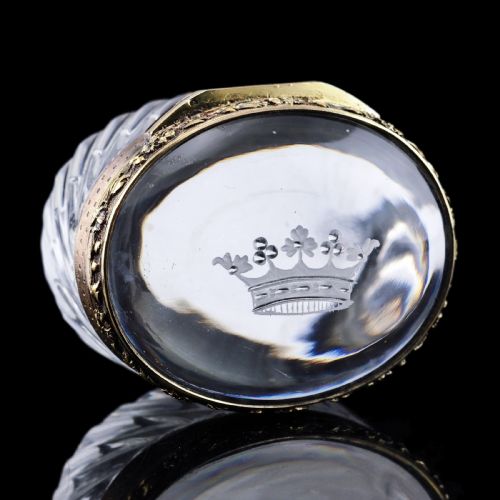


19th Century Silver Casket
These 19th century silver caskets bring heavy ornamentation and fitted velvet interiors to dressing tables and desks.
19th Century Silver Casket
When you search for a 19th century silver casket, you look at decorative containers produced across Britain, France, Germany, and India during the Victorian and broader nineteenth-century periods. These objects served primarily as jewellery boxes, trinket boxes, and vanity cases for personal valuables.
The pieces on this page appear in various forms, including oval trinket boxes, large jewellery caskets, table boxes, and specialised items like Indian pandan boxes and Dutch spoon boxes. Materials range from solid sterling silver and silver gilt to silver-plated metal, often combined with crystal, glass, marble, and exotic woods.
Stylistic influences span widely from Victorian Rococo Revival and Neoclassical Revival to Renaissance Revival and French Second Empire designs. Buyers typically encounter European work featuring intricate repoussé decoration, hinged lids, and lined interiors.
How they were made
Silversmiths utilised solid sterling silver, silver gilt, and silver plating over copper or base metals, shaping panels through casting, hammering, and repoussé work. Many examples incorporate cut glass, crystal, or Connemara marble secured within metal mounts.
Interiors rely on fitted linings of velvet, satinwood, or coromandel, constructed by cabinet makers to house jewellery and cutlery securely. Hinges, clasps, and locks require precision engineering to ensure lids close flush against the metal bodies.
19th Century Silver Casket Retail Price Guide 2026
Typical asking prices for 19th century silver casket among the pieces listed under this phrase on Sellingantiques today, from the lower quarter to the upper quarter. They describe what is for sale here now, not the wider market.
Listings feature items spanning the nineteenth century, incorporating materials from Connemara marble and tortoiseshell to sterling silver and velvet.
What varies in quality
The distinction between standard and superior pieces rests on the depth and clarity of the metalwork, particularly in chased and repoussé ornamentation. Heavy gauge sterling silver and fire-gilt surfaces command greater respect than thin silver plating over base metal.
Internal execution also dictates value, where hand-fitted velvet linings and secondary materials like tortoiseshell, crystal, or coromandel show superior craftsmanship. Maker involvement, evidenced by clear hallmarks or stamps from known workshops, elevates the standing of an individual box.
Posen of Frankfurt and Berlin·Walker and Hall·H. Matthews
The 19th Century Silver Casket Glossary
- Repoussé
- A metalworking technique where the smith hammers the metal from the reverse side to form a raised design in relief. This method defines the sculptural surface decoration on many nineteenth-century caskets.
- Silver Gilt
- Silver that has been coated with a thin layer of gold, often referred to as vermeil. This treatment provides a rich, warm tone and protects the underlying silver from tarnishing.
- Pandan
- A traditional box originating from India, used to hold betel leaf preparations or spices. These pieces feature elaborate handmade silver decoration and regional motifs like peacocks.
- Coromandel
- A dense, heavy tropical hardwood prized for its dark grain with contrasting light streaks. It forms the body of robust nineteenth-century travelling vanity cases and table boxes.
- Hallmark
- An official stamp applied to precious metals indicating the standard of purity, the assay office, and the date of manufacture. These marks allow collectors to verify the origin and age of silver pieces.
19th Century Silver Casket: Frequently Asked Questions
What were 19th century silver caskets used for?
These boxes held precious personal items including rings, necklaces, and pocket watches on dressing tables and desks.
Larger versions accommodated travelling vanity equipment or specialised collections like spoons and trinkets.
How do I care for silver and velvet boxes?
Dust silver surfaces gently with a soft microfibre cloth, avoiding harsh chemical dips that damage gilt finishes and interior linings.
Keep velvet interiors dry and protected from direct sunlight to prevent fading and deterioration of the fabric.
How can I tell the period of a casket?
Examine the metal hallmarks for date letters, maker marks, and standard purity symbols that record the exact year of assay.
Stylistic cues such as heavy Rococo Revival scrolling or Second Empire symmetry also point to specific decades within the nineteenth century.
Are all silver caskets made of solid silver?
Many pieces utilise solid sterling silver or silver gilt, but a significant portion consists of silver-plated copper or base metal.
Continental and British makers frequently combined silver mounts with glass, marble, tortoiseshell, or wood bodies.