




19th Century Sign
When you search for a 19th century sign, you are looking at trade boards and glass window panels that marked historic shops and merchants.
19th Century Sign
A 19th century sign on this page typically appears as a trade sign, a tradesman's figure, or an etched pub window from the Victorian period. These pieces originate from commercial and domestic contexts where businesses advertised their trades to the public.
The selection ranges from wooden carpenter boards to large glass pub windows and sculpted figures. Buyers encounter these items as historical records of nineteenth-century commerce and street life.
Materials and construction
Makers utilised wood, glass, and bronze to construct these items, applying etching techniques to windows and hand-carving methods to wooden trade boards. Glass panels required careful acid etching to create opaque lettering and decorative designs.
Wooden trade signs and figures involved shaping timber and applying paint or gilt finishes to withstand exterior conditions. These physical methods ensured durability while maintaining clear visual communication for the merchants.
19th Century Sign Retail Price Guide 2026
Typical asking prices for 19th century sign among the pieces listed under this phrase on Sellingantiques today, from the lower quarter to the upper quarter. They describe what is for sale here now, not the wider market.
A solitary etched window once welcomed thirsty patrons into a Victorian pub before finding its way to this collection.
Distinctions in standard
Quality in a 19th century sign depends on the depth of the carving, the clarity of the etched glass, and the preservation of the original painted surface. Pieces that retain their unblemished lettering and authentic finish command greater attention.
The crispness of the artisan's handwork separates standard commercial items from finer surviving examples. Structural integrity and minimal modern intervention preserve the historical authenticity of each piece.
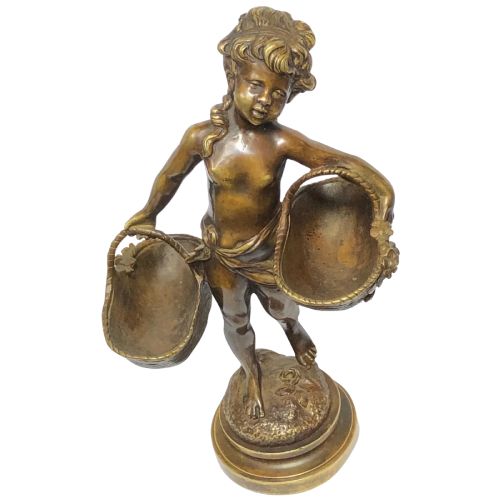
Barbedienne·F.Milliot
The 19th Century Sign Glossary
- Trade sign
- A board or object displayed outside a shop to indicate the merchant's profession or wares. These items formed the visual landscape of nineteenth-century high streets.
- Etched glass
- Glass treated with acid to create frosted patterns or lettering. This technique allowed pubs and shops to display detailed signage on windows.
- Tradesman's figure
- A three-dimensional representation of a worker or profession used for display. These figures served as commercial advertisements outside specific establishments.
- Gilt
- A thin layer of gold applied to wood or metal surfaces. Artisans used this material to highlight lettering and decorative elements on signs.
19th Century Sign: Frequently Asked Questions
What materials make up a 19th century sign?
Listings show these objects constructed from wood, glass, and metal. Artisans shaped timber for boards and etched glass for windows.
Each material served a practical function for merchants who needed durable outdoor or window advertising.
How were these signs used originally?
Merchants mounted trade boards outside shops and etched glass panels into pub windows to attract customers. They communicated the specific trade of the establishment clearly to passers-by.
Today, collectors hang them as wall art or display them within interiors as historical artefacts.
How do I care for an antique sign?
Keep wooden and glass pieces away from direct sunlight and damp environments to protect the original paint and etched surfaces. Dust them gently with a dry cloth without using abrasive cleaning chemicals.
Proper placement preserves the remaining finish and structural stability of the material.
How can I tell the period of a sign?
Examine the materials, lettering styles, and manufacturing techniques against known nineteenth-century standards. Etched glass and hand-painted wooden boards display specific stylistic traits of the Victorian era.
Makers' marks or signatures, where present, help confirm the date and origin of the piece.