
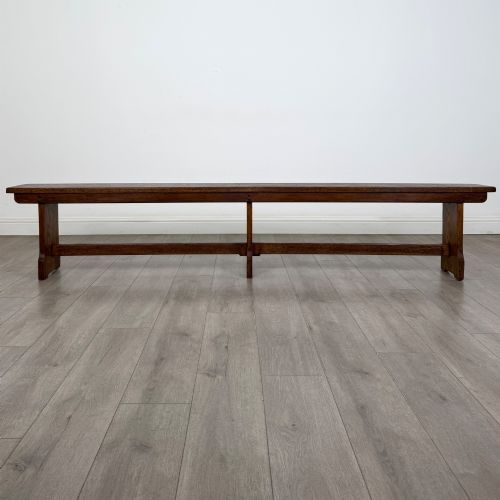
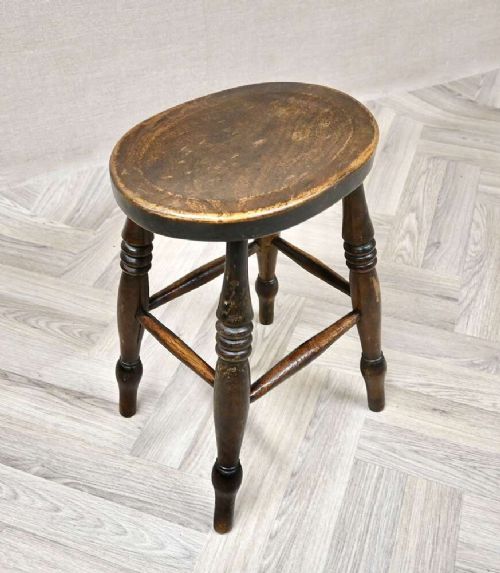
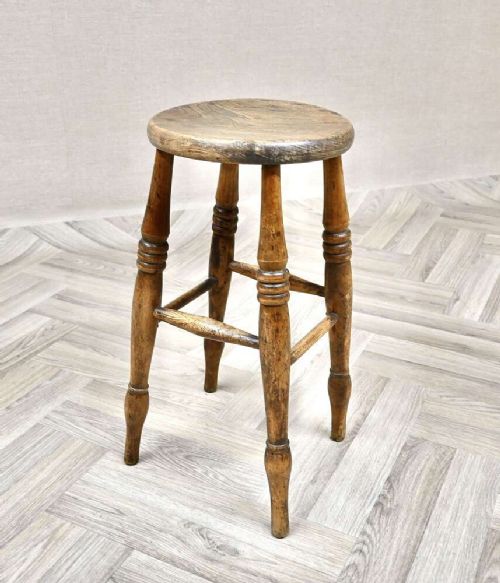
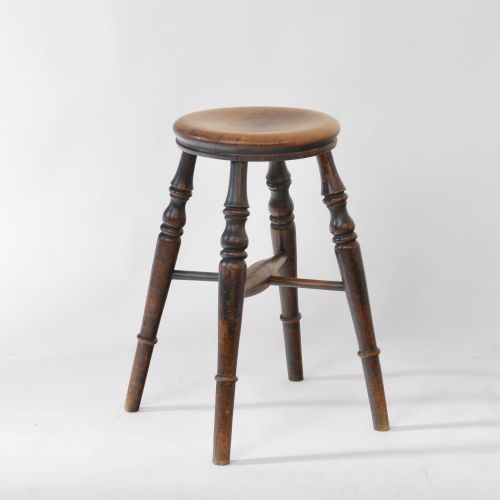
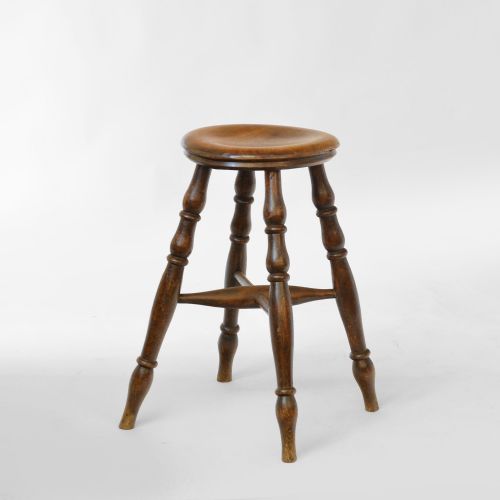
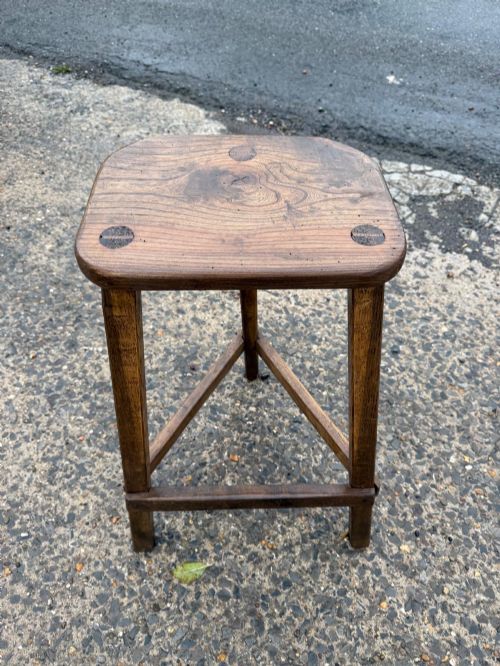
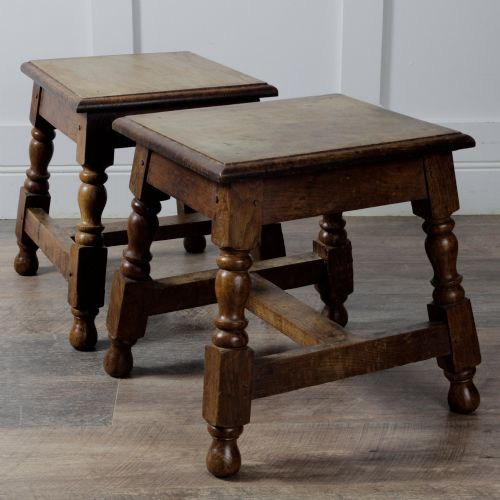
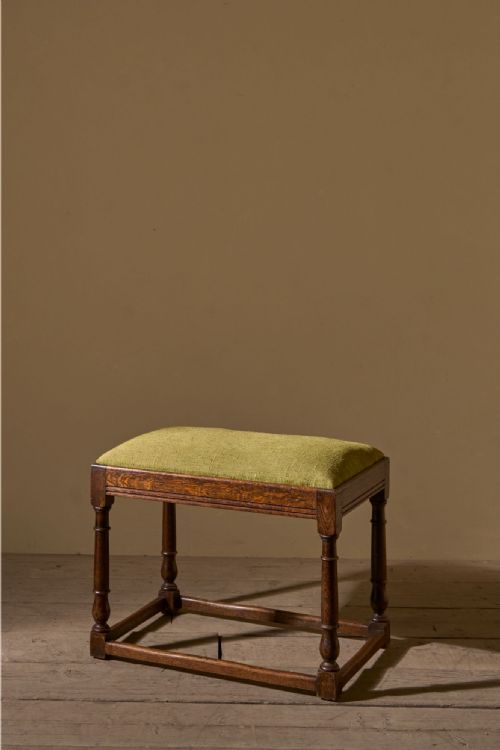
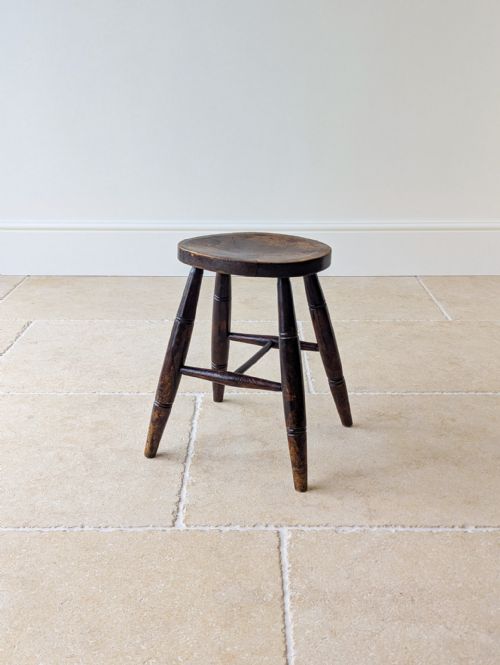
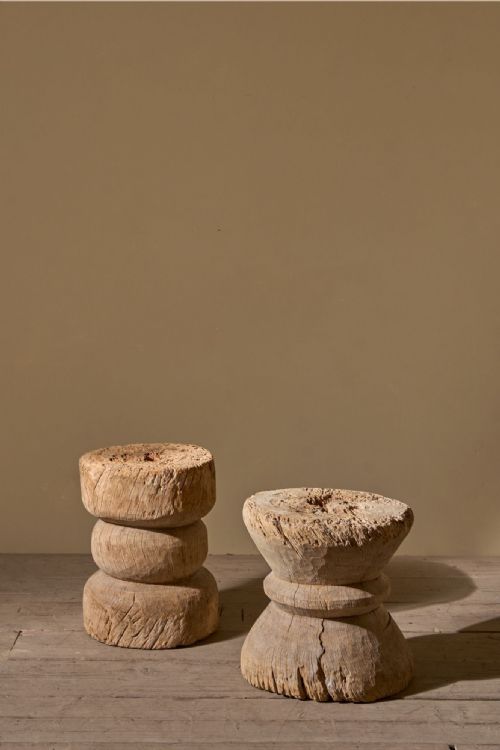
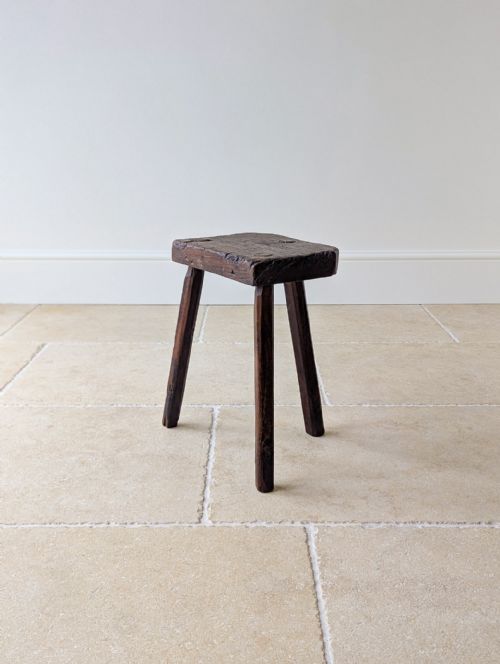
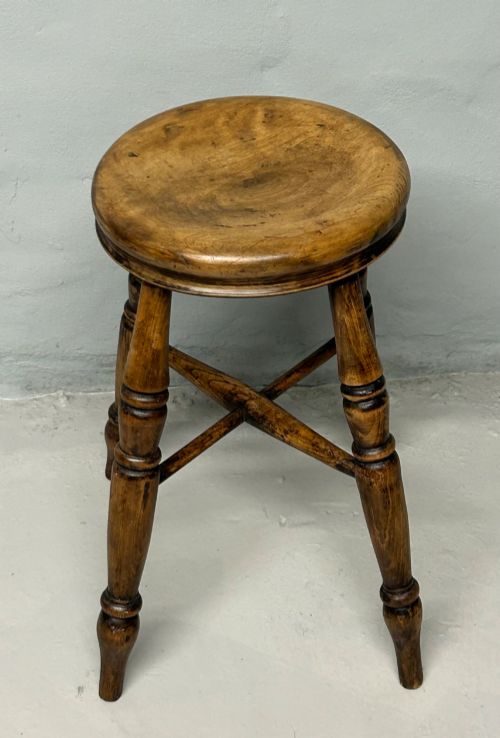
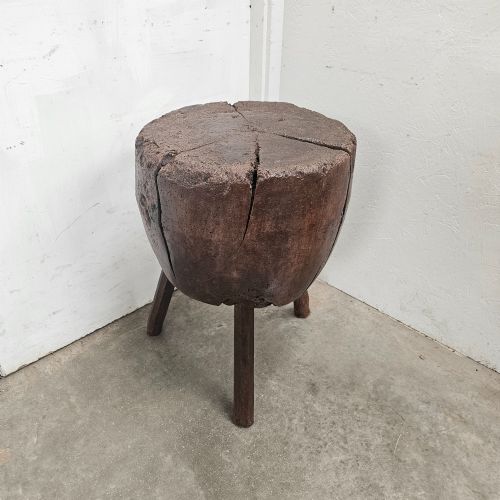
19th Century Rustic Stool
A 19th century rustic stool brings honest craft and working history into a room.
19th Century Rustic Stool
A 19th century rustic stool is a utilitarian seat born from practical tasks in dairies, pubs, workshops and farmhouses. Buyers searching this phrase seek unpretentious timber seating that carries the marks of daily labour.
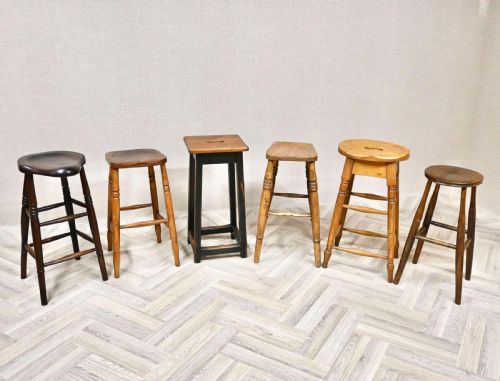
The pieces on this page span forms such as milking stools, tavern seats, clerk's stools and high workshop benches. They originate from English, French and Eastern European traditions, reflecting local agricultural and industrial needs.
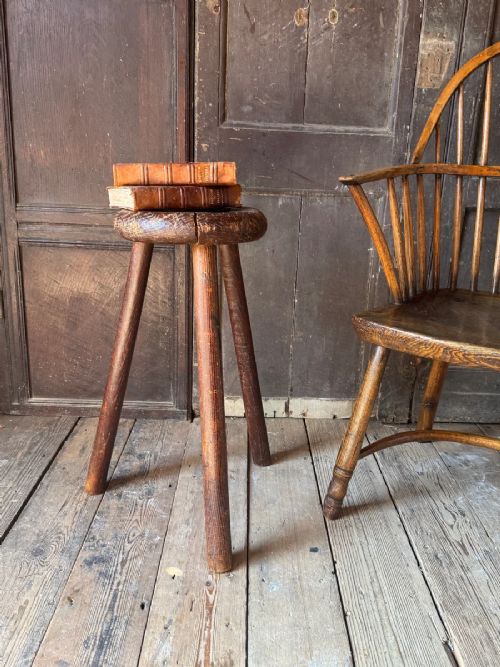
Most examples rely on simple three or four-legged designs built for stability on uneven floors. Their vernacular character derives entirely from utility rather than decorative ambition.
Materials and construction
Local timbers dictate the construction, with native hardwoods and softwoods selected for toughness and availability. Elm, oak, ash, beech, sycamore and pine appear frequently across the seats and underframes.
Joinery methods prioritize strength over refinement, utilising wedged mortise and tenon joints or simple drilled legs inserted directly into thick plank tops. Many survive with retained layers of historic paint or raw scrubbed surfaces.
Forms range from milking stools and tavern seats to chopping blocks and bar stools.
Quality and character
Quality in a 19th century rustic stool lies in the proportion of the top and the integrity of the leg splay. A well-balanced stance and comfortable wear from decades of use separate superior utilitarian objects from ordinary ones.
Surface patination plays a central role in valuation, where untouched aged timber or genuine old paint surfaces command greater interest. Structural honesty and minimal modern intervention preserve the integrity of the piece.
The 19th Century Rustic Stool Glossary
- Vernacular
- Everyday objects made by local tradesmen for specific regional tasks without high-style architectural pretension. These pieces rely on traditional methods suited to local materials.
- Patina
- The surface sheen and colour developed through years of handling, cleaning and exposure to light. It serves as a visual record of age and use.
- Splay
- The outward angle of the legs from the underside of the seat. This divergence provides necessary stability on uneven ground.
- Mortise and tenon
- A traditional joint where a projecting tongue fits snugly into a corresponding cavity. It secures frames without relying on metal fasteners.
- Block
- A thick section of timber used for heavy tasks such as chopping meat or metalworking. These dense blocks often double as low seating.
19th Century Rustic Stool: Frequently Asked Questions
What were 19th century rustic stools used for?
These stools served specific daily functions in dairies, pubs, kitchens and workshops where workers sat for long hours. Milking stools offered stability on uneven barn floors, while tavern and bar stools accommodated patrons.
Industrial settings required sturdy stools for artisans, silversmiths and clerks. Their simple forms adapted to whatever practical seating requirement arose in rural and trade environments.
How do I live with a rustic stool?
A rustic stool functions easily as an occasional side table, a bedside stand or a plant platform in modern interiors. Their compact footprints allow them to tuck beside armchairs or under console tables without cluttering a room.
Keep them away from direct heat sources to prevent timber shrinkage and cracking. Treat old painted surfaces with care, avoiding harsh chemical cleaners that strip historical finishes.
How do I tell English and European stools apart?
English country stools frequently showcase exposed elm seats paired with ash or oak turnings. Their construction follows traditional vernacular forms rooted in regional joinery traditions.
Continental European examples, particularly from France and Eastern Europe, often feature distinct wood choices like beech or fruitwood alongside original ochre, yellow, green or red paint finishes.
What is a milking stool?
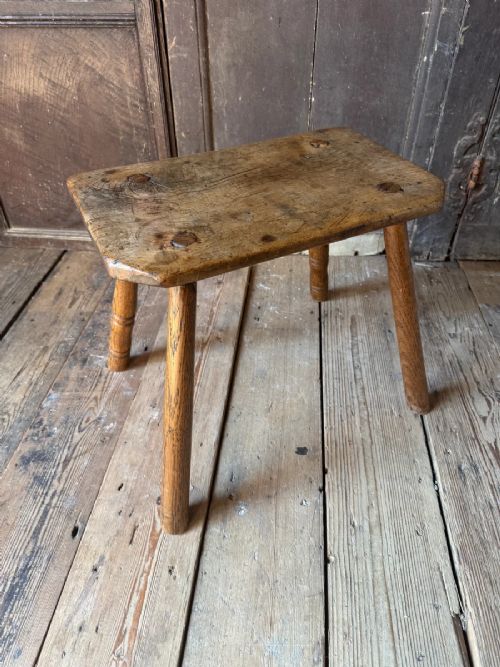
A milking stool is a low, typically three-legged seat designed to remain stable on farm floors while dairy workers sat close to cows. The tripod leg arrangement prevented wobbling on uneven mud or straw.
These pieces usually possess a compact saddle-shaped or round plank top. Their low height and portability made them convenient for various farm chores.