
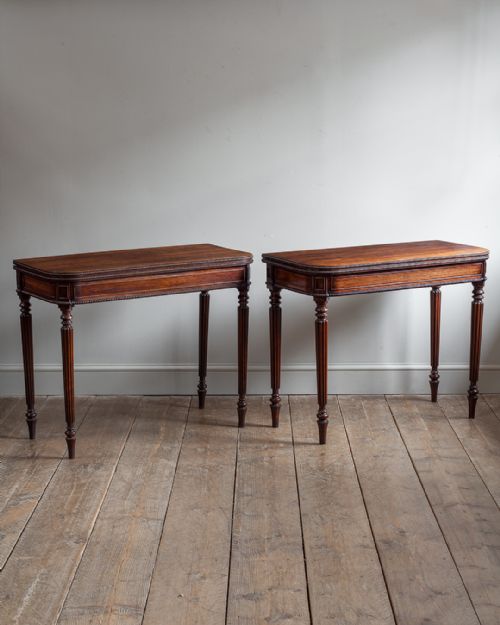
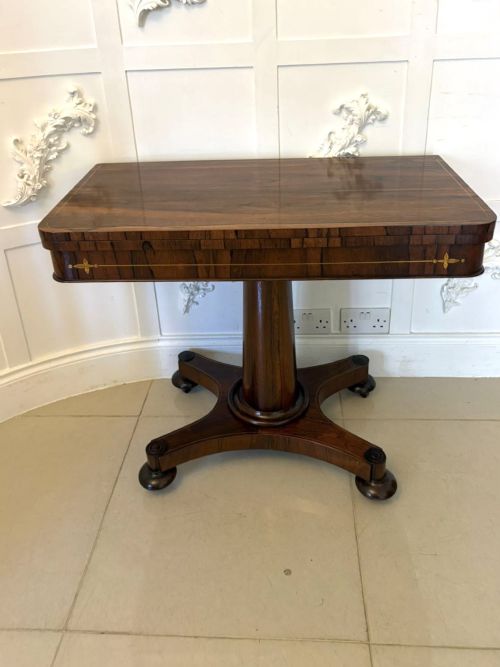
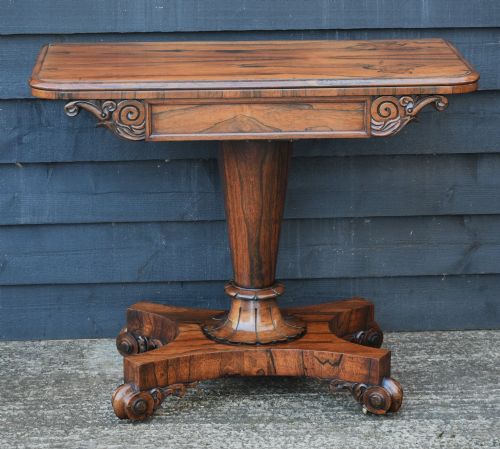
19th Century Rosewood Console
These pieces combine figured timber and architectural form, offering a solid 19th century rosewood console for modern rooms.
19th Century Rosewood Console
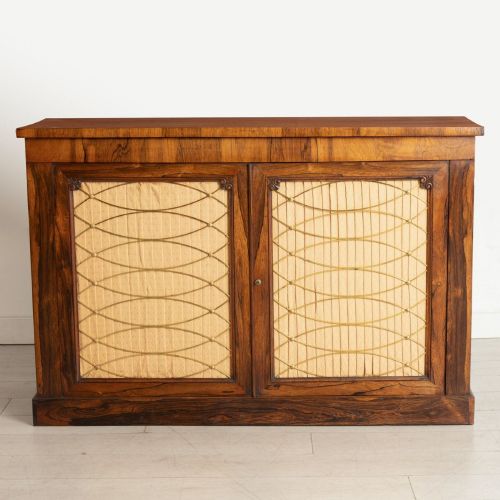
A 19th century rosewood console brings heavy timber and formal presence into a room, serving as a side support or wall-adjacent surface. The selection spans straightforward side tables to elaborate pieces with mirror backs and marble tops.
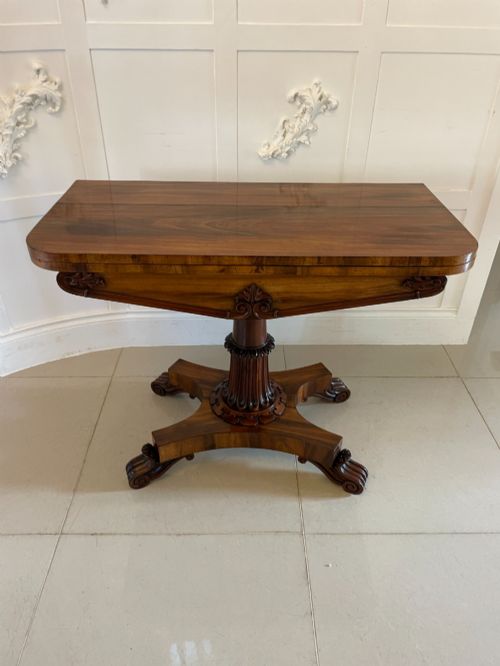
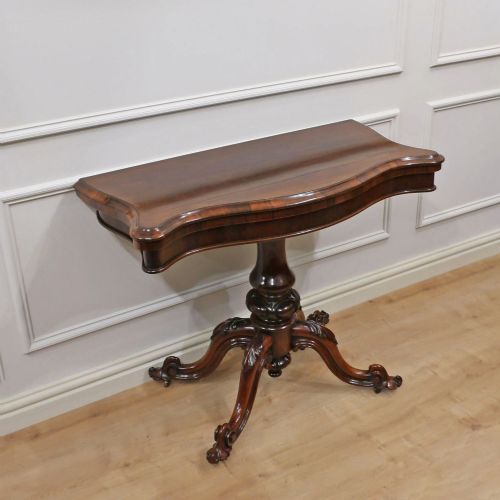
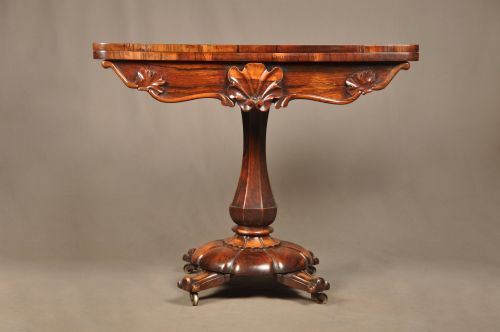
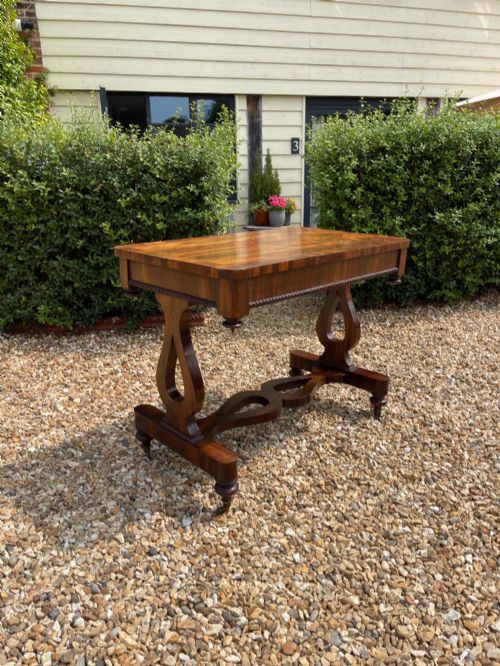
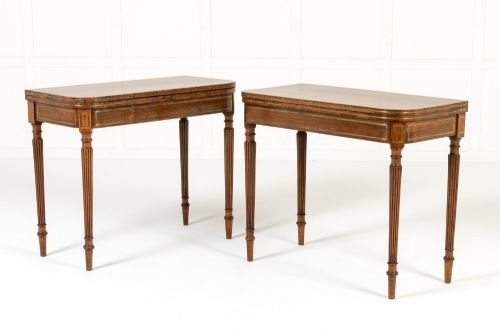
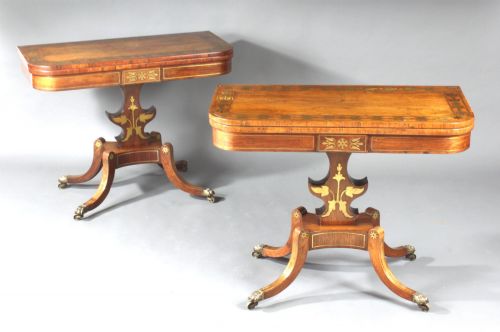
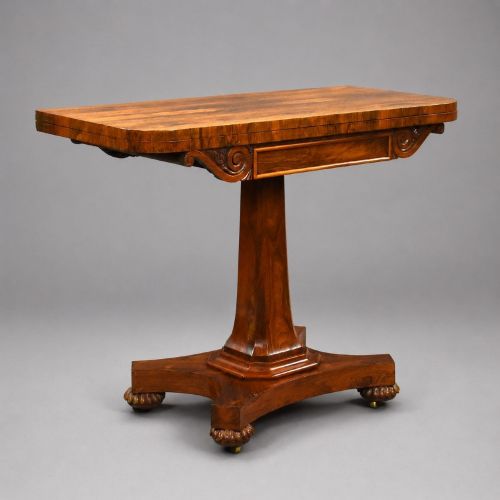
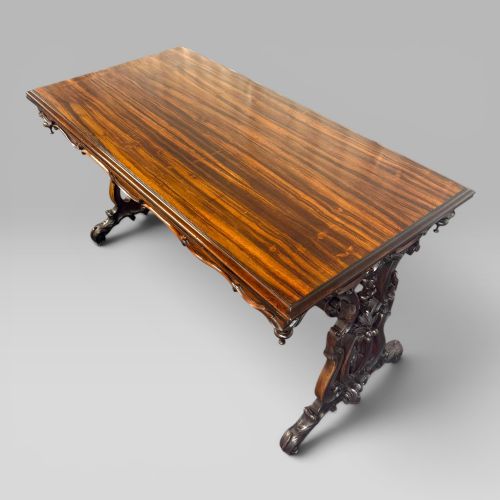
Regency and Victorian examples dominate the available forms, often incorporating fold-over tops or scroll pedestal bases. Makers also produced Anglo-Indian and French Empire variants during this broad period.
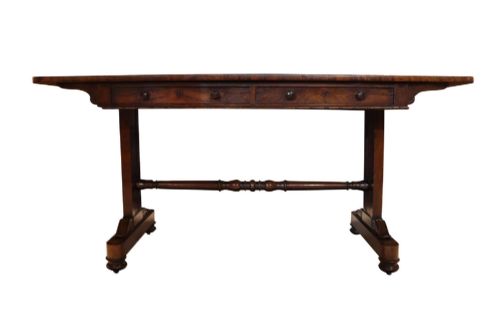
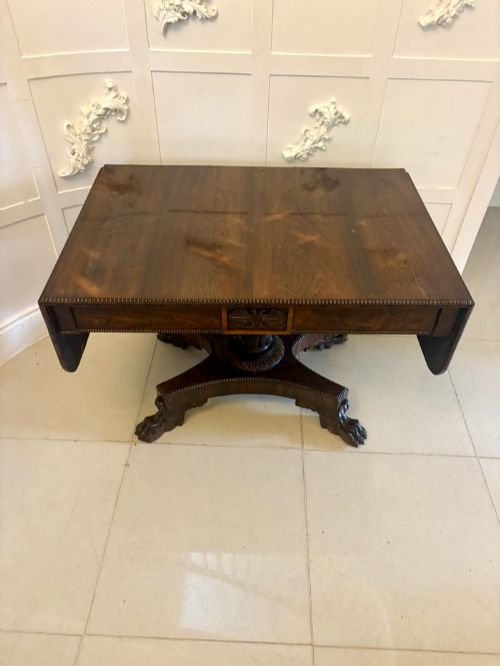
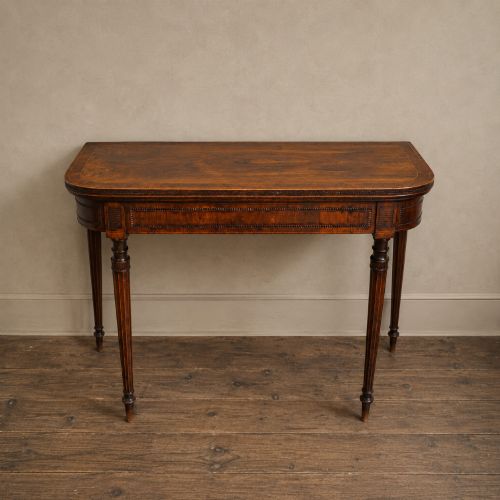
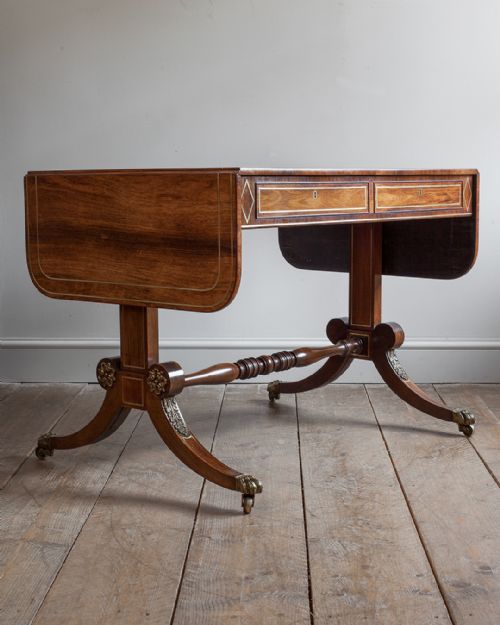
Beyond dedicated console tables, the category encompasses related forms like card tables, sofa tables, and games tables that share the same foundational timber and period characteristics.
How They Were Made
Cabinet makers utilised dense, dark rosewood veneers laid over secondary structural timbers, frequently highlighting the natural grain with satinwood, boxwood, or brass inlay. Ormolu mounts, brass sabots, and castors appeared on finer examples.
Structural elements involved pedestal bases, concave legs, and parcel-gilt details, whilst specialised surfaces featured inset marble slabs or mirror glass panels fitted to the rear frame.
Secret compartments occasionally hide inside fold-over card tables, waiting for someone to discover where Regency players stored their counters.
What Varies in Quality
Execution of timber selection and inlay marks the distinction between standard production and top-tier pieces, particularly where contrasting satinwood crossbanding or meticulous brass stringing meets the rosewood ground.
Structural stability and carving definition on scroll pedestals and bases separate workshop output, alongside the presence of integrated elements like original marble tops and mirror backs.
Robert Strahan·Gillows
The 19th Century Rosewood Console Glossary
- Console
- A table designed to stand against a wall, frequently secured or balanced on shaped legs.
- Crossbanding
- A border of veneer laid perpendicular to the main grain of the piece, often utilising contrasting timbers such as satinwood or yew.
- Sabot
- A metal sleeve fitted to the foot of a table leg, usually cast in brass.
- Card table
- A folding table with a hinged top that opens to reveal a baize-lined surface for games.
- Parcel-gilt
- Woodwork decorated with partial gilding applied to carved highlights or specific design elements.
19th Century Rosewood Console: Frequently Asked Questions
Where do I put a console table?
These pieces suit narrow entrance halls, living room perimeters, or positioned beneath large wall mirrors.
Their shallow depth allows them to occupy circulation spaces without blocking movement through a room.
How do I date a rosewood table?
Examine the structural joinery, leg profiles, and secondary woods beneath the rosewood veneers. Regency pieces display classical proportions and brass inlay, whilst Victorian examples often feature heavier carved scrollwork.
Century markers appear in the shift from strict classical revival forms towards more exuberant mid-Victorian decorative schemes.
Can I use a card table daily?
Hinged fold-over mechanisms require gentle handling when opening or closing the twin top leaves. Regular domestic use is practical provided the pivot joints and supporting legs remain stable.
Avoid placing excessive weight on the unsupported leaf when the table is open.
How do I care for rosewood surfaces?
Maintain the timber with dry dusting and occasional applications of appropriate wax polish to preserve the grain depth. Keep pieces away from direct heat sources and strong sunlight to prevent veneer drying.
Marble tops require simple wiping with a damp cloth and mild soap to avoid staining.