




19th Century Riverbank Oil Painting
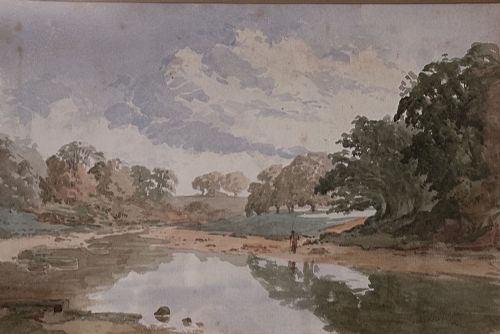
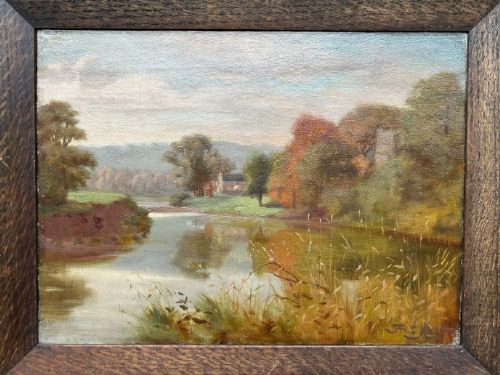
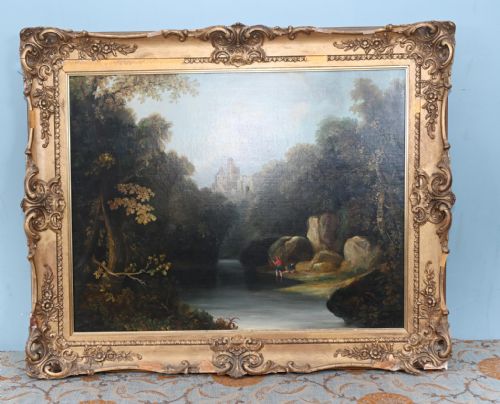
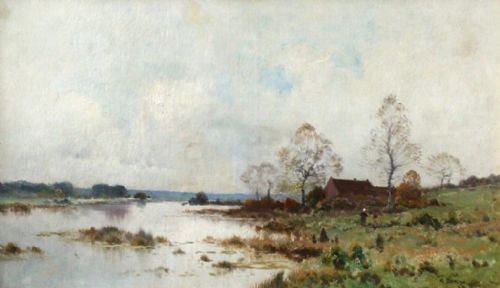
A 19th century riverbank oil painting captures quiet pastoral stretches and bustling waterways through the rich application of oil paint.
19th Century Riverbank Oil Painting
A 19th century riverbank oil painting brings rural waterways, pastoral scenes, and aquatic life indoors through period artwork. These works depict scenes ranging from quiet English country schools to French impressionist vistas, focusing heavily on natural landscapes and daily rural life.
Buyers will most commonly encounter canvas supports housed within period wooden gilt frames, capturing scenes like monks fishing, children by rivers, and cattle watering. The stylistic range spans Victorian realism and naturalism alongside impressionism, reflecting both British and French origins from the period.
How they were made
Artists of the period applied oil paint primarily onto stretched canvas or occasionally wood panels, building up texture and depth through layered brushwork. Many surviving works retain their original gilt wood frames, which were constructed to complement the tonal qualities of the landscape within.
The technique relies upon the slow-drying nature of oil media to blend atmospheric light over water and foliage, capturing transient effects of weather and season. Pigments were manipulated to render both the fine details of figures and animals and the looser impressions characteristic of the later decades.
An attentive duck and her ducklings occasionally steal the entire focus from human anglers along the riverbank.
What varies in quality
Quality separates through the artist's command of light, shadow, and atmospheric perspective over the water, distinguishing master hands from provincial copyists. Skilled brushwork breathes life into foliage and water reflections, whereas lesser works rely on stiff composition and repetitive application.
The preservation of the original paint surface and the integrity of the period wooden gilt frame heavily influence the overall standing of a piece. Works bearing clear signatures from documented artists command greater interest than unsigned examples of the English school.
Frederick Marriott·Honore Cavaroc·Frank Hyde·William Manners·Pierre Emmanuel Eugene Damoye·Constant Ludovic Artz·Henry Cheadle·Robert John Hammond
The 19th Century Riverbank Oil Painting Glossary
- Canvas
- A heavy woven fabric stretched across a wooden frame to serve as the foundational surface for oil paintings. It provides a distinct texture that interacts with the dried paint layers.
- Gilt wood
- Timber frames coated in a thin layer of gold leaf or metallic gilt, commonly utilised during the period to enhance the visual impact of oil paintings.
- Oil paint
- A slow-drying medium composed of pigments suspended in a drying oil, typically linseed, allowing artists to blend colours smoothly and build rich textures.
- Wood panel
- A rigid flat wooden support used by artists in place of canvas for painting, offering a smooth and stable ground for fine brushwork.
- Genre painting
- Artwork depicting scenes from everyday life, often featuring figures engaged in common rural or domestic activities by the water.
19th Century Riverbank Oil Painting: Frequently Asked Questions
How do I identify a 19th century oil painting?
Examination of the canvas weave, stretcher frames, and the ageing characteristics of the oil paint layers provides reliable clues to the period.
Signatures, artist inscriptions, and framing materials further help date and attribute the work correctly.
Where should I hang a riverbank painting?
These pastoral scenes suit studies, living rooms, or hallways where natural light can illuminate the subtle tones of the water and sky.
Keep them away from direct sunlight and damp environments to protect the canvas and gilt wood frame.
What subjects appear in these paintings?
Common subjects include anglers fishing, cattle watering at the edge, ducks with ducklings, and figures picking flowers along the banks.
Artists also recorded specific regional views, such as scenes from Upper Wharfedale and Leigh Woods.
Are these paintings signed by artists?
Many examples feature artist signatures or inscriptions, while others remain completely unsigned works originating from regional English or French schools.
Signed pieces often provide a clearer path to researching the creator's background and exhibition history.