


19th Century Realist Painting
These nineteenth century realist painting works capture everyday life through detailed brushwork and honest observation.
19th Century Realist Painting
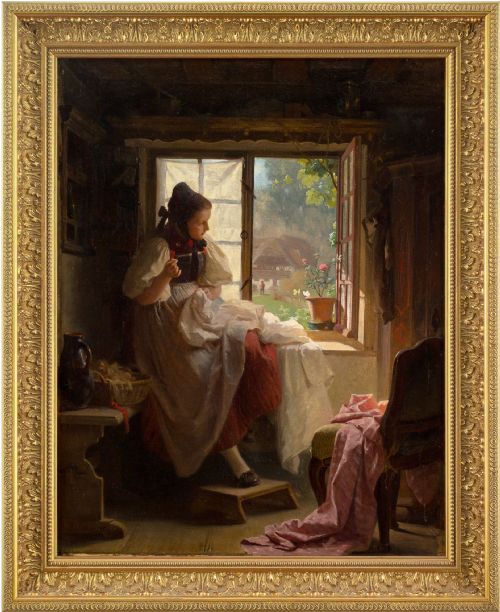
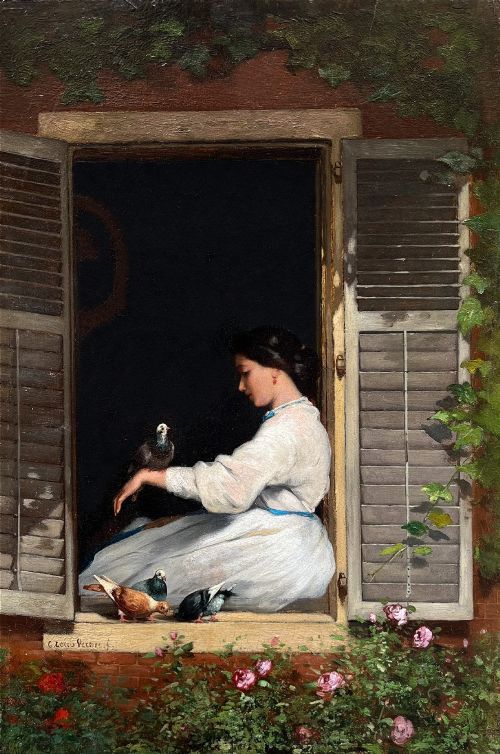
When you search for 19th century realist painting, you encounter works that focus on ordinary people, domestic scenes, and working life without idealisation. These works record subjects such as girls sewing, agricultural workers, and quiet interior moments.
The pieces on this page span several decades of the nineteenth century, including specific dates from eighteen fifty up to nineteen hundred. You will find both portraits and genre scenes created by artists working in France, the Netherlands, and across Europe.
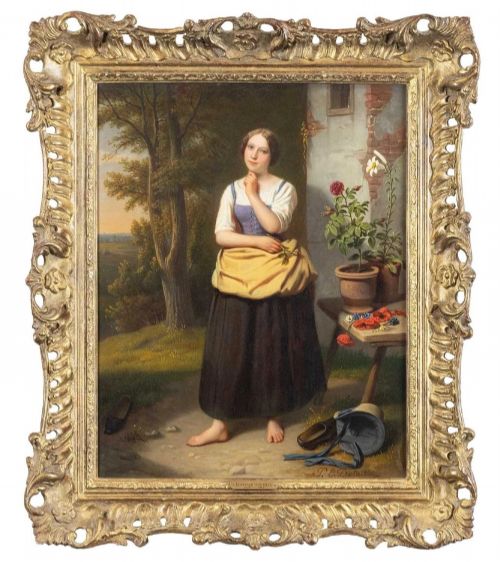
Oil paintings form the core of what is available, executed on both canvas and wood panels. Many retain their period giltwood frames, completing the presentation of these historic artworks.
Materials and techniques
These works rely on oil paint applied to prepared canvas or wood panels, allowing artists to build rich textures and subtle tonal shifts. The medium supports both the smooth finishes of academic realism and the looser brushwork of impressionist child studies.
Frames play a structural and aesthetic role, with many pieces housed in period giltwood frames that complement the depth of the oil painting. The combination of durable ground supports and quality pigments ensures the longevity of these nineteenth century surfaces.
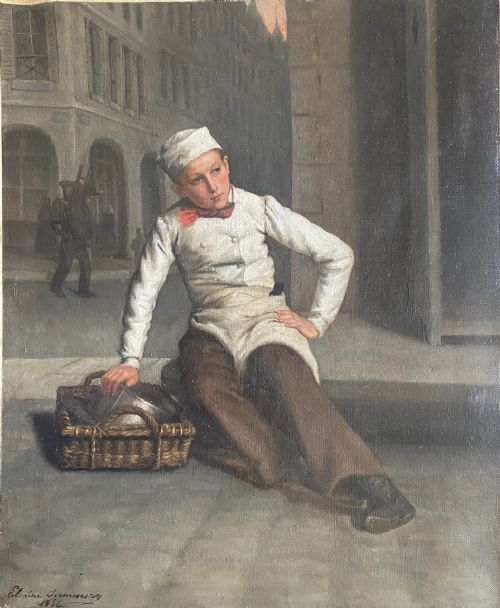
Several works preserve the quiet focus of nineteenth century domestic life, from children studying to apprentices resting after work.
Variations in quality
The condition of the oil paint surface and the originality of the panel or canvas influence the overall integrity of the piece. Works that retain their period framing and show minimal restoration hold greater visual harmony.
Max Kaltenmoser·Louis Charles Verwee·Léon Joseph Voirin·Théophile Emmanuel Duverger·Federico Andreotti·Pauline Delacroix Garnier
The 19th Century Realist Painting Glossary
- Realism
- An artistic movement focused on the unidealised depiction of everyday subjects and ordinary people. This approach replaced romanticism by observing contemporary life directly.
- Oil on canvas
- A traditional painting technique utilising pigment suspended in oil applied to a woven fabric support. This method allows for extensive blending and rich colour depth.
- Oil on panel
- A painting created on a wooden board rather than fabric. Panels provide a rigid and stable support favored by many nineteenth century artists.
- Giltwood frame
- A wooden picture frame coated with a thin layer of gold leaf or gilt. These frames often match the period of the artwork they enclose.
- Genre painting
- The pictorial representation of scenes from everyday life, typically depicting figures engaged in common activities. These works provide insight into historical social conditions.
19th Century Realist Painting: Frequently Asked Questions
What subjects appear in these paintings?
The works depict everyday subjects, including portraiture of working people, domestic interiors, and rural life. Common figures feature girls sewing, blacksmiths, and agricultural workers.
These scenes reflect the nineteenth century shift toward documenting ordinary human experience rather than grand historical or mythological events.
How do I care for an oil painting?
Keep the artwork away from direct sunlight and sources of extreme heat or humidity to protect the canvas and wood panel. Dust the surface gently with a soft, dry brush without using liquid cleaners.
Ensure the hanging environment remains stable to prevent cracking in the oil paint and the surrounding giltwood frame.
What is the difference between canvas and panel?
Canvas consists of woven fabric stretched over a wooden frame, offering flexibility and a textured ground for brushstrokes. Wood panels provide a completely rigid surface that some artists preferred for finer, more detailed execution.
Both supports were widely used throughout the nineteenth century depending on the artist's preference.
How do I identify realist works from this period?
Realist pieces are characterised by sober palettes, unidealised human subjects, and an emphasis on truthful observation of daily labour and domestic moments. Look for natural poses and believable lighting rather than theatrical staging.
Signatures, dates, and framing styles often help anchor the work within the broader nineteenth century context.