




19th Century Printing Plate
These 19th century printing plate items span earthenware, metal, and ceramic forms created across Georgian, Regency, and Victorian periods.
19th Century Printing Plate
When you search for a 19th century printing plate, you encounter a diverse group of objects including actual metal printing plates alongside ceramic meat plates, platters, and transferware featuring detailed designs. These pieces originate from the Georgian, Regency, and Victorian eras, reflecting the varied manufacturing and decorative output of nineteenth-century Britain.
The ceramic examples you meet most frequently on this page comprise blue and white earthenware plates and serving platters displaying pictorial patterns such as Chinese Garden, Tower, and transfer-printed scenes. Alongside these tableware items, actual metal and lithographic printing plates appear, providing a direct link to nineteenth-century reproduction methods.
Makers and potteries represented in the evidence range from Spode and Brameld and Co. to Don Pottery and John Horner Halifax Pontifex and Stiles. Whether formed as a serving platter, a dessert service component, or a framed print, each piece captures the utilitarian and artistic output of the nineteenth century.
Materials and production techniques
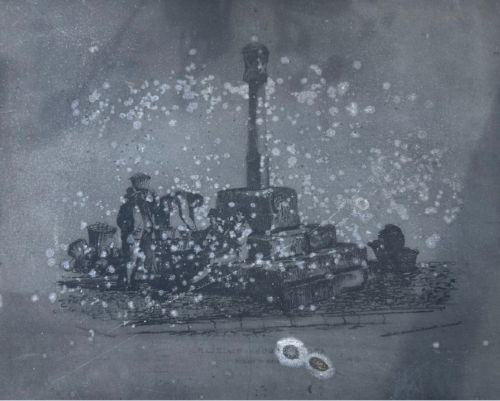
The metal objects utilise copper or other metals prepared for lithographic and engraving work, capturing fine lines for prints depicting subjects such as actors and fashion subjects. Metal plates required precise cutting and etching to hold ink for repeated impression.
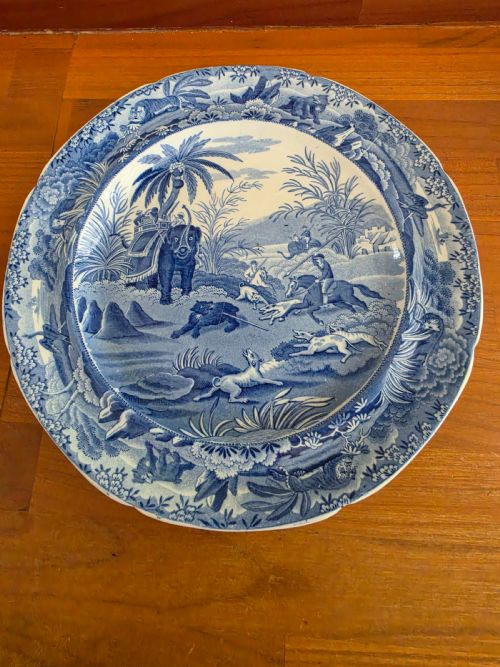
Ceramic examples employ earthenware, pearlware, and glaze, shaped into plates and platters before receiving blue and white transfer printing. Transferware techniques allowed potteries to apply intricate pictorial scenes onto ceramic bodies efficiently.
Paper and glass appear in related framed prints and engravings, complementing the ceramic and metal output. These varied materials demonstrate the broad manufacturing base utilised by nineteenth-century workshops.
One plate records the dramatic title Death of the Bear, bringing a sudden flash of wilderness to the dining table.
Factors of quality in 19th century pieces
Quality in ceramic meat plates and platters rests upon the clarity of the transfer print and the smoothness of the glaze. Crisp application of patterns like Tower or London Bridge distinguishes superior ceramic pieces from weaker pressings.
For metal printing plates and paper engravings, quality lies in the depth of the metal cutting and the precision of the printed impression. Sharp detail in portraiture and landscape engraving marks the work of skilled craftsmen.
John Horner Halifax Pontifex and Stiles·Spode·Brameld and Co·Don Pottery
The 19th Century Printing Plate Glossary
- Pearlware
- A refined earthenware developed in the late eighteenth century featuring a faint bluish glaze that pooled in crevices. This ceramic body served as a popular base for early nineteenth-century blue and white transfer printing.
- Transferware
- Pottery decorated by applying a printed design from an engraved copper plate onto paper, which was then transferred onto the unglazed or bisque ceramic body. This technique enabled factories to mass-produce detailed pictorial scenes.
- Prattware
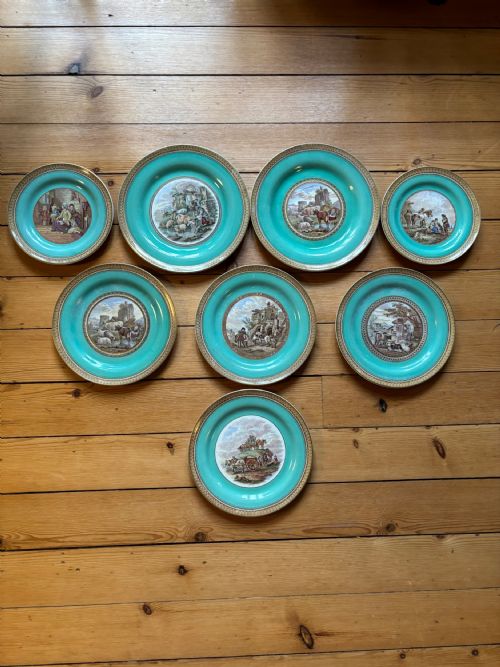
- A type of earthenware produced in Staffordshire characterised by underglaze polychrome decoration, typically utilising cobalt, ochre, and manganese colours. These items often took the form of moulded plates and figures.
- Lithographic
- A printing process based on the chemical repulsion of oil and water, utilised on metal plates to duplicate images and text. This method expanded reproduction capabilities during the nineteenth century.
19th Century Printing Plate: Frequently Asked Questions
What is a 19th century printing plate?
These items encompass both metal plates used for lithographic printing and ceramic plates and platters produced during the nineteenth century. The selection includes actual printing matrices alongside transfer-printed earthenware.
Potteries and workshops across Britain utilised these materials to create functional tableware and printed illustrative works. Each piece reflects the industrial and artistic methods of the Georgian and Victorian eras.
How do I identify a Georgian ceramic plate?
Georgian ceramic plates often feature deep blue and white transfer-printed patterns, earthenware bodies, and specific maker marks from potteries such as Don Pottery or Brameld and Co. The styles typically align with Regency and early nineteenth-century aesthetics.
Examining the glaze, weight, and pattern style helps distinguish Georgian earthenware from later Victorian pieces. Named patterns like The Cowman or London Bridge provide further clues to dating.
How were blue and white meat plates used?
Blue and white meat plates and serving platters functioned as dining table centerpieces for presenting large joints of meat and substantial courses. Their durable earthenware construction suited daily household service.
Over time, these large platters transitioned from active kitchen use to decorative display items in homes. Their pictorial transferware designs made them collectable wall and cabinet pieces.
What is the difference between transferware and an engraving?
Transferware involves a printed pattern applied to a ceramic body and glazed, whereas an engraving is a printed image on paper pulled from a metal plate. Both techniques utilised engraved copper plates to transfer detailed imagery.
Ceramic transferware provided durable tableware, while paper engravings served as framed portraits and fashion prints. Both categories represent the mechanical reproduction methods of the nineteenth century.