



19th Century Porcelain Bottle
These 19th century porcelain bottle forms combine utility with decorative ambition, offering miniature canvases and cabinet vessels that collectors seek for their intricate hand-painted detail.
19th Century Porcelain Bottle
A 19th century porcelain bottle encompasses a diverse array of small-scale vessels, from snuff and scent containers to larger decorative vases and rose water sprinklers. These objects span English, French, and Asian workshops, reflecting the distinct aesthetic priorities of periods such as the Victorian era, the Regency period, and the Qing Dynasty.
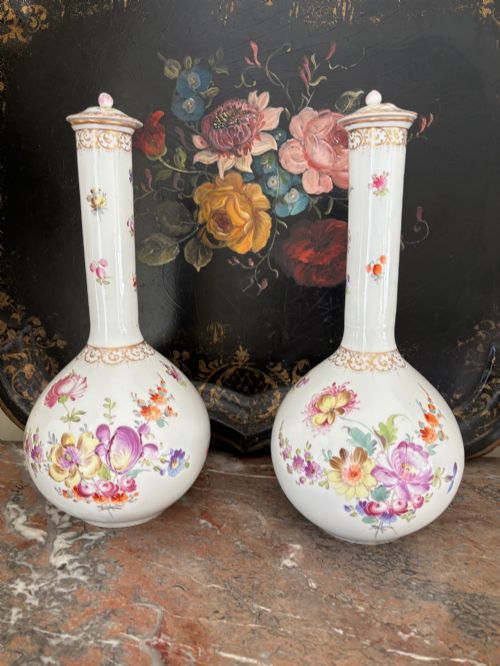
Buyers frequently encounter compact personal items like scent and snuff bottles alongside larger display pieces such as bulbous covered vases and bottle vases. Forms range from utilitarian scent flasks fitted with stoppers to elaborate figural containers representing specific cultural motifs and historical scenes.
The origins of these vessels vary from European porcelain houses to Chinese imperial kilns and Japanese kilns, bringing together differing traditions of throwing, moulding, and glazing. Each piece demonstrates the specific decorative vocabulary of its maker and period, whether through Chinoiserie patterns, floral encrustations, or classical figural panels.
Materials and technique
Potters formed these pieces using hard-paste porcelain and parian ware, shaping the clay through throwing on the wheel or pressing into moulds to achieve bulbous bodies, fluted necks, and slender spouts. Once shaped, the vessels received transparent or coloured glazes, including celadon and bleu de roi grounds, before undergoing high-temperature firing.
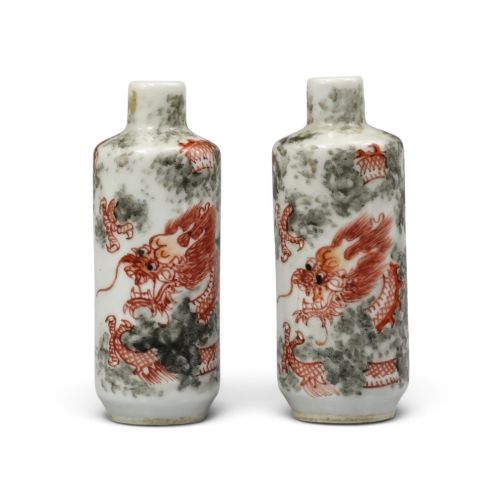
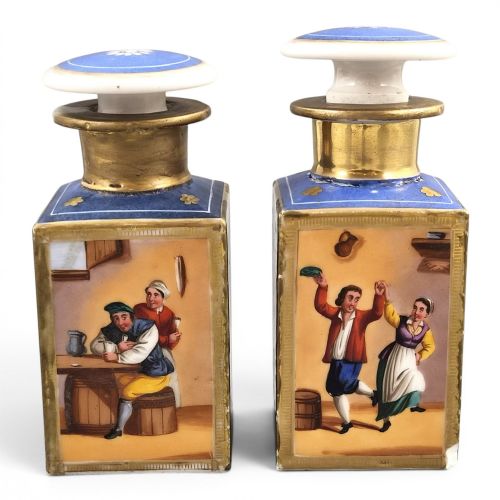
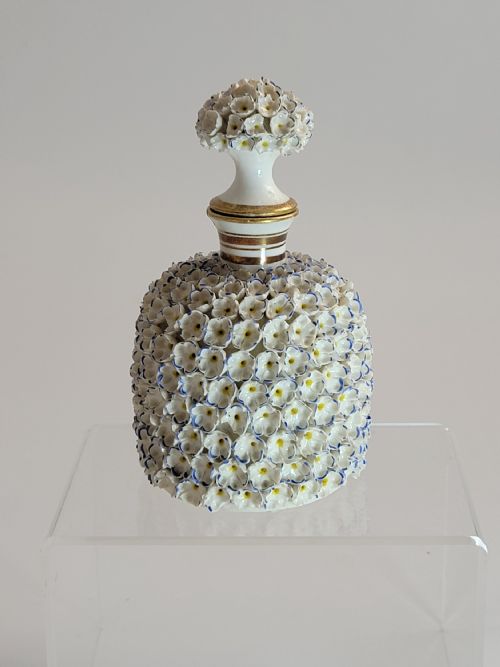
Decoration relied on meticulous hand painting using enamel colours, iron-red pigments, and applied gold leaf or gilding to highlight raised motifs. Artisans frequently integrated delicate three-dimensional elements such as flower encrustations or figural scenes directly onto the glazed surface.
Listings feature 19th century porcelain bottles from English, French, and Asian makers, encompassing materials from parian ware to hard-paste porcelain and gold leaf.
What separates the finest examples
Quality rests upon the precision of the hand-painted brushwork and the clarity of the enamel colours, where crisp lines and expressive figural details distinguish master workshops from standard production pieces. The crispness of moulded relief work and the successful execution of challenging glaze grounds further separate exceptional vessels from ordinary items.
The preservation of original stoppers, covers, and delicate applied elements like floral encrustations influences the integrity of a piece. Finer examples maintain the original gilding and vibrant enamel tones without excessive rubbing or restoration.
Sitzendorf·Jacob Petit·Stevenson and Hancock·Royal Worcester·Flight Barr and Barr·Minton
The 19th Century Porcelain Bottle Glossary
- Famille rose
- A major palette of Chinese ceramic glazes introduced in the Qing Dynasty, characterised by opaque pink enamels. It allowed for nuanced shading in floral and figural depictions.
- Parian ware
- A type of fine biscuit porcelain developed in the nineteenth century to imitate marble. It has a smooth, unglazed surface suited to sculptural figures and scent bottles.
- Bleu de roi
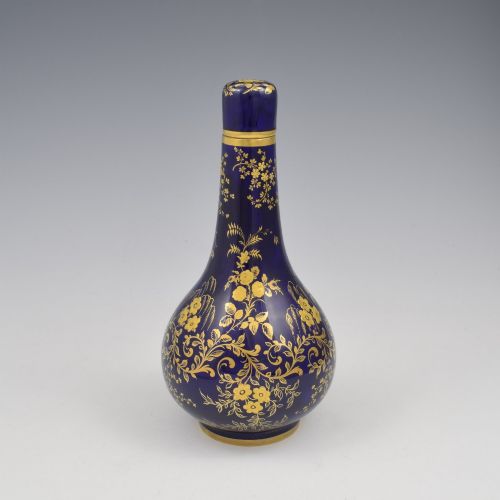
- A deep, rich cobalt blue glaze utilised extensively by European porcelain manufacturers. It often serves as a dramatic ground for gilt decoration.
- Imari
- A style of Japanese export porcelain featuring underglaze blue combined with iron-red, gold, and secondary colours. This aesthetic influenced various European factories.
- Rose water sprinkler
- A vessel with a bulbous body and a long, narrow neck designed for dispensing perfumed water. They often appear in Regency and nineteenth-century ceramic collections.
19th Century Porcelain Bottle: Frequently Asked Questions
How were perfume bottles used?
Nineteenth-century perfume and scent bottles held liquid fragrances for personal grooming and social calls. They were often carried in reticules or displayed on dressing tables.
Many examples feature tight-fitting stoppers or screw caps to prevent evaporation of the precious oils inside.
How do I date a porcelain bottle?
Dating relies upon factory marks, stylistic indicators, and the specific material composition of the body. Examining the application of the glaze and gilding also helps place a piece within a specific decade.
Comparing the form to documented examples from makers like Jacob Petit or Flight, Barr and Barr provides a reliable chronological framework.
What is parian ware?
Parian ware is an unglazed porcelain resembling white marble that gained popularity during the Victorian era. It was frequently cast into sculptural forms, scent bottles, and decorative vases.
The material allowed manufacturers to achieve fine detail without relying on colourful enamel palettes.