

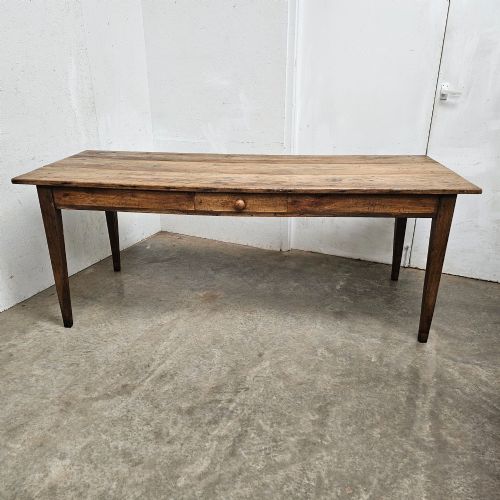
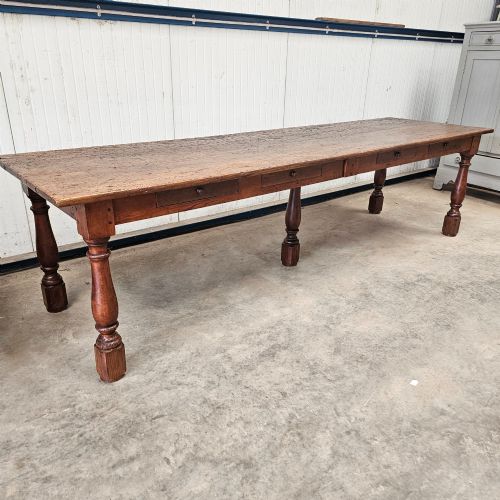
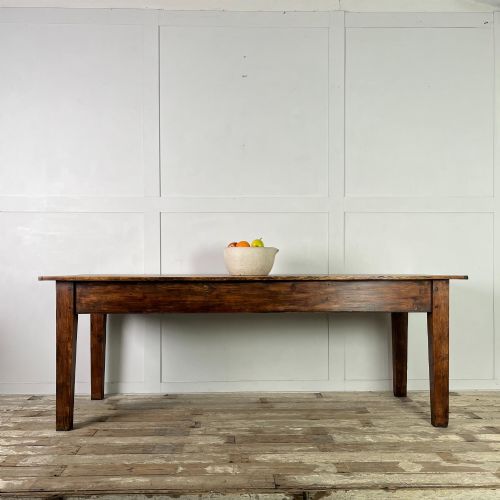
19th Century Pine Dining Table
A 19th century pine dining table brings honest utility and enduring character to a room.
19th Century Pine Dining Table
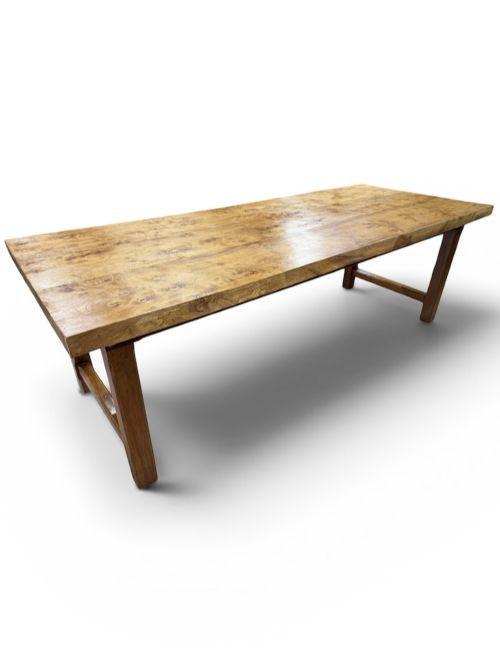
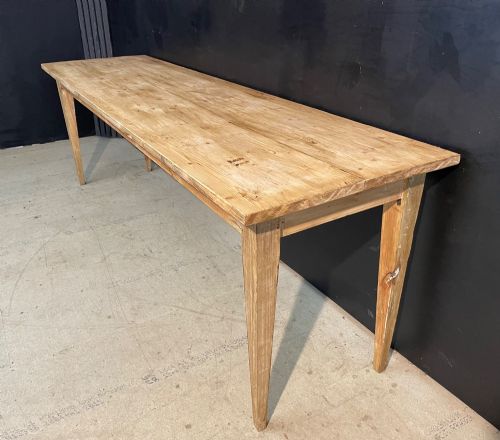
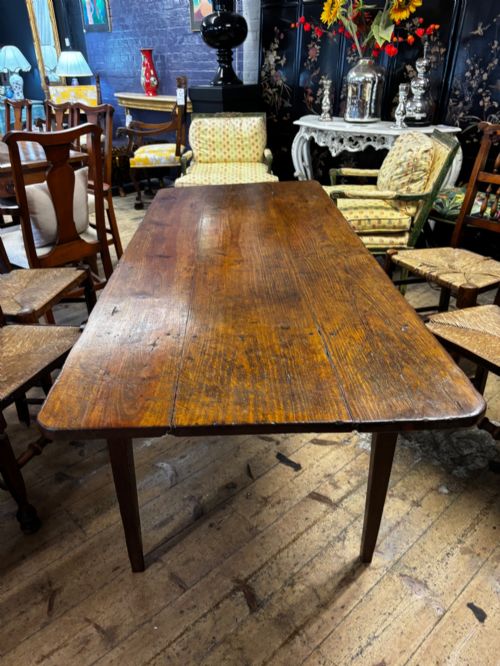
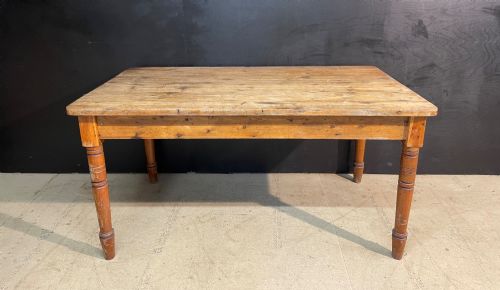
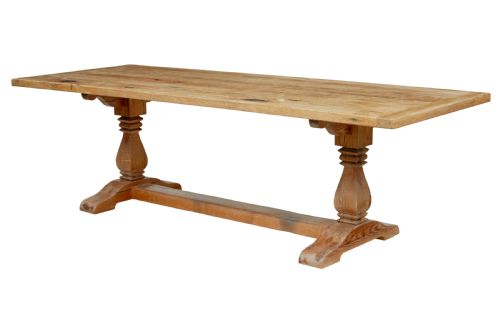
A 19th century pine dining table represents the hardworking domestic furniture of the Victorian and earlier country eras. Buyers encounter numerous regional variations, from English farmhouse formats to French provincial and Swedish trestle designs.
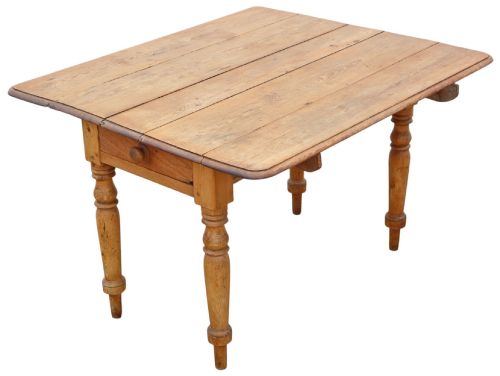
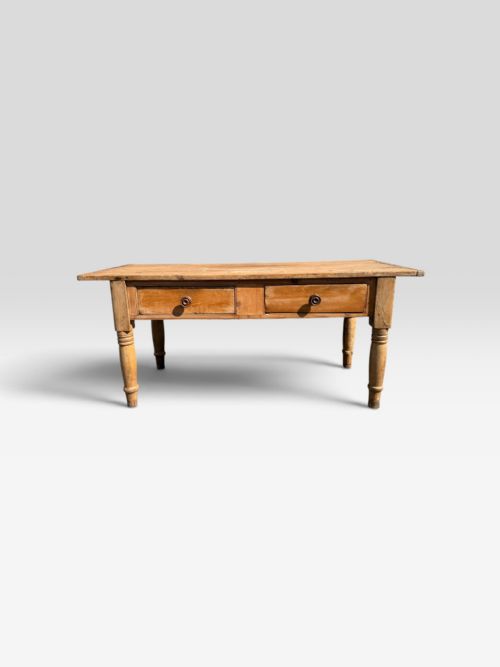
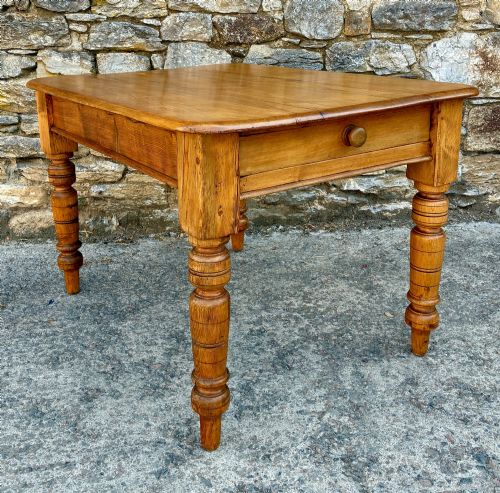
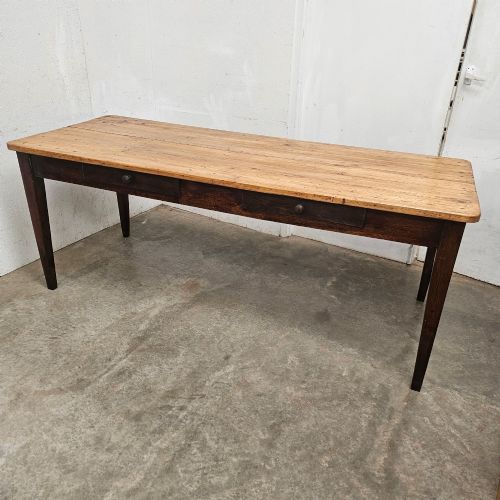
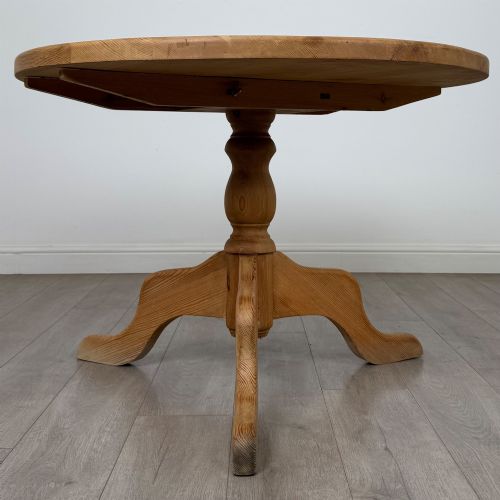
Most examples originate from working environments like kitchens, taverns, and farmhouses rather than formal drawing rooms. They typically arrive as rectangular dining tables, preparation tables, or drop-leaf tables equipped with practical drawers.
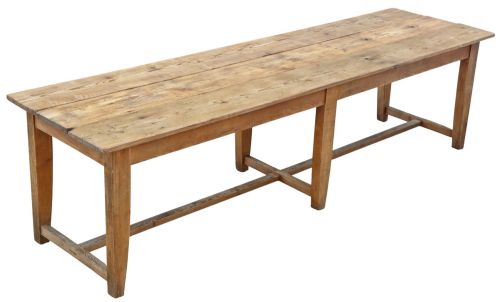
The aesthetic relies on simplicity, sturdy timber frames, and signs of long use. Their proportions range from compact tavern tables to large refectory boards designed for communal dining.
How they were made
Makers utilised softwoods primarily, pairing standard pine and heavy pitch pine with structural hardwoods like oak, fruitwood, and elm for strength. Tables often combined these timbers, using pine for tops or aprons while framing bases in sturdier woods.
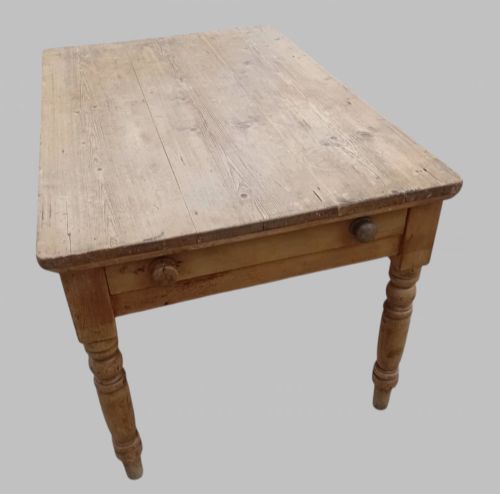
Construction techniques prioritised durability over hidden joints, employing solid timber planks, sturdy trestle supports, X-frames, and occasionally folding mechanisms. Many surfaces retain traces of early paint finishes or were scrubbed clean during daily kitchen use.
Several tables arrive with multiple deep drawers designed for storing generations of kitchen secrets.
What varies in quality
The proportion and scale dictate much of the desirability, with longer refectory formats and substantial timber thickness commanding attention. Original unpainted surfaces, untouched scrub-tops, and intact historical paint layers elevate an example above standard utility pieces.
Joinery execution and mechanical elements such as functional drawers, folding drop-leaves, or wind-out mechanisms show the original maker's skill. Integration of secondary woods like oak or fruitwood often indicates a higher grade of regional construction.
Heals
The 19th Century Pine Dining Table Glossary
- Scrub-top
- A wooden table top designed for frequent washing with water and sand to keep the timber pale and clean. This process leaves the grain raised and weathered.
- Refectory table
- A long, narrow dining table traditionally built for communal meals in large halls. They employ heavy timber legs connected by low stretchers for stability.
- Trestle table
- A format featuring a horizontal beam supported by two vertical feet or frames at either end. This design allows maximum legroom along the length of the board.
- Pitch pine
- A dense, resinous variety of pine known for its durability and prominent grain patterns. It provided superior strength for heavy-use kitchen and serving tables.
- Drop-leaf
- A table configuration with hinged flaps on one or both sides that fold down to save space. Folding brackets support the leaves when raised for dining.
19th Century Pine Dining Table: Frequently Asked Questions
How do I clean a pine table?
Wash the timber gently with warm soapy water and a soft cloth, avoiding harsh chemicals that strip the dry finish. Dry the surface thoroughly immediately afterwards.
Apply a clear beeswax periodically to nourish the dry wood and protect against spills. Avoid placing hot dishes directly onto historic surfaces.
Were these tables used in kitchens?
Many examples served heavy domestic duties in farmhouses, sculleries, and taverns where food preparation took place daily. Drawers often held cutlery, linens, or baking tools.
Their robust construction was built to withstand constant kneading of dough and heavy chopping. Scrubbed tops reflect this intensive daily cleaning history.
Will a drop-leaf table seat guests?
Drop-leaf formats provide flexible seating by folding down when not in use and extending outward for meals. The drop-leaf mechanisms support additional diners comfortably.
Review the specific length and leg placement to ensure chairs fit underneath without obstruction. Trestle and X-frame variations offer particular advantages for legroom.