


19th Century Paraffin Lighting
These 19th century paraffin lighting pieces bring period warmth and practical illumination to a room, spanning table lamps, floor lamps, and oil lamps.
19th Century Paraffin Lighting
When you search for 19th century paraffin lighting, you encounter functional oil lamps designed to burn paraffin, commonly configured as table lamps and floor lamps. These pieces date from the Victorian era, spanning decades from the mid nineteenth century up to nineteen hundred.
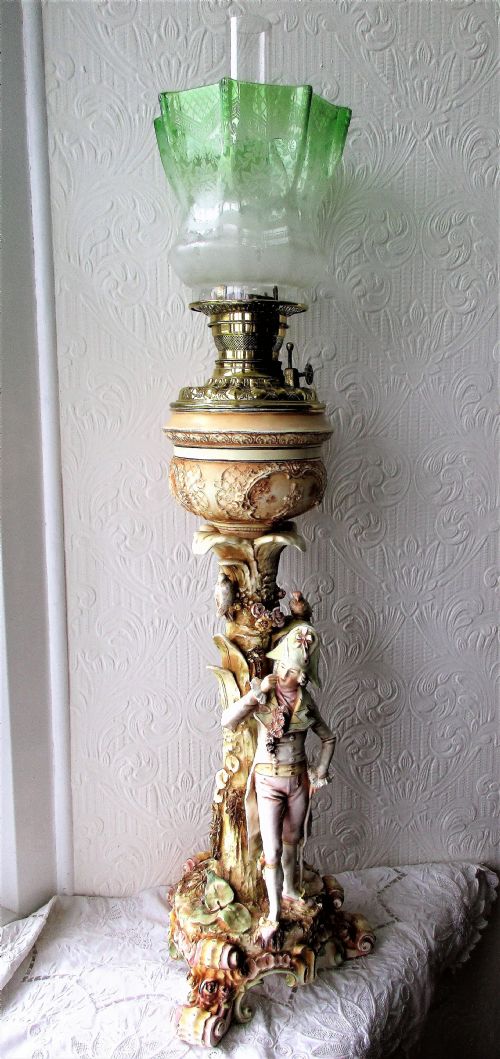
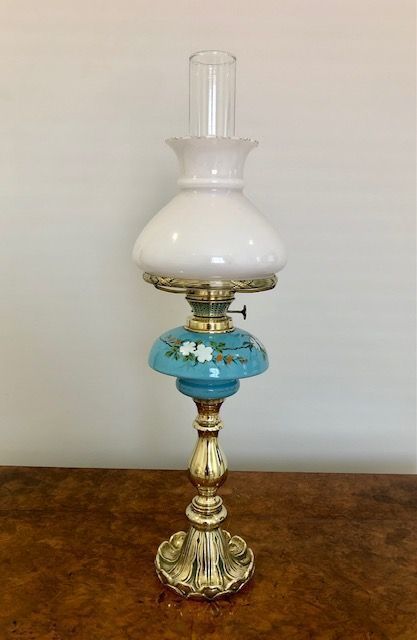
The selection here encompasses diverse forms, from brass and glass table lights to porcelain figural designs and tall standard lamps. You meet English, French, and Chinese export pieces reflecting Victorian classical revival, rococo revival, and Napoleon III styles.
How they were made
Makers utilised cast and embossed brass, gilt brass, and ormolu alongside blown and moulded glass, including cranberry, ruby, opaline, and satin varieties. These metal and glass components formed sturdy reservoirs and elegant stems designed to support burners and shades safely.
Porcelain and faience bodies frequently appeared, painted with floral motifs or moulded into figural shapes such as owls, cherubs, and animals. Metal fittings paired with ceramic bases created durable domestic lighting fixtures finished with decorative shades.
Listings feature 19th century lighting spanning brass, porcelain, and cranberry glass across Victorian, French, and Chinese export styles.
What varies in quality
The standard of 19th century paraffin lighting depends heavily on the refinement of the metalwork, the depth of glass colour, and the artistic execution of any ceramic figures. Heavier cast brass bases and finely hand painted porcelain display superior craftsmanship compared to simpler moulded alternatives.
The presence of matching elements, original tinted or crystal glass shades, and well preserved gilding or silver plating elevates an object. Superior examples combine robust mechanical construction with balanced proportions and intact decorative themes.
Wild And Wessel·Meissen Porcelain
The 19th Century Paraffin Lighting Glossary
- Paraffin lamp
- A domestic lighting device that burns paraffin oil through a wick to produce light. These lamps became widespread during the Victorian period.
- Peg lamp
- A small oil lamp featuring a tapered lower section or peg designed to fit directly into the top socket of a candlestick or a dedicated base.
- Standard lamp
- A tall floor lamp intended to stand directly on the floor rather than on a table or sideboard.
- Cranberry glass
- A rich pink or red transparent glass produced by adding gold chloride to the molten glass batch. It was widely utilised for Victorian lamp reservoirs and shades.
- Ormolu
- Gilded bronze mounts and decorative elements applied to furniture and lighting. This technique involved coating metal with a mercury and gold amalgam.
19th Century Paraffin Lighting: Frequently Asked Questions
How do I use a 19th century paraffin lamp today?
Most antique paraffin lamps function primarily as decorative decorative objects or are converted for electricity to ensure domestic safety. Using them with oil requires careful attention to wick condition and fuel management.
If retained for burning paraffin, ensure the reservoir and burner mechanism remain entirely sound and free from leaks before lighting.
Where were these lamps placed in Victorian homes?
Table lamps typically sat on central parlour tables, sideboards, or desks to provide task and ambient illumination during evening hours. Floor standing standard lamps occupied corners of drawing rooms where extra height was required.
Smaller peg lamps rested in existing candlesticks, offering flexibility in placement across different rooms of the house.
How do I tell a Victorian lamp from a later copy?
Examine the construction methods, materials, and wear patterns on the metal base and glass reservoir. Nineteenth century pieces typically exhibit heavier cast brass components and hand finished details rather than modern stamped metal.
Maker marks, screw threads appropriate to the period, and the weight of the glass offer further clues to authentic nineteenth century manufacture.
What styles are common in 19th century lighting?
Victorian classical revival, rococo revival, and Napoleon III designs dominate this category, alongside Chinese export porcelain pieces tailored for European tastes. These styles reflect prevailing nineteenth century interior decoration trends.
Forming pairings or incorporating figural elements like cherubs and animals was also popular among makers producing high status lighting.