


19th Century Ottoman Box
These 19th century ottoman box designs offer functional storage and traditional seating, bringing period character and upholstery to any interior.
19th Century Ottoman Box
When you search for a 19th century ottoman box, you encounter a versatile category spanning trunks, storage chests, and upholstered seating. These pieces serve as blanket boxes, piano stools, and daybeds, combining compartment storage with padded tops.
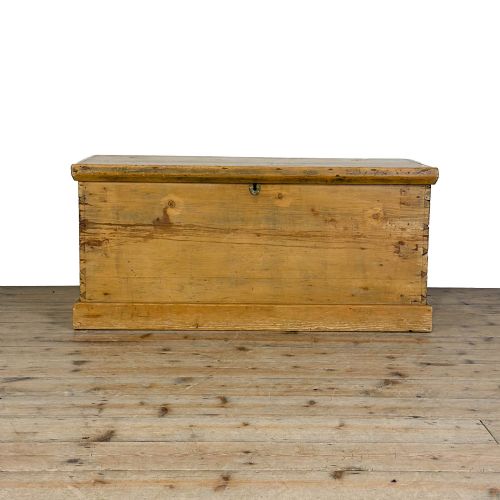
The versions most common on this page include Victorian and Regency examples fashioned from timber frames with fabric or leather upholstery. You will find items ranging from rustic pine blanket chests to finely turned mahogany and rosewood piano stools or country house ottomans.
How they were made
Makers constructed the structural carcasses of these pieces from solid woods such as mahogany, rosewood, walnut, birch, and pine. Iron hardware, brass fittings, and working locks frequently reinforced the storage chests and trunks.
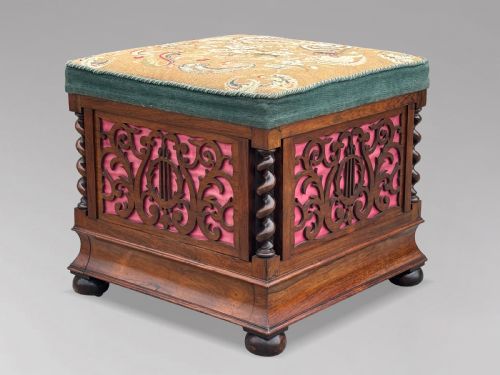
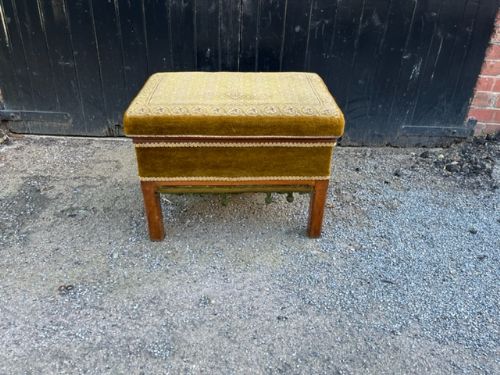
Upholstered surfaces relied on traditional padding finished with fabrics including velvet, leather, and gros-point needlework. Some later examples incorporate decorative elements like Liberty fabric or lions paw feet.
Certain piano stools hide their musical past beneath needlework.
What varies in quality
The distinction between standard utility items and finer pieces lies in the selection of timber and the sophistication of the joinery. Dense hardwoods like rosewood and mahogany, combined with concave shapes or waisted forms, indicate higher workshop ambition.
Upholstery detail and decorative flourishes also separate the grades. Original gros-point needlework tops, carved feet, and specialised textiles set apart the country house pieces from simpler pine storage trunks.
The 19th Century Ottoman Box Glossary
- Ottoman
- A padded upholstered seat or bench, often featuring a hinged lid that opens to reveal storage space inside. These items functioned historically as seating and blanket boxes.
- Gros-point
- A heavy, counted-thread embroidery stitch used on canvas, frequently found providing durable decorative needlework tops on period stools. It creates a textured, hard-wearing surface.
- Mule chest
- A traditional storage chest featuring a drawer or drawers beneath the main lifting compartment. This form bridges the design gap between simple trunks and chests of drawers.
- Waisted
- A furniture profile that curves inwards towards the centre, creating a narrower section in the middle. This shaping appears on certain refined stool frames.
19th Century Ottoman Box: Frequently Asked Questions
What is a 19th century ottoman box?
A 19th century ottoman box is a piece of furniture combining a compartment for storage with an upholstered lid for seating. These items functioned as blanket boxes, piano stools, or daybeds in period homes.
They bridge the gap between practical household storage and comfortable domestic seating. The category encompasses both rustic pine trunks and refined mahogany or rosewood frames.
How were these boxes used originally?
Originally, these pieces served multiple domestic purposes depending on their specific form and room placement. Upholstered versions provided seating in bedrooms or drawing rooms while concealing blankets or linens.
Stool variations specifically accommodated musicians near pianos or served as footrests. Storage chests and trunks held household textiles and personal belongings.
What woods are typical for these pieces?
Cabinet makers utilised a variety of timbers depending on the intended function and social setting of the furniture. Finer examples frequently feature dense hardwoods like mahogany, rosewood, and walnut.
Practical storage trunks and country items were typically constructed from solid pine or birch. Iron and brass were also employed for structural reinforcement and handles.