



19th Century Oak Shelving
These pieces of 19th century oak shelving bring warmth and utility to a room through sturdy timber and time-honoured joinery.
19th Century Oak Shelving
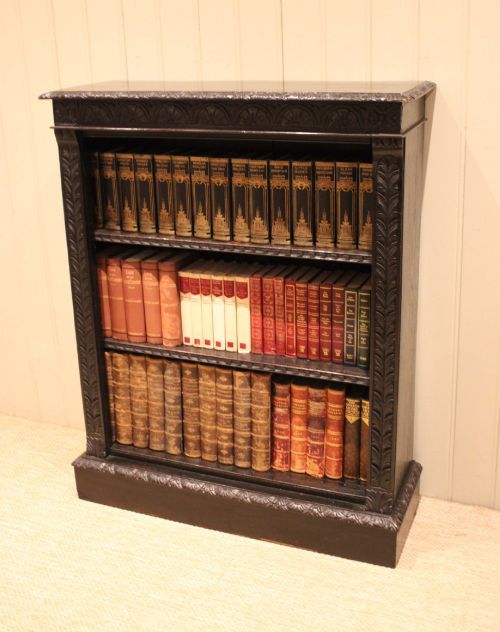
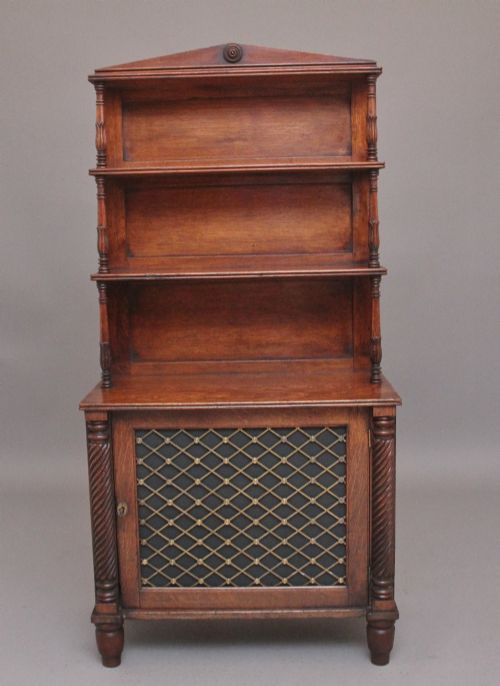
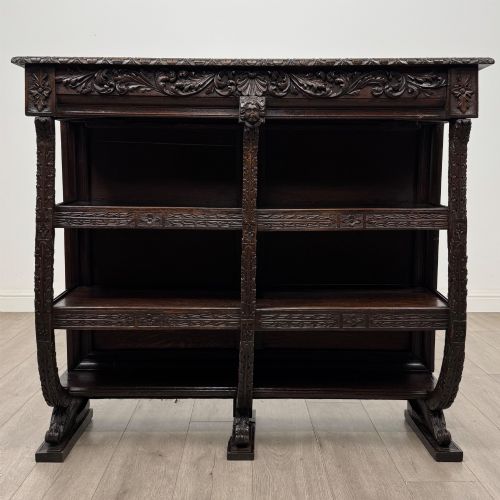
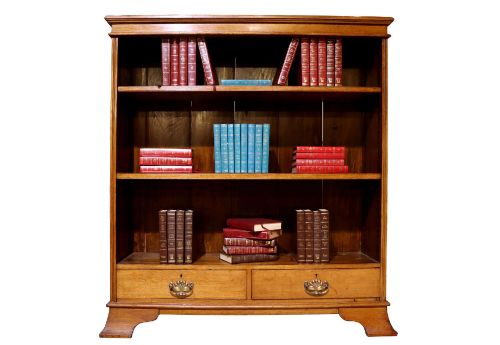
When you search for 19th century oak shelving, you encounter a robust selection of bookcases, open display shelves, cabinets, and welsh dressers that served practical storage needs in past domestic settings. These items originate predominantly from the Victorian and Regency periods, spanning styles from straightforward country house utility to ornate Gothic Revival and Renaissance Revival designs.
The most common formats on this page are open bookcases and library shelving units, alongside regional variants such as Welsh dressers and French provincial corner cupboards. Timber selection ranges from plain solid oak to pollard oak and multi-wood combinations, occasionally paired with secondary woods like pine, beech, and mahogany.
Makers of the era utilised these various forms to fit both grand libraries and modest parlours, leaving behind pieces that vary from architectural cabinets with glazed doors to simple wall shelves. The overriding character of these objects remains grounded in heavy timber construction and practical compartment organisation.
What varies in quality
The distinction between standard utility items and finer examples rests in the selection of the timber and the ambition of the carving. Superior pieces display carefully chosen pollard oak or rich grain figuring, accompanied by crisp, deep hand-carved ornamentation rather than shallow machine work.
Structural integrity also separates the grades, visible in the weight of the timber, the thickness of the shelving boards, and the sophistication of architectural elements like dental cornices and adjustable shelf mechanisms. Original brass or iron hardware and intact backboards further elevate the standing of a piece.
19th Century Oak Shelving Retail Price Guide 2026
Typical asking prices for 19th century oak shelving among the pieces listed under this phrase on Sellingantiques today, from the lower quarter to the upper quarter. They describe what is for sale here now, not the wider market.
Materials extend beyond primary oak to include structural and secondary uses of brass, iron, pine, beech, and mahogany.
The 19th Century Oak Shelving Glossary
- Pollard oak
- Timber taken from trees that were cut back close to the trunk to produce a dense, highly figured grain pattern. This decorative wood was frequently utilised for prominent surfaces on Victorian furniture.
- Welsh dresser
- A traditional kitchen and dining room form combining a base of cupboards and drawers with an open plate rack above. These items often feature solid oak construction and regional vernacular details.
- Gothic Revival
- A design movement drawing inspiration from medieval architecture, characterised by pointed arches, trefoils, and heavy carved tracery. This style appears frequently on 19th century bookcases and display cabinets.
- Renaissance Revival
- An eclectic architectural style incorporating classical motifs, symmetry, and robust sculptural details. Pieces in this manner display prominent cornices, columns, and panelled doors.
- Quarter-sawn
- A method of log milling where the timber is cut radially to the growth rings, producing a stable board with distinct figuring. Cabinet makers favoured this cut for surfaces requiring both strength and visual interest.
19th Century Oak Shelving: Frequently Asked Questions
What rooms suit 19th century oak shelving?
These pieces adapt well to studies, living rooms, and kitchens where their substantial timber construction provides both practical storage and a strong visual anchor.
Open bookcases and dressers hold book collections and display ceramics, while smaller cabinets fit domestic corners and hallways.
How do I spot a Gothic Revival piece?
Look for architectural details such as pointed arches, quatrefoils, and heavy carved mouldings that echo medieval stone building traditions.
These decorative elements often appear alongside dark oak timber and brass hardware on Victorian library furniture.
Are the shelves usually adjustable?
Many bookcases and display units from this era feature adjustable shelving systems utilising wooden ratchets or brass strip supports.
This adaptability allowed owners to alter shelf heights for varying book sizes and decorative objects.
How do I care for antique oak?
Maintain the timber by keeping pieces away from direct heat sources and sudden humidity changes that cause wood to split.
Apply a microcrystalline wax periodically to nourish the surface and preserve the natural sheen of the oak.