

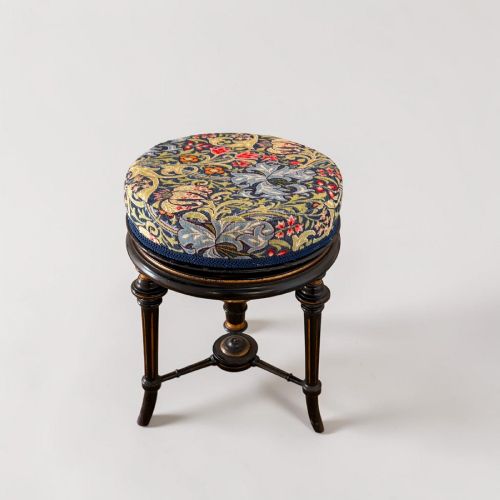
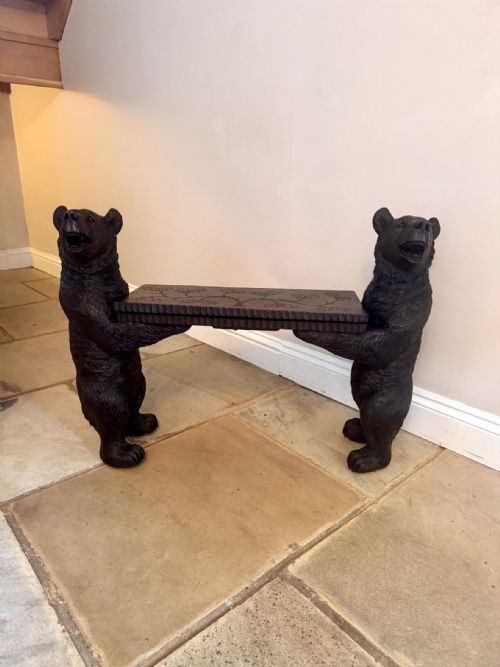
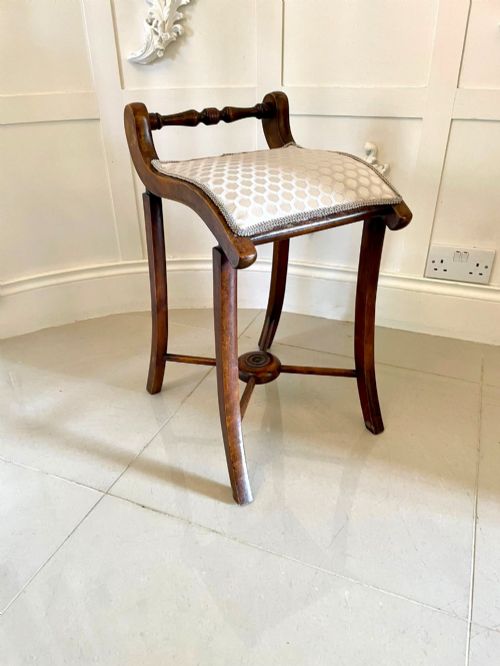
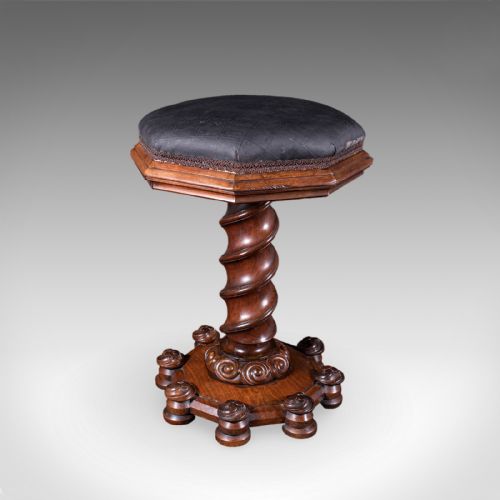
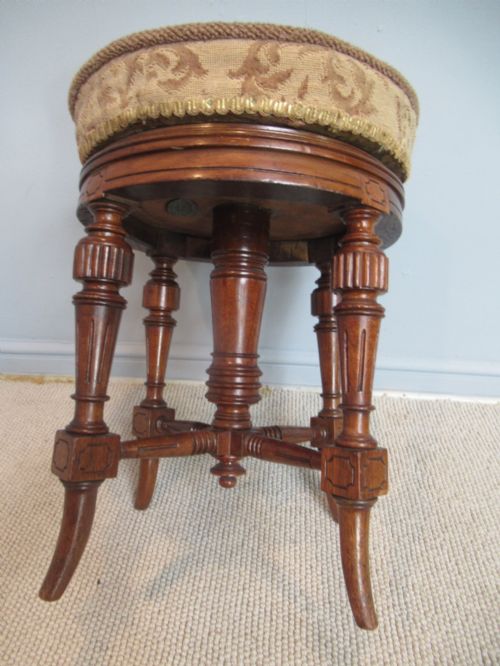
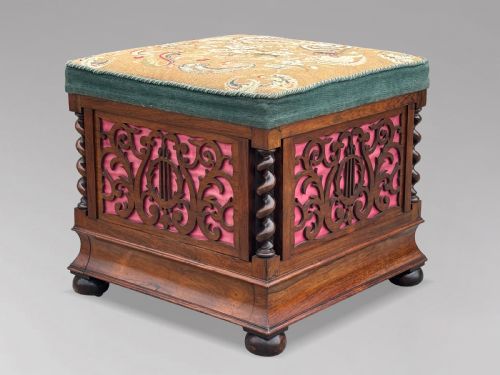


19th Century Music Stool
A 19th century music stool brings the mechanical ingenuity and timber richness of the period directly to the keyboard or harp.
19th Century Music Stool
A 19th century music stool serves the pianist, organist, or harpist with adjustable seating designed for posture and performance. These pieces appear in forms such as revolving piano stools, swivel chairs, and duet benches.
The most common examples on this page are single-seat rosewood and mahogany piano stools featuring screw mechanisms for height adjustment. Makers designed these seats specifically for domestic parlours and music rooms.
Beyond standard piano stools, the listings include specialised forms like harpist chairs, organist benches, and dressing chairs. Styles span from Regency and William IV through to Victorian and Aesthetic Movement.
How they were made
Cabinet makers built these stools using dense hardwoods such as mahogany, rosewood, and walnut, frequently incorporating brass screw mechanisms to alter the seat height. Some variants add ormolu mounts, brass inlay, or gilt painted highlights to the timber frame.
Upholstery materials range from velvet and leather to tapestry and plain fabric, often secured over a revolving or adjustable top. Specialised forms combine steel and brass framing with timber elements for patented mechanical actions.
19th Century Music Stool Retail Price Guide 2026
Typical asking prices for 19th century music stool among the pieces listed under this phrase on Sellingantiques today, from the lower quarter to the upper quarter. They describe what is for sale here now, not the wider market.
Listings feature rosewood, mahogany, and walnut timbers alongside brass, steel, velvet, leather, and tapestry materials across the 19th century.
What varies in quality
Quality rests in the precision of the mechanical screw action and the solidity of the timber turning or carving. Superior examples maintain smooth rotation and secure height adjustment without play in the central column.
The choice of cabinet timber and the refinement of secondary details like brass inlay or ormolu mounts separate standard production from high-maker execution. Upholstery finish and the preservation of the original wooden frame structure also define the better tier.
Jennens & Bettridge·Charles Nosotti·Holland & Son·JAS Shoolbred & Co London
The 19th Century Music Stool Glossary
- Revolving stool
- A seat with a top that turns on a threaded wooden screw or metal spindle to alter the height. This mechanism allows the player to spin the seat freely.
- Adjustable screw top
- A mechanism using a central threaded shaft operated by turning the seat pad up or down. It provides stable height variation for different players.
- Duet music stool
- A wider bench designed to seat two musicians side by side at a piano. These often incorporate hinged seats opening to reveal sheet music storage.
- Ormolu
- Gilded bronze mounts applied as decorative ornaments to furniture frames. Makers used these cast metal details on Empire-style pieces.
19th Century Music Stool: Frequently Asked Questions
How do I adjust the height on these stools?
Most models use a central wooden or metal screw mechanism hidden beneath the seat pad. Turning the top clockwise or anticlockwise raises or lowers the sitting height.
Some later patented designs incorporate levers or specialised ratchets alongside traditional screw threads to alter the position quickly.
What is the difference between a piano stool and a music chair?
Piano stools typically feature a backless revolving or fixed top designed for unrestricted movement at the keyboard. Music chairs include backrests, sometimes with adjustable or revolving functions to support the spine during longer recitals.
Specialised variants like harpist chairs or organist stools adapt the seating geometry to the specific posture required by the instrument.
How should I care for the timber and upholstery?
Keep the wood conditioned using appropriate wax or polish applied sparingly to preserve the polished surface. Protect delicate fabrics like velvet, leather, or tapestry from direct sunlight to prevent fading.
Period screw mechanisms benefit from occasional light lubrication where metal meets wood to ensure smooth movement without straining the joints.
Can I use a music stool at a modern desk?
Many adjustable revolving stools function effectively as dressing table chairs or desk seating due to their variable height capability. Checking the minimum and maximum height range ensures the seat matches standard table clearances.
The compact footprint of these stools makes them adaptable as accent seating in smaller living spaces.