



19th Century Music Seat
A 19th century music seat offers practical seating for musicians while charting the evolution of domestic performance spaces.
19th Century Music Seat
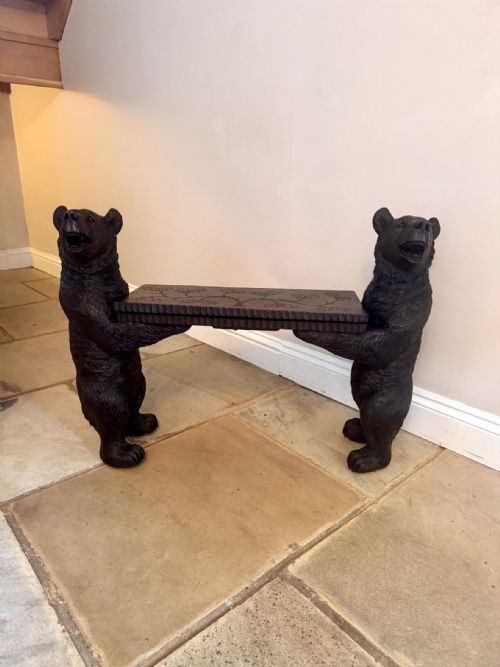
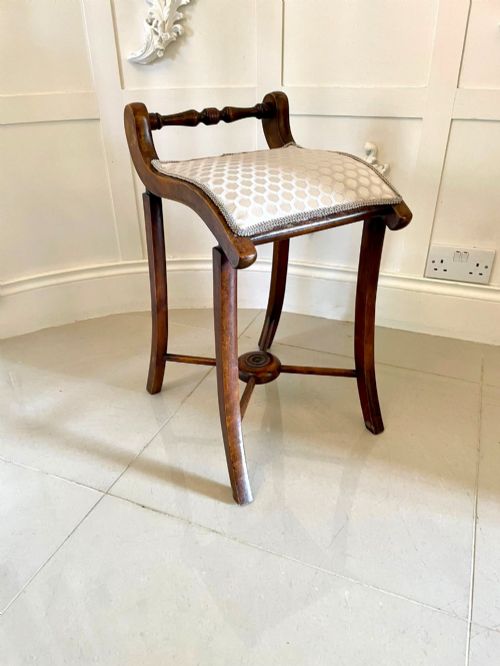
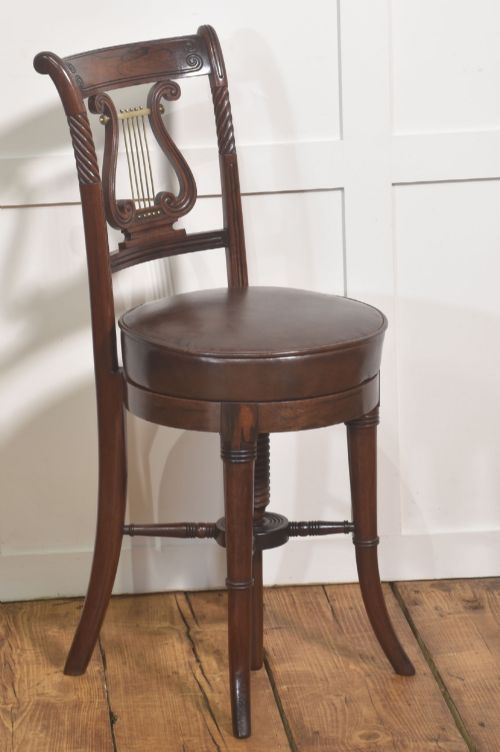
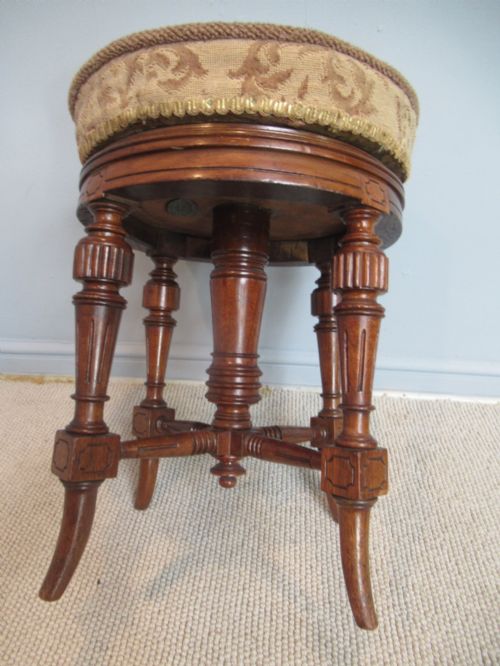
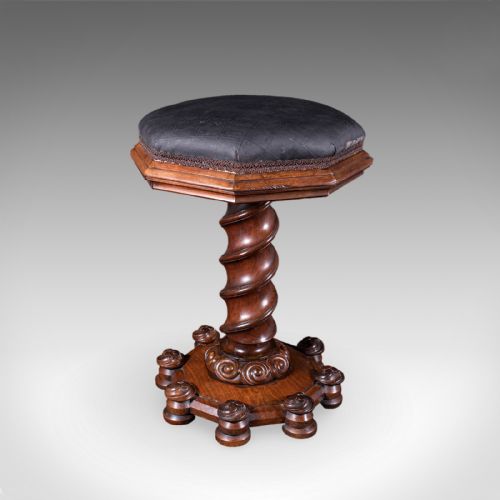
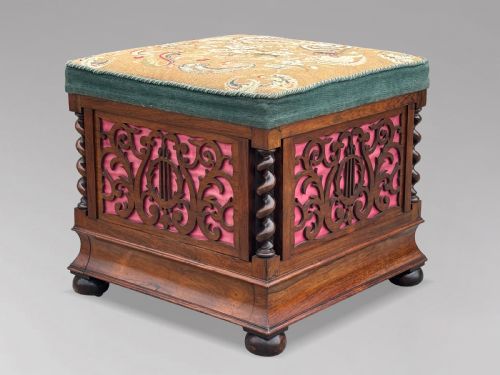
A 19th century music seat encompasses piano stools, revolving stools, and adjustable dressing chairs designed for performers at home. These pieces appear in forms ranging from simple square tops to elaborate revolving models.
The selection includes pieces spanning the Georgian, Regency, William IV, and Victorian periods. Walnut, mahogany, and rosewood dominate the structural woods, often paired with brass mechanisms.
Makers utilised upholstery fabrics such as velvet, leather, and tapestry to finish the seats. Styles stretch from Empire and Neoclassical Revival to Aesthetic Movement and Anglo-Burmese Colonial.
Factors of quality
The sophistication of the mechanical adjustment mechanism dictates much of the utility and standard of the piece. Smooth movement in revolving tops and screw risers reflects superior engineering.
The choice of timber and intricacy of carving or brass inlay distinguish standard workshop output from exceptional commissions. Timber selection ranges from plain mahogany to figured walnut and rosewood.
19th Century Music Seat Retail Price Guide 2026
Typical asking prices for 19th century music seat among the pieces listed under this phrase on Sellingantiques today, from the lower quarter to the upper quarter. They describe what is for sale here now, not the wider market.
Jennens & Bettridge·Charles Nosotti·Holland & Son
The 19th Century Music Seat Glossary
- Revolving stool
- A seat featuring a top that turns on a central screw or spindle to alter the height.
- Adjustable piano stool
- A seating form fitted with a mechanical screw mechanism allowing the player to raise or lower the sitting surface.
- Ormolu
- Gilt bronze mounted onto furniture as a decorative embellishment during the Empire and related styles.
- Marquetry
- Inlaid patterns of wood veneer applied to decorative surfaces on furniture like Swiss musical chairs.
19th Century Music Seat: Frequently Asked Questions
How do I adjust the height?
Many of these seats use a central screw mechanism operated by turning the upholstered top clockwise or anticlockwise.
Other variants employ internal ratchets or side levers to secure the desired playing height.
Were these made exclusively for pianos?
While piano stools form the majority of surviving examples, makers also produced specialised seating for harpists, organists, and general dressing table use.
Different instrumental requirements influenced whether the seat needed a backrest, arms, or a swivelling top.
How do I identify a William IV music seat?
William IV examples typically display robust mahogany or rosewood frames with heavy turned legs and scrolling supports.
These pieces often incorporate concealed or exposed brass screw mechanisms for height adjustment.
Can I use these seats daily?
Most antique music seats remain structurally sound for regular domestic sitting, provided the revolving or screw mechanisms receive gentle treatment.
Checking the stability of the central column ensures safe daily use in a modern room.