



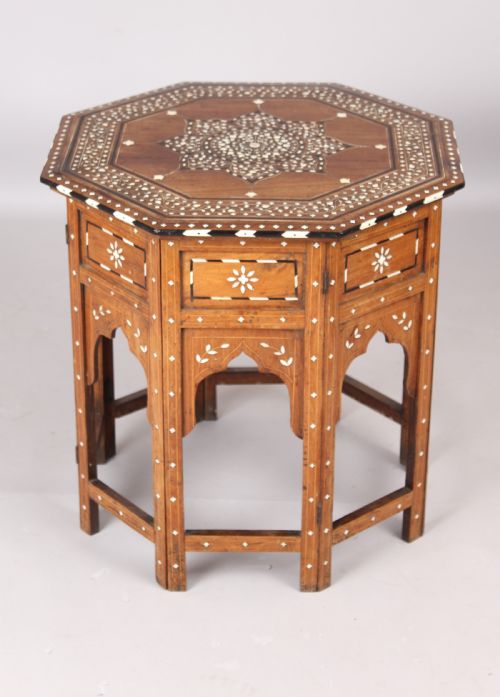


19th Century Moorish Furniture
These 19th century moorish furniture pieces combine intricate geometric inlay and dense carving to bring exotic warmth into European interiors.
19th Century Moorish Furniture
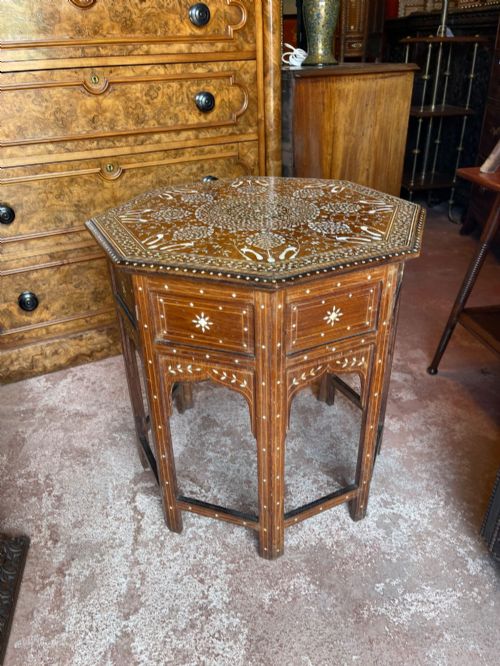
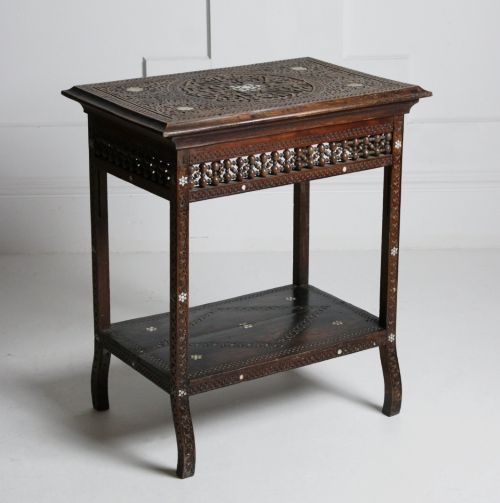
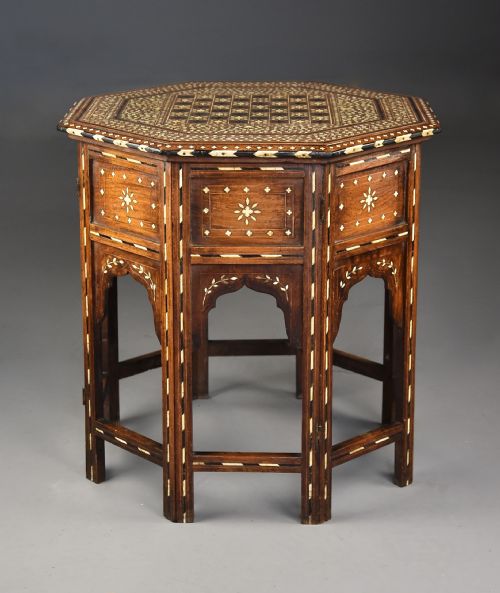
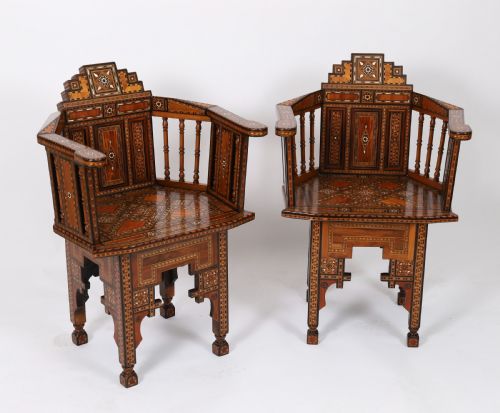
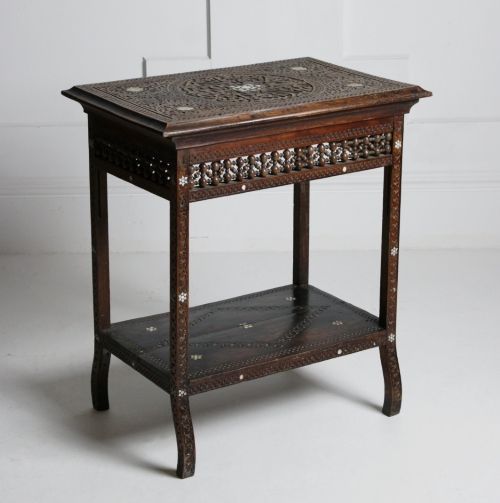
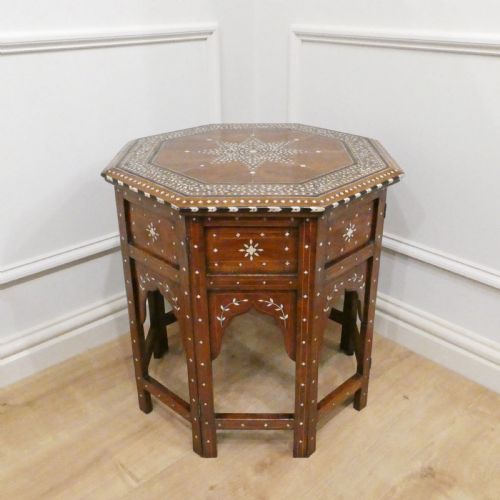
When you search for 19th century moorish furniture, you encounter tables, chairs, cabinets, and stools originating from distinct regional traditions and European revival styles. The selection includes octagonal and hexagonal occasional tables, side tables with multiple tiers, armchairs, folding chairs, and wall cabinets.
The objects span varied cultural influences, encompassing Moorish Revival, Syrian, Levantine, Anglo-Indian, and Mamluk Revival designs. Tables often feature intricate folding bases or fitted cupboards, while seating includes openwork chairs and low stools.
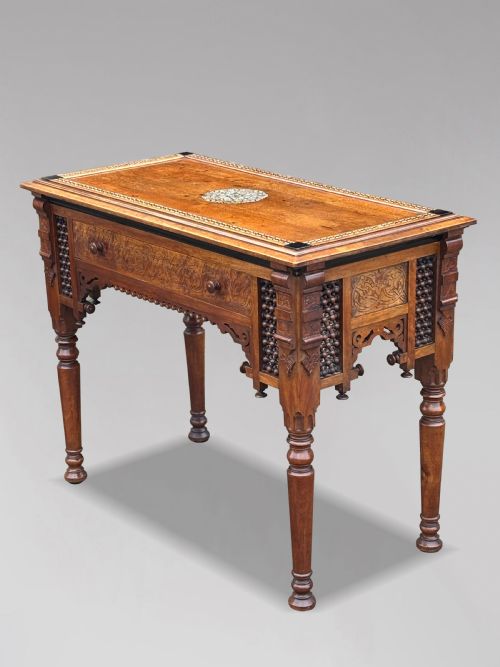
European retail firms also reinterpreted these aesthetics, producing pieces in the Moorish taste or Anglo-Moresque style. You are likely to find items dated across the decades of the nineteenth century, reflecting both direct imports and Western adaptation.
How they were made
Maker-craftsmen built these items using dense tropical hardwoods such as walnut, mahogany, rosewood, and ebony as a foundation. They applied elaborate surface ornament by cutting recesses into the wood and fitting intricate geometric pieces into the body.
Decoration relied heavily on contrasting materials, employing bone, mother-of-pearl, abalone, and white-metal or copper wire. Artisans also utilised delicate piercing and openwork carving techniques to create intricate panels and lattice screens across tables and chairs.
The listings span the nineteenth century, including specific dates from 1860, 1880, 1890, and 1900.
What varies in quality
The standard of an item rests upon the precision of the joinery and the density of the surface ornamentation. Finer examples display tightly fitted inlay elements with minimal filler, where the bone or mother-of-pearl sits flush against the surrounding hardwood.
Richer pieces exhibit depth in the carving and complexity within the geometric strapwork patterns rather than printed or stamped imitation. The choice of base timber also dictates grade, with solid ebony, rosewood, or finely grained walnut elevating the construction above simpler secondary woods.
Liberty & Co·Adriano Brambilla
The 19th Century Moorish Furniture Glossary
- Hoshiarpur
- A style of woodwork originating from the Punjab region of India, characterised by dense inlay of bone and shesham wood in floral and geometric patterns. These pieces were frequently exported to Britain during the nineteenth century.
- Cairoware
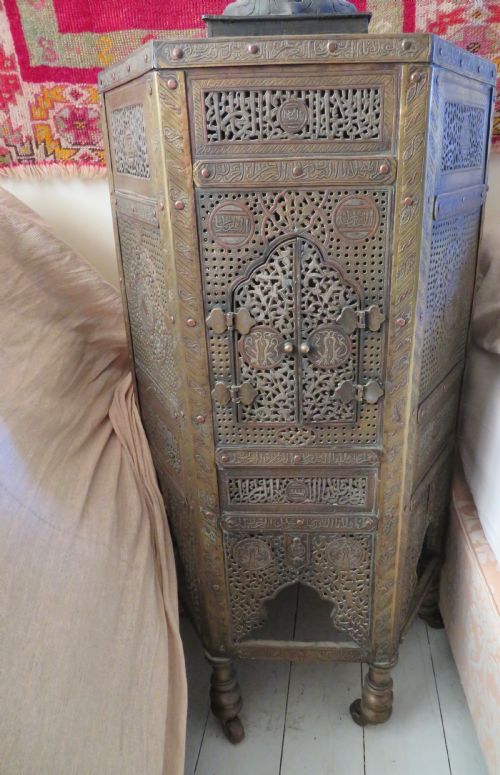
- Metalwork objects from Cairo featuring engraved brass inlaid with silver, copper, and white-metal, often applied to occasional tables and decorative items. The technique reflects traditional Mamluk metalworking revivals.
- Parquetry
- A geometric mosaic of wood pieces used to cover floors or furniture surfaces, creating interlocking patterns. In Levantine and Moorish pieces, this technique incorporates contrasting timber shades.
- Anglo-Moresque
- A nineteenth-century design style combining British domestic furniture forms with Moorish surface decoration and arches. Retailers popularised this fusion for Victorian drawing rooms.
- Mamluk Revival
- A nineteenth-century decorative movement drawing inspiration from the art and architecture of the Mamluk Sultanate. It manifests in furniture through geometric star motifs and heavy brass or bone embellishment.
19th Century Moorish Furniture: Frequently Asked Questions
Where should I place a Moorish side table?
These compact tables function well as occasional surfaces beside armchairs or as display stands for lamps and decorative objects. Their geometric inlay and varied heights make them suitable focal points in living spaces.
Because many examples feature folding bases or hexagonal tops, they adapt easily to smaller rooms or corners where rigid furniture feels heavy. Avoid placing them in direct sunlight to protect the natural bone and mother-of-pearl inlay from drying out.
How do I clean inlaid furniture?
Dust the surfaces regularly with a soft, dry cloth to prevent dirt from settling into the intricate recesses of the carving and bone inlay. Avoid using harsh chemical sprays, liquid polishes, or abrasive cloths that can loosen individual tesserae.
If the wood requires nourishment, apply a sparing amount of microcrystalline wax with a soft brush, buffing gently. This preserves the lustre of both the hardwood and the shell elements without harming the adhesive underneath.
Are these chairs comfortable for daily seating?
Seating from this period prioritises decorative visual impact and intricate openwork over ergonomic cushioning. Many side chairs and armchairs feature low backs and rigid wooden frames without upholstery.
They serve best as occasional chairs rather than primary seating for long periods. Adding a small, custom-made squab cushion can improve comfort while maintaining the visual integrity of the frame.
How can I tell Hoshiarpur work from Syrian pieces?
Hoshiarpur items typically employ shesham wood or similar dense Asian hardwoods combined with intricate all-over bone inlay depicting scrolling foliage and geometric borders. The craftsmanship reflects traditional Indian techniques adapted for British tastes.
Syrian and Levantine pieces often feature contrasting darker timbers such as walnut or ebony, accented with mother-of-pearl and abalone shell forming strict Islamic geometric tessellations. The framing and structural joinery also follow distinct Middle Eastern architectural motifs.