
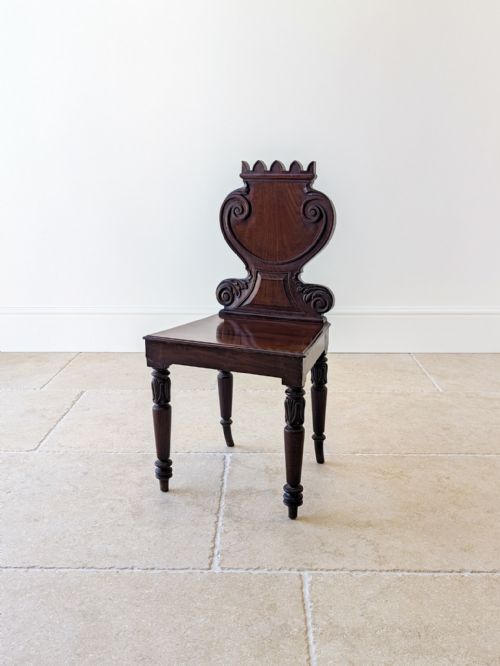
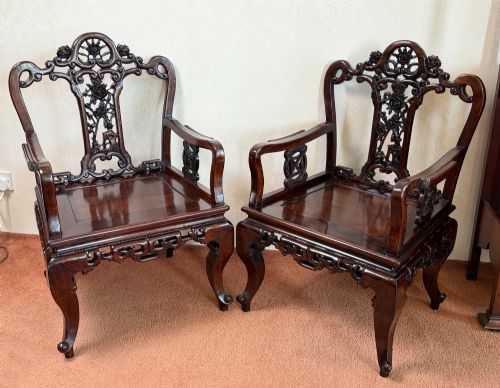


Dark Hardwood Side Chairs
Dark hardwood side chairs bring dense grain and steady structure to a room, ranging from Anglo-Indian rosewood to carved Chinese seating.
Dark Hardwood Side Chairs
How they were made
Cabinet makers utilised dense timbers such as rosewood, mahogany, padouk and walnut, selecting woods that supported intricate hand carving without splintering. These heavy woods were joined using traditional mortise and tenon construction to ensure lasting rigidity.
Surface treatment varied by region, with some workshops applying deep clear polishes to highlight the natural grain, while others employed dark lacquer or intricate surface relief. Upholstered elements relied on traditional stuffing and needlepoint textiles secured to sturdy frames.
Listings feature pieces spanning the nineteenth century through the 1930s, utilising rosewood, mahogany, padouk and walnut.
What varies in quality
Quality rests in the crispness of the hand carving and the selection of the timber. Dense, well-figured rosewood or padouk indicates superior material choice compared to plainer stock.
Construction integrity defines the better pieces, where joinery remains tight and original surface patination is intact. Regional variations in decorative depth separate standard utility seating from finer exhibition examples.
The Dark Hardwood Side Chairs Glossary
- Hardwood
- Timber derived from broad-leaved trees, known for density and durability. These woods resist denting and take a fine polish.
- Padouk
- A heavy, durable tropical hardwood with a distinctive reddish-brown tone. It was frequently utilised in carved colonial furniture.
- Rosewood
- A richly grained, heavy dark timber prized for cabinet work. It accepts detailed carving and deep finishing.
Dark Hardwood Side Chairs: Frequently Asked Questions
How do I use these chairs today?
These chairs work well as single accent pieces in a hallway or bedroom, or gathered around a dining table. Their sturdy construction suits daily use while adding dark wood tones to a room.
Ensure placement avoids direct heat sources to protect the polished timber and any joined elements.
Are these chairs comfortable to sit on?
Many side chairs and hall chairs were designed for upright posture rather than lounging, often featuring solid wooden seats or cane panels. Some examples include needlepoint upholstery for added cushioning.
Consider adding loose pads if you plan to use them for extended seating at a desk or dining table.
How do I identify the period of a chair?
Dating relies on stylistic clues, timber choice and construction methods visible in the frame. Nineteenth-century examples often display deeper hand carving and heavier proportions than later modernist designs.
Examine the underside and joints for tool marks and wear patterns that indicate age.
How should I care for dark hardwood?
Maintain the timber by dusting with a soft, dry cloth and occasionally applying a suitable beeswax polish. Avoid silicone sprays which can damage the historic finish.
Keep the chairs away from direct sunlight and damp environments to prevent wood movement and splitting.