


19th Century Military Furniture
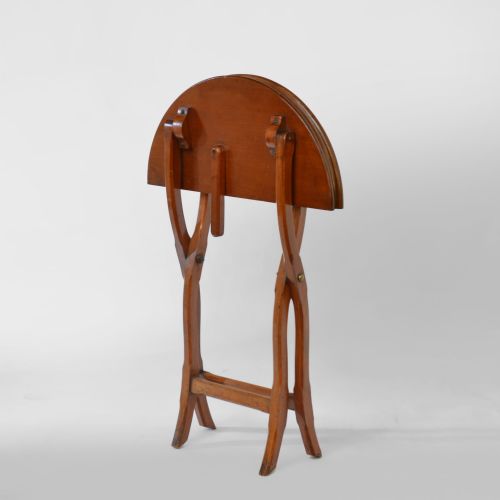
19th century military furniture built for transport offers officers ingenious folding forms and robust timbers that survive today.
19th Century Military Furniture
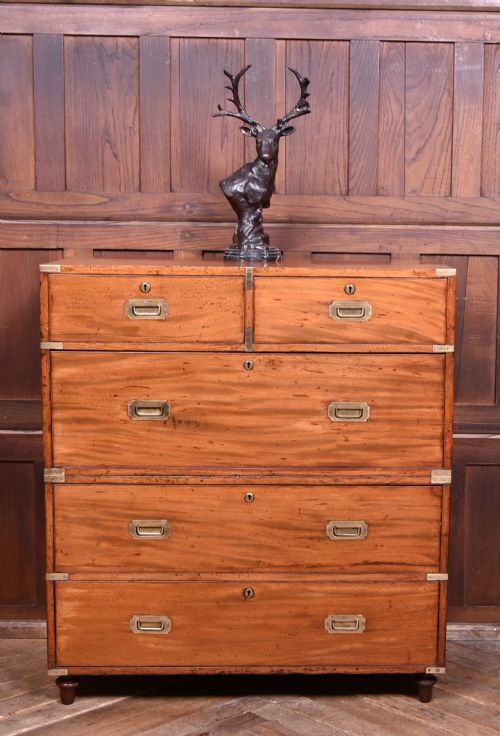
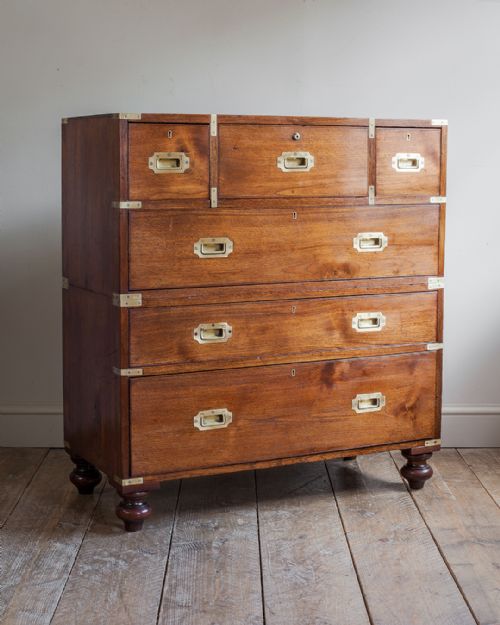
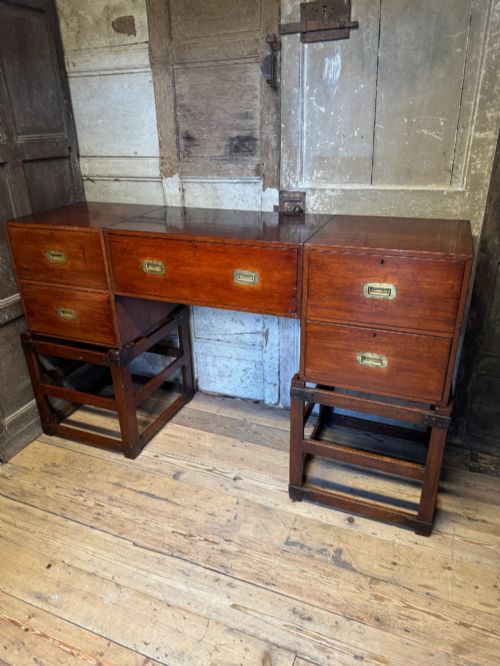
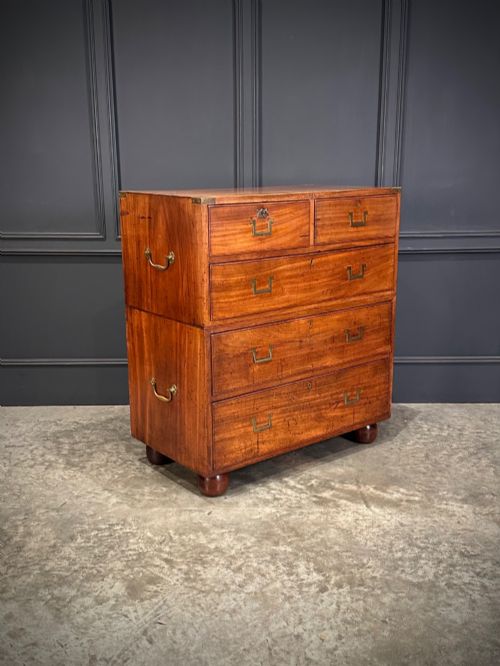
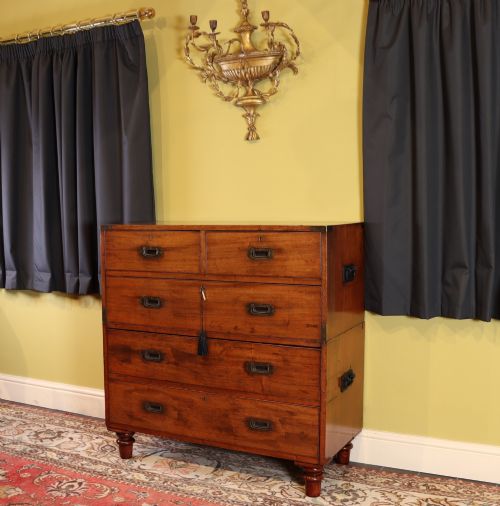
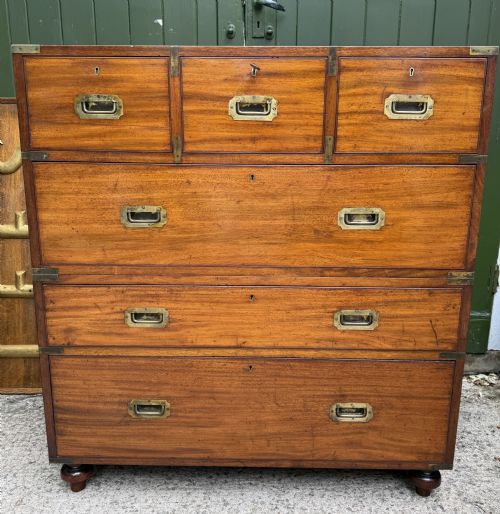
19th century military furniture encompasses portable pieces designed for officers on campaign, featuring clever disassembly mechanisms for travel across the empire. The most frequent form encountered is the two-part chest of drawers, often brass-bound and fitted with recessed handles.
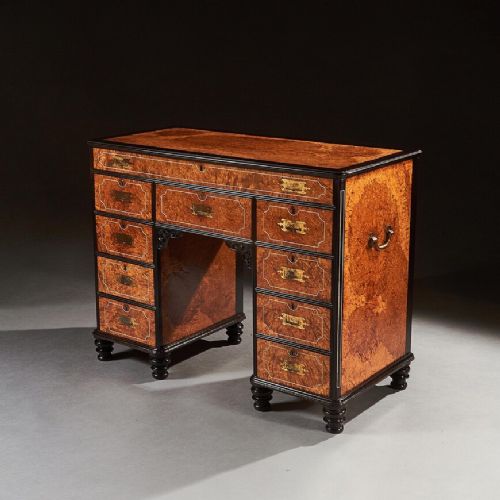
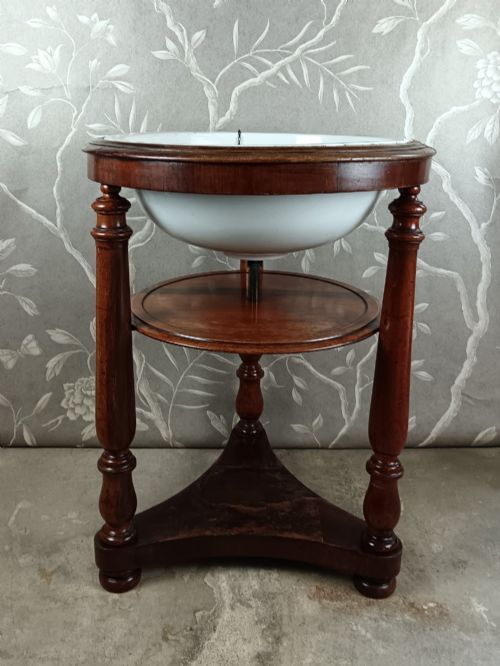
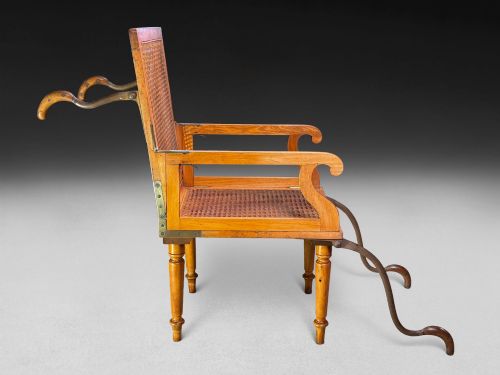
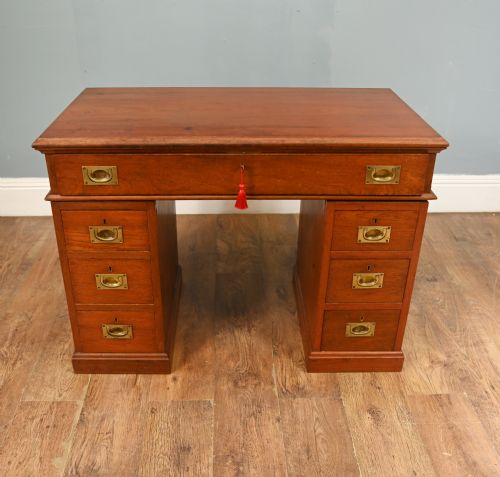
Beyond chests, the selection spans desks, armchairs, washstands, and wardrobes. These items served practical domestic functions in field tents while maintaining the rigid dignity expected by the military hierarchy.
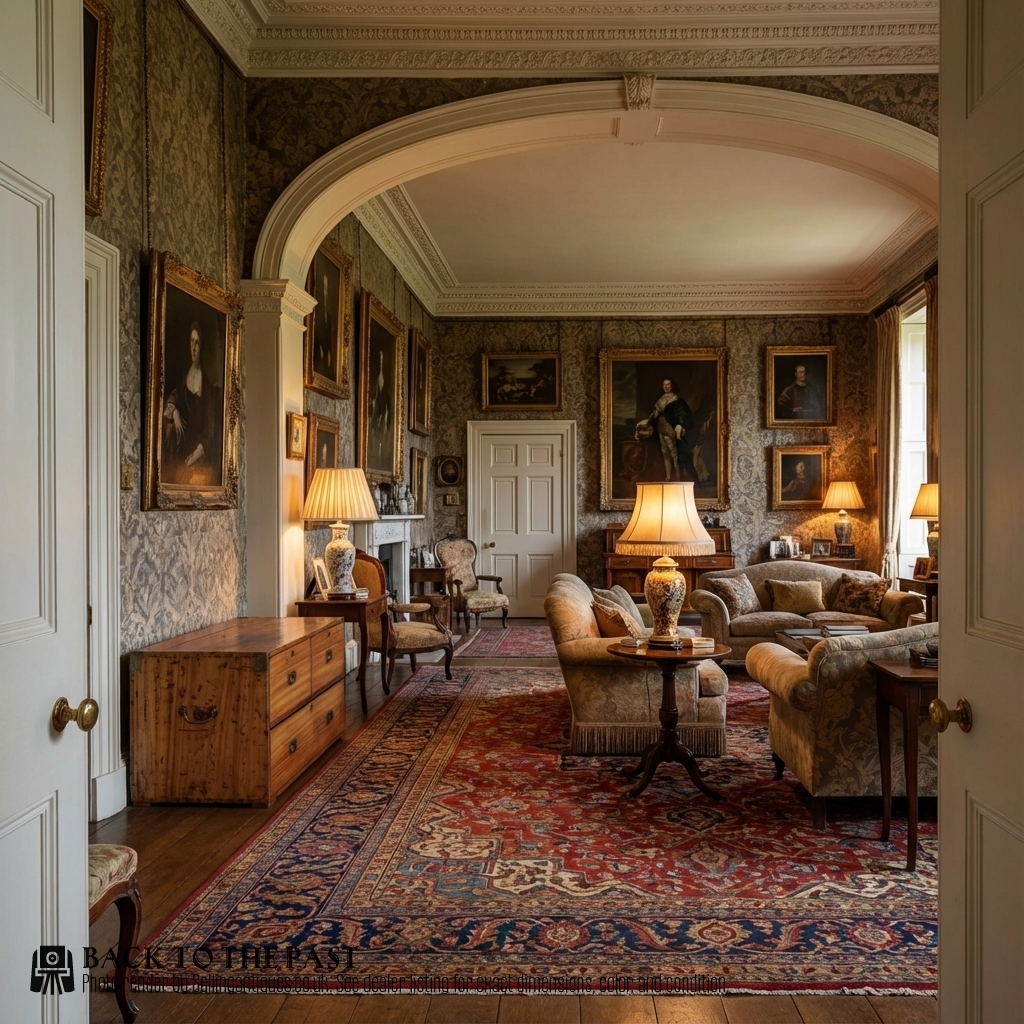
Originating largely from British colonial expansion, pieces surface in domestic British settings after decades of service abroad. Their enduring appeal lies in straightforward utility combined with disciplined cabinet-making.
Materials and Construction
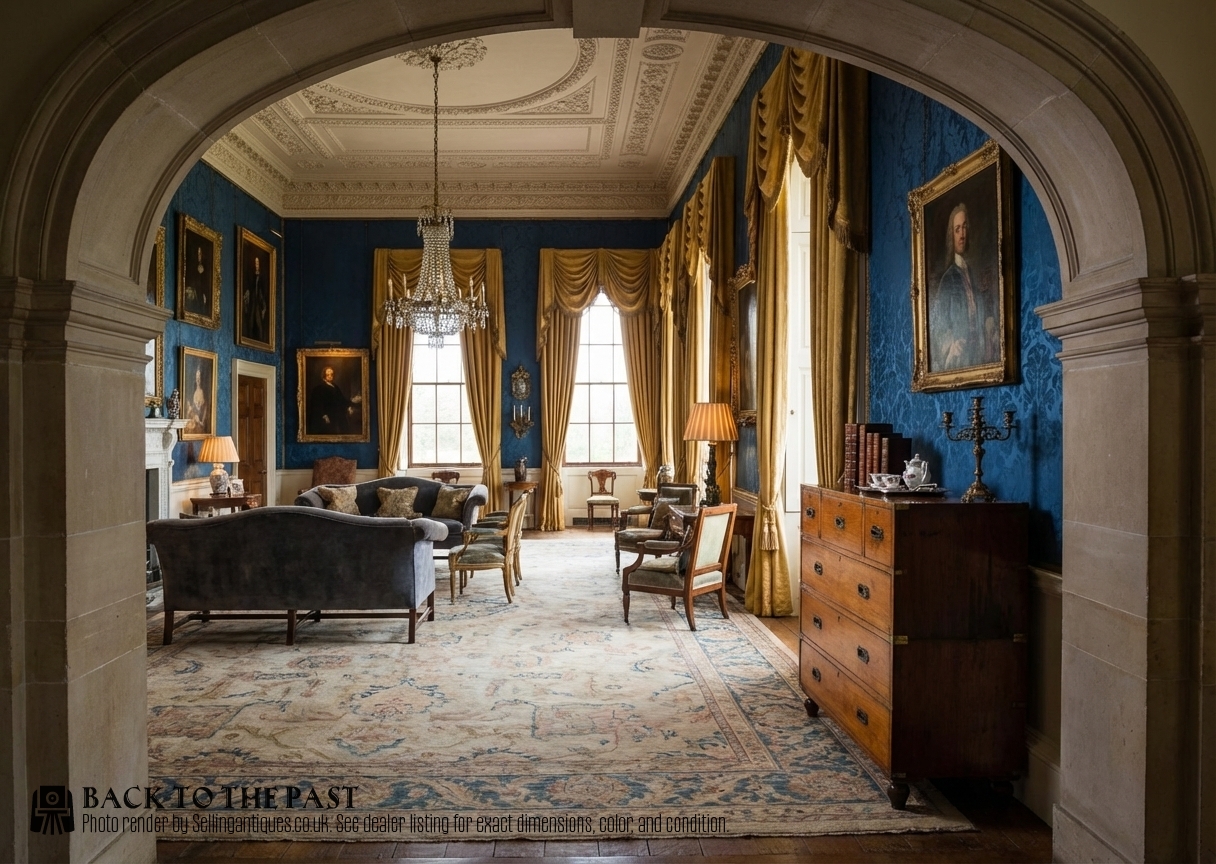
Carpenters constructed these items from dense, durable timbers such as mahogany, teak, camphor wood, and padouk, selected to withstand humidity and rough transport. Camphor wood additionally provided natural insect resistance for clothing storage.
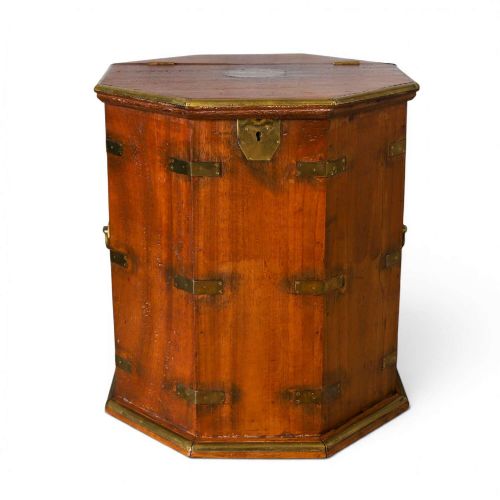
Brass corners, straps, and flush-fitting hardware reinforced vulnerable joints while preventing snagging during packing. Drawers typically split into separate modular sections to lighten individual loads for pack animals and carts.
Listings feature mahogany, camphor wood, teak, and rosewood across forms including desks, armchairs, and washstands.
Assessing Quality
Superior examples demonstrate meticulous precision in joinery, ensuring modular sections lock together securely without wobble. The calibre of the brass hardware and the crispness of the recessed pulls distinguish master workshops from standard regimental output.
Timber selection plays a central role, with well-figured mahogany or solid camphor wood elevating a piece above utility grade. Original internal fittings, such as fitted secretaire drawers with pigeonholes, elevate the integrity of the design.
S. W. Silver & Co. London & Liverpool·J. Herbert McNair
The 19th Century Military Furniture Glossary
- Campaign chest
- A modular chest of drawers built in two or more sections with recessed brass handles and corner brackets. This design allowed officers to transport personal belongings easily during relocations.
- Secretaire chest
- A chest of drawers featuring a pull-out top drawer with a drop-front fitted interior for writing and correspondence. These combined desk functionality with clothing storage in limited spaces.
- Two-part chest
- A case piece constructed as separate upper and lower carcases that stack together. This division halved the weight and bulk for transit.
- Recessed handle
- A pull handle inset flush into the wood surface so it does not project beyond the frame. This prevented snagging during loading and packing.
- Brass-bound
- Furniture reinforced along edges and corners with brass strips and plates. This metalwork absorbed impacts during rough transport.
19th Century Military Furniture: Frequently Asked Questions
Why are campaign chests built in two parts?
Makers divided the carcase into stacked sections so servants and transport teams could manage the weight more easily. This modular approach suited the frequent relocations of military life.
Each section locked securely into the other using internal brass pins or brackets to maintain stability once assembled in a tent or quarters.
How do I care for camphor wood furniture?
Camphor wood benefits from minimal intervention, requiring only a soft dry cloth for dusting and occasional light waxing to maintain the finish. Avoid placing the wood in direct sunlight or near heat sources to prevent drying.
The natural oils within the timber continue to emit a distinct aroma and protect the grain over decades of interior use.
What is the difference between teak and mahogany pieces?
Teak provided exceptional resistance to moisture and humidity, making it the preferred choice for tropical postings in India and naval environments. Its natural oil content gave it a dense, oily feel and a deeper brown tone.
Mahogany offered a finer grain suited to more formal domestic styling upon return to Britain, often displaying rich reddish-brown hues when polished.
Were these pieces used only in tents?
While originally commissioned for field tents and campaign bivouacs, officers continued using this furniture in permanent barracks and upon retiring to English country homes. Their compact proportions made them versatile for smaller rooms.
Many families integrated the modular chests and folding chairs into everyday household decor long after active military service concluded.