
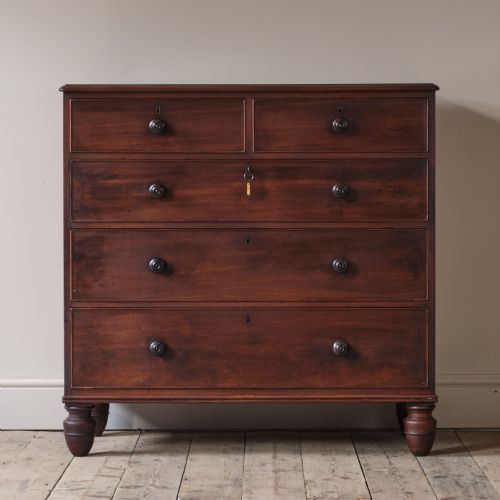

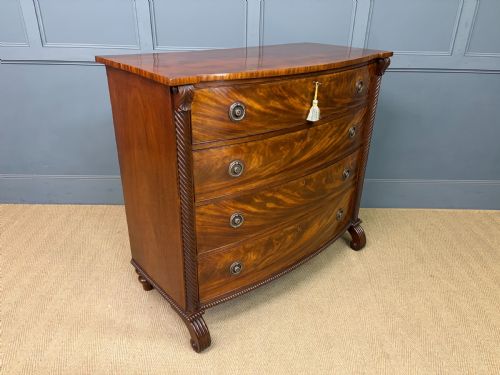
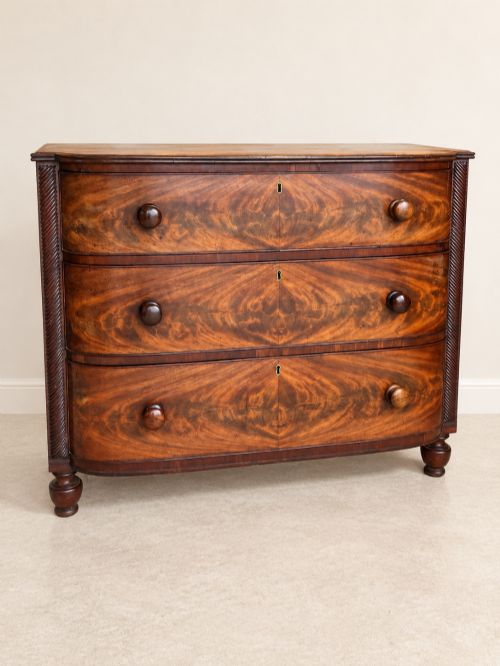
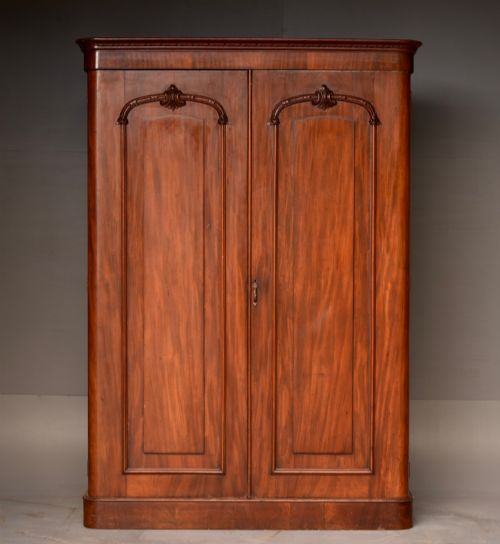
19th Century Mahogany Storage
These 19th century mahogany storage pieces bring classic British cabinet-making directly into your home, offering practical utility and timeless warmth.
19th Century Mahogany Storage
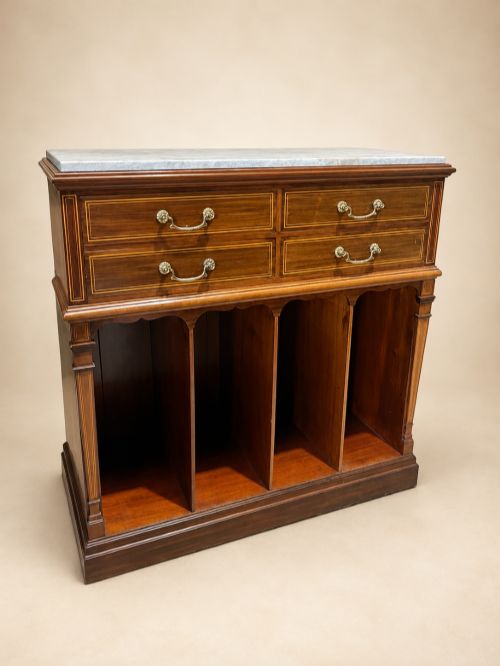
When searching for 19th century mahogany storage, buyers encounter a diverse range of functional furniture designed for daily organisation. The selection spans distinct periods including Georgian, Regency, and Victorian eras, reflecting shifting domestic needs.
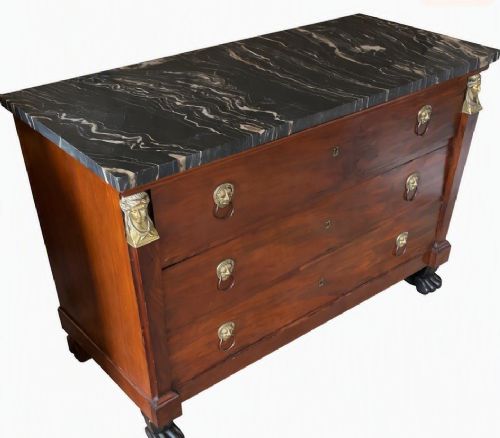
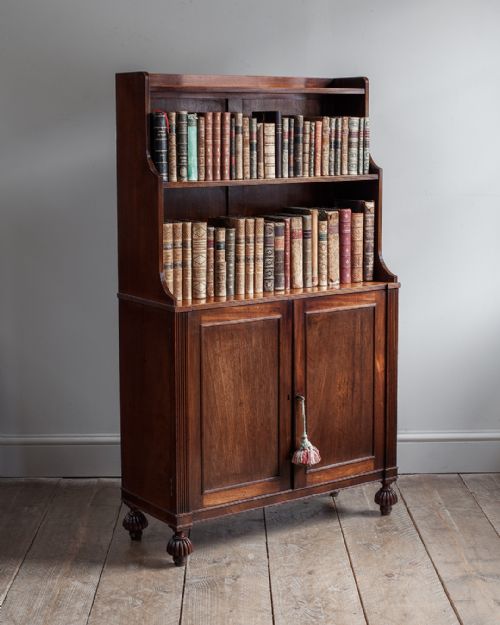
Origins vary across British and continental workshops, incorporating styles such as French Empire and Sheraton Revival. Each object serves a specific storage purpose, from hallway boot racks to library bookcases.
Assessing Quality and Craftsmanship
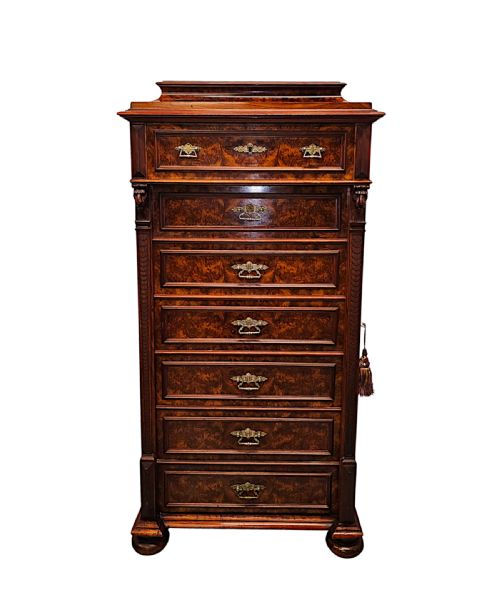
Quality separates pieces through the selection of timber figures, particularly the vibrancy of flame mahogany veneer matched across drawer fronts. Superior cabinet-making shows in tight dovetail joints, smooth drawer operation, and original brass hardware.
Proportion and restrained decorative inlay distinguish finer examples from standard utilitarian items. The preservation of original polished surfaces and structural integrity marks the upper tier of the range.
Listings span eight distinct decades and periods, incorporating Georgian, Regency, and Victorian aesthetics across eight materials.
T & G Seddon
The 19th Century Mahogany Storage Glossary
- Bow front
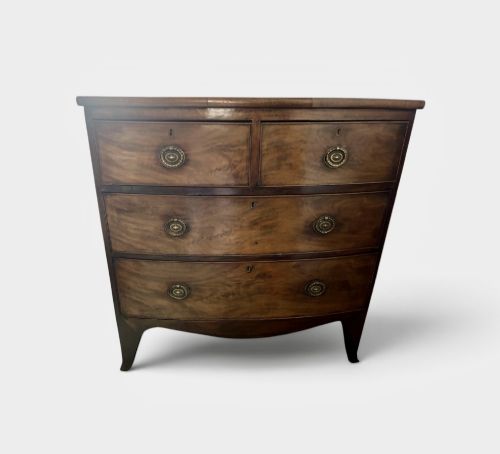
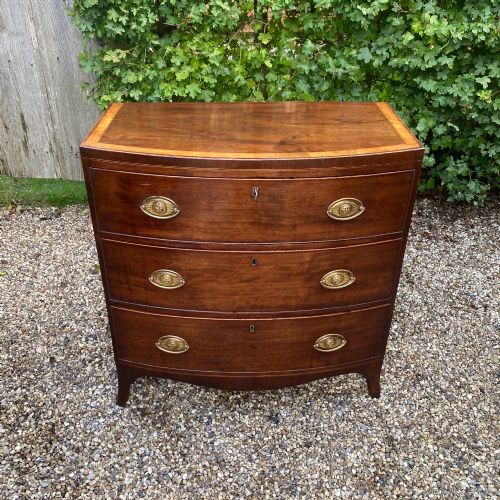
- A convex curved cabinet front popular in Regency and Georgian furniture design. This shape softens room lines while increasing internal volume.
- Chiffonier
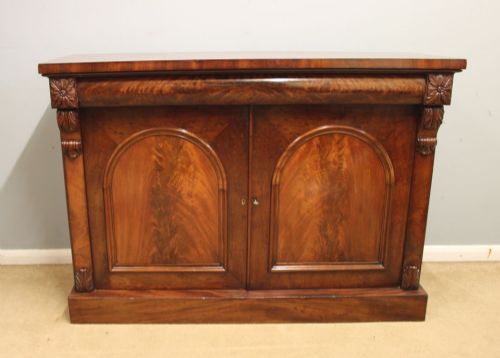
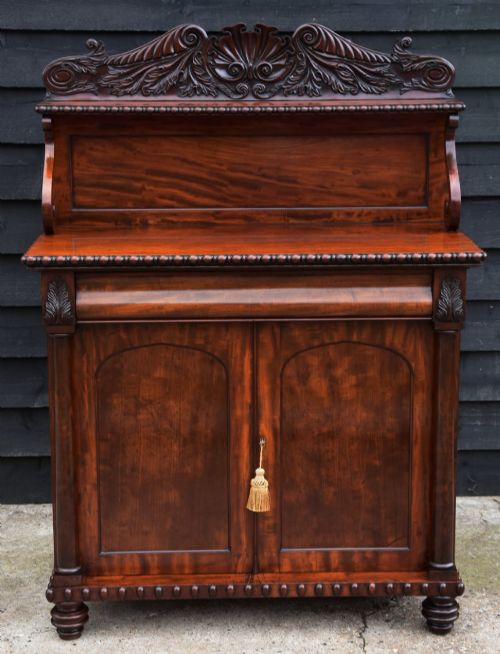
- A compact sideboard or low cabinet typically fitted with drawers and enclosed shelves below. It emerged in the early 19th century for dining room storage.
- Cellarette
- A lockable container designed for holding bottles of wine or spirits. They often feature lead linings and stand on bracket feet or rollers.
- Tallboy
- A double chest of drawers where a taller section sits atop a lower base. This form maximises vertical storage floor space.
- T & G Seddon
- A notable cabinet-making firm active in the 19th century known for high-quality domestic furniture production.
19th Century Mahogany Storage: Frequently Asked Questions
What items count as 19th century mahogany storage?
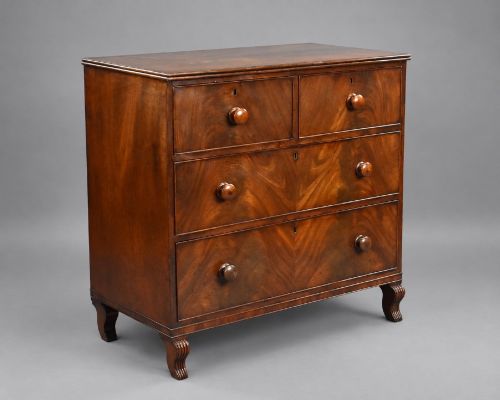
The category includes chests of drawers, bookcases, wardrobes, sideboards, and smaller specialist items like teapoys and cellarettes. These pieces were built between the Georgian and late Victorian periods.
They utilise rich mahogany timber, often featuring flame veneer, brass hardware, and satinwood inlay to combine practical utility with decorative elegance.
How do I identify a Regency mahogany chest of drawers?
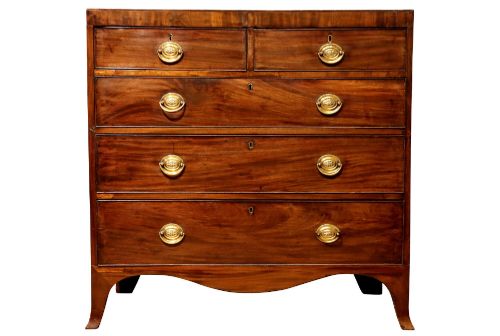
Regency chests typically exhibit clean architectural lines, flame mahogany veneers, and brass ring handles. Bow-fronted variants are particularly common from this period.
Look for hand-cut dovetails on the drawer construction and proportioned bracket or turned feet that ground the heavy timber structure.
Where were these storage pieces used in the home?
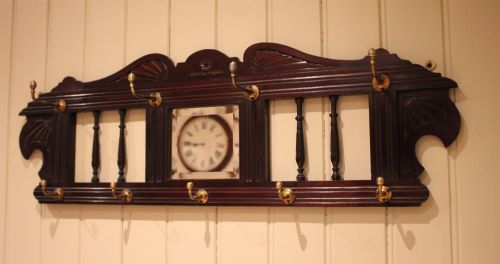
Chests and wardrobes served bedrooms and dressing rooms, while bookcases and chiffoniers furnished libraries, drawing rooms, and dining spaces. Hallways held specialist items like boot racks and coat stands.
Each form was tailored to store specific household items, from heavy winter garments to bottled wine and books.
How should I care for antique mahogany furniture?
Keep mahogany storage pieces away from direct sunlight and heat sources to prevent the wood from drying out and the veneer from lifting. Dust regularly with a soft, dry cloth.
Apply high-quality beeswax periodically to nourish the timber and maintain the warm sheen of the polished surface without building up excessive residue.