
19th Century Mahogany Nightstands
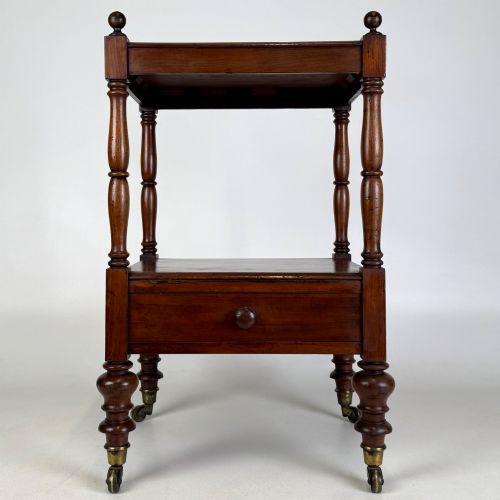
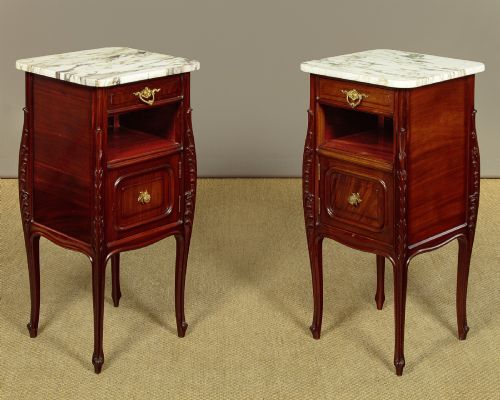
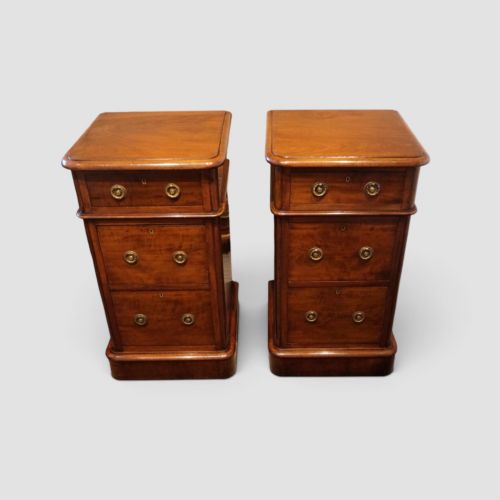
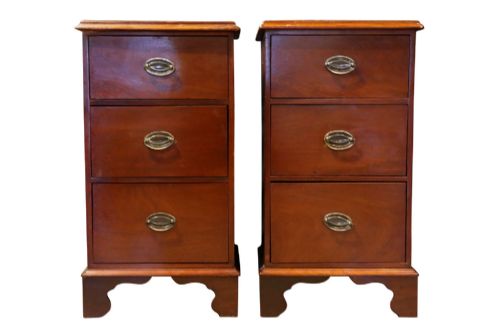
These 19th century mahogany nightstands offer practical bedside storage and rich timber grain, bringing period character to a bedroom.
19th Century Mahogany Nightstands
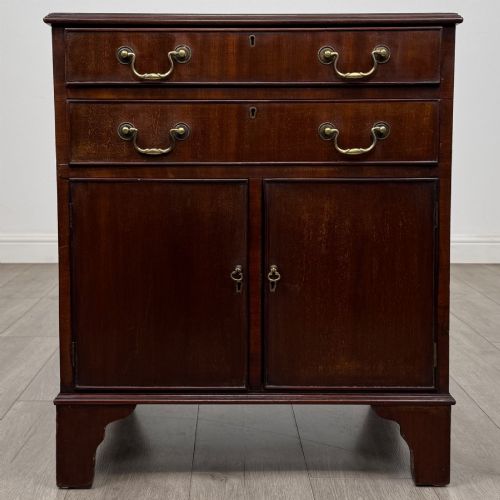
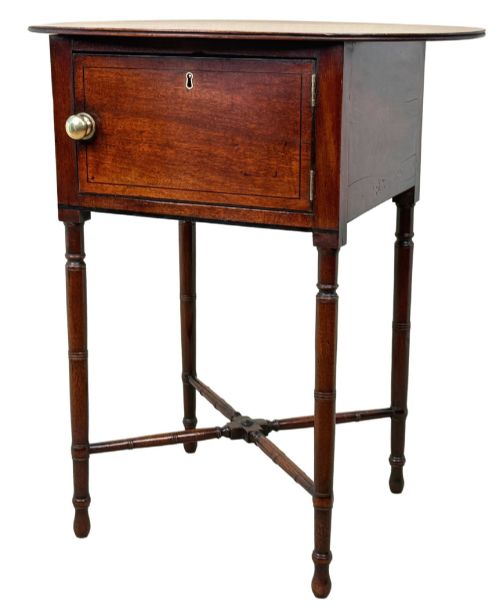
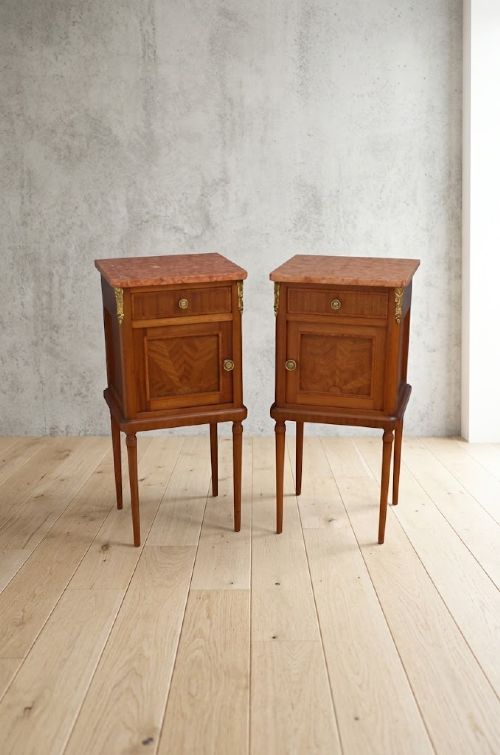
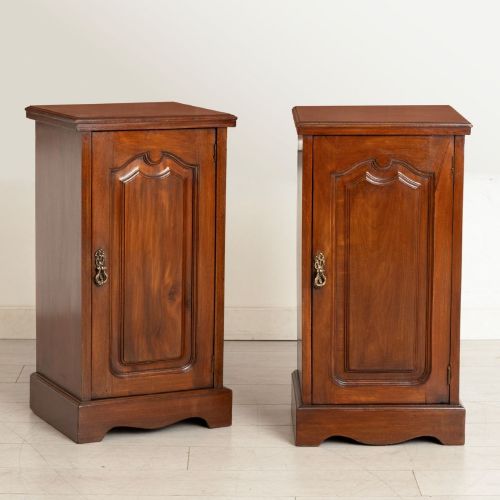
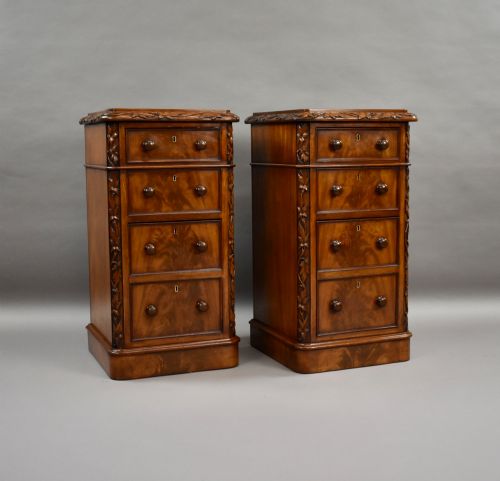
When searching for 19th century mahogany nightstands, you encounter a variety of forms including bedside cabinets, pot cupboards, bedside chests of drawers, and occasional tables designed to sit beside a bed. The selection spans distinct eras such as the Victorian period, Regency, Georgian, and French Empire styles, reflecting both English and continental European cabinet-making traditions.
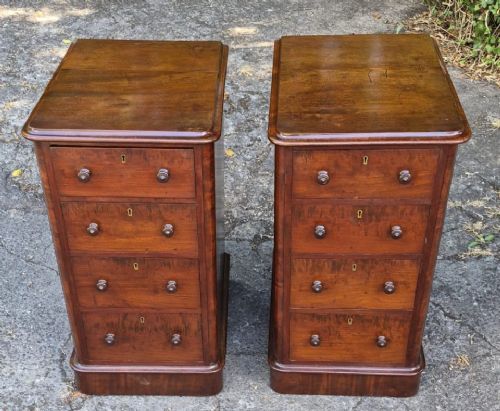
You are most likely to meet pairs or single examples featuring cupboards with doors, small chests with multiple drawers, or marble and painted surfaces. Many pieces date from the Victorian era or around eighteen eighty, while earlier Regency and Georgian pieces occasionally appear alongside French revival designs.
These items served functional domestic roles in bedrooms and dressing rooms, adapting from simple pot cupboards to more elaborate bedside chests and washstands. The inventory on this page demonstrates how these forms evolved across the nineteenth century while retaining mahogany as the primary structural wood.
How they were made
Cabinet-makers relied on solid mahogany and mahogany veneers applied to secondary timbers, utilising traditional joinery methods such as dovetailing for drawer construction and mortise and tenon joints for frames. Timber selection focused on rich grain figures, which were polished to a warm lustre.
Many pieces incorporate contrasting materials, with brass handles, keyplates, and gallery rails adding functional detail. More ornate continental examples, particularly those in the French Empire and Louis styles, integrate ormolu mounts and gilt bronze, while certain tabletops feature inset marble or glass.
Several bedside cabinets hide tambour doors, proving that nineteenth-century engineers enjoyed sliding timber around corners just as much as we do.
What varies in quality
Quality in these pieces depends heavily on the selection and matching of the mahogany veneers, the crispness of carved details, and the integration of secondary materials like ormolu or brass. Superior examples exhibit fine dovetail work, well-figured timber grain, and original mounts rather than later replacements.
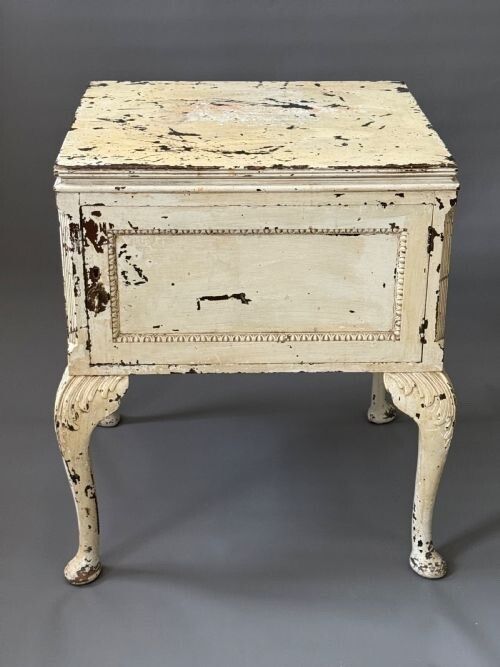
Modifications and conversions also influence the standing of a piece, as some washstands and tables have been adapted over time into bedside cabinets or height-adjusted. Untouched proportions and original surfaces generally distinguish the finer items from heavily restored or altered equivalents.
François Linke
The 19th Century Mahogany Nightstands Glossary
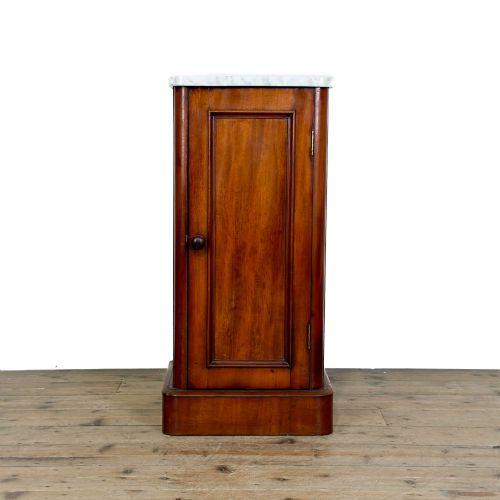
- Pot cupboard
- A small bedside cabinet originally designed to house a chamber pot behind a single door. These typically feature an enclosed compartment and occasionally a small drawer above.
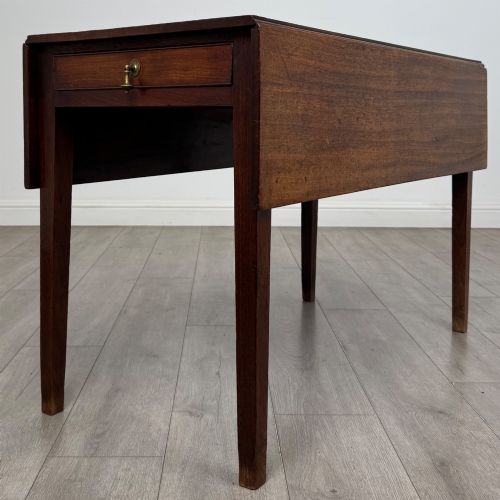
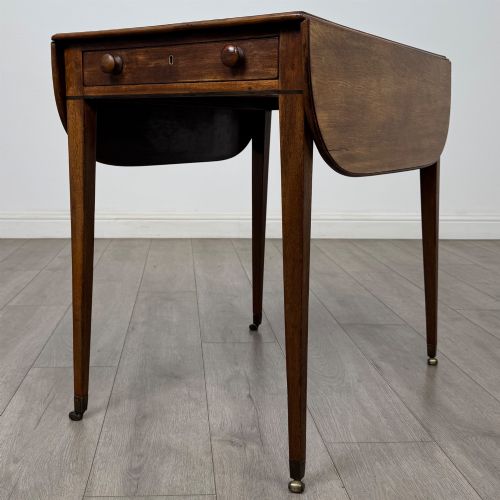
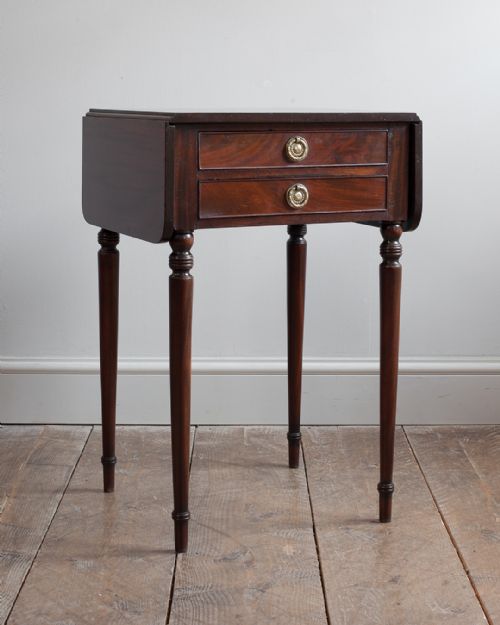
- Pembroke table
- A small drop-leaf table with hinged flaps on either side, often fitted with a single drawer. They served versatile functions as occasional or work tables in bedrooms and sitting rooms.
- Ormolu
- Gilded bronze mounts applied as decorative ornamentation to furniture, commonly found on French Empire and revival pieces. This technique creates metallic highlights against the dark mahogany timber.
- Tambour
- A flexible shutter made of narrow vertical strips of wood glued to canvas, allowing a sliding door to curve around the corner of a cabinet. This ingenious mechanism appears on select Georgian bedside tables.
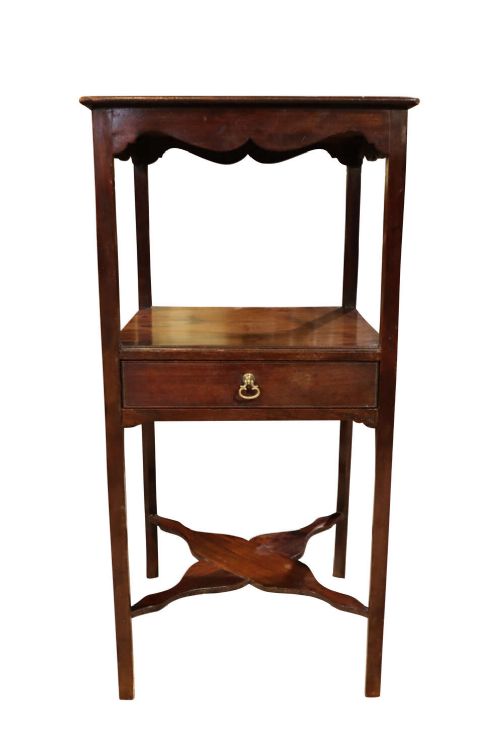
- Washstand
- A piece of bedroom furniture designed to hold a basin and pitcher, frequently featuring marble tops or splashbacks. Many of these sturdy pieces are later converted into bedside storage.
19th Century Mahogany Nightstands: Frequently Asked Questions
Are these nightstands sold as pairs?
Many of the bedside cabinets and chests listed appear as matched pairs, which makes them particularly sought after for symmetrical placement on either side of a double bed. Single examples also feature prominently for smaller spaces or eclectic interiors.
Matching pairs often share identical hardware, timber grain patterns, and dimensions, though slight variations can occur in antique pieces due to hand-crafting methods.
What is a pot cupboard?
A pot cupboard is a compact nineteenth-century bedside cabinet specifically built with an enclosed interior to store a chamber pot. They usually present a single door opening to a shelved compartment.
Over time, many of these practical cupboards transitioned into general bedside storage for books and personal items while retaining their original enclosed form.
How do I distinguish Victorian from Regency pieces?
Regency pieces generally date from the early nineteenth century and display classical restraint, clean architectural lines, and occasional brass inlay or brass grilles. They reflect the influence of ancient Greek and Roman design.
Victorian pieces tend to be heavier in proportion, often featuring richer carving, three-drawer configurations, and darker finishes that suit mid-to-late nineteenth-century domestic tastes.
Can I use a washstand as a nightstand?
Nineteenth-century washstands are frequently adapted for modern bedroom use as bedside tables, offering sturdy surfaces that often include marble tops. Their height and proportions make them suitable companions for taller beds.
While some retain their original washstand configuration, others have undergone careful conversion to incorporate interior shelving or drawers appropriate for bedside storage.