

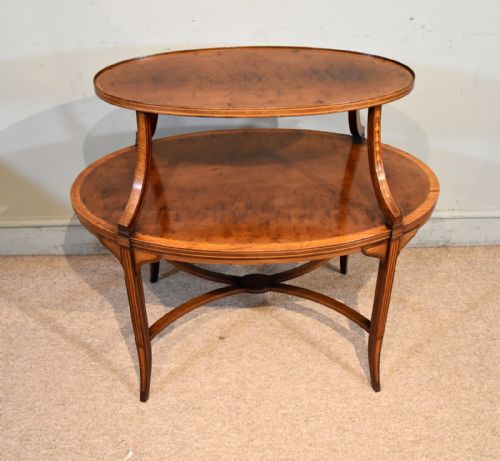


19th Century Mahogany Etagere
These pieces of a 19th century mahogany etagere offer tiered display surfaces that bring utility and warmth to living spaces.
19th Century Mahogany Etagere
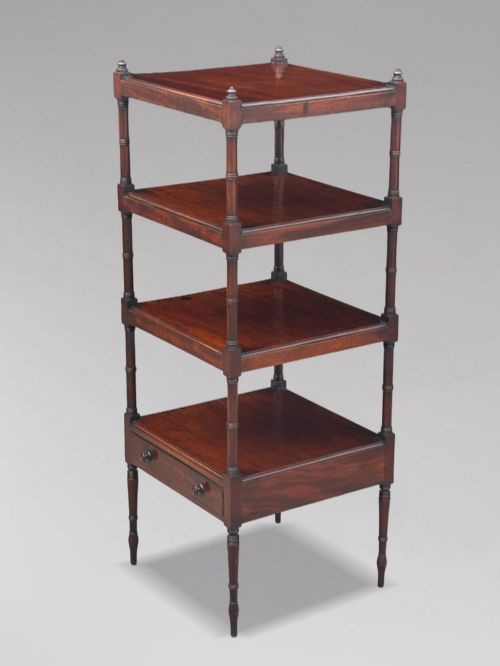
A 19th century mahogany etagere is an open tiered stand designed for displaying small objects, books or serving items. These furnishings appear across various periods from the Georgian era through to the late Victorian years, reflecting changing domestic habits.
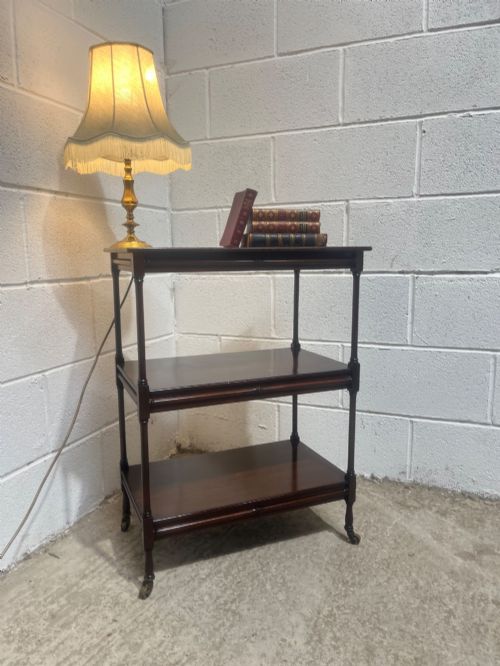
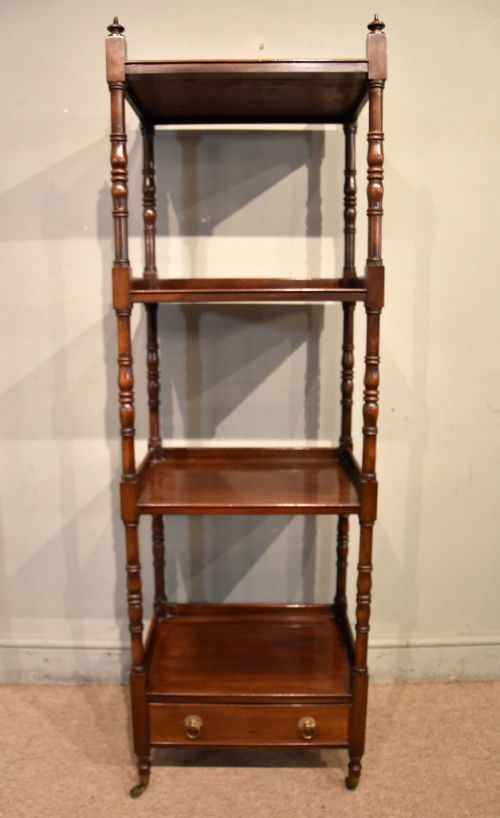
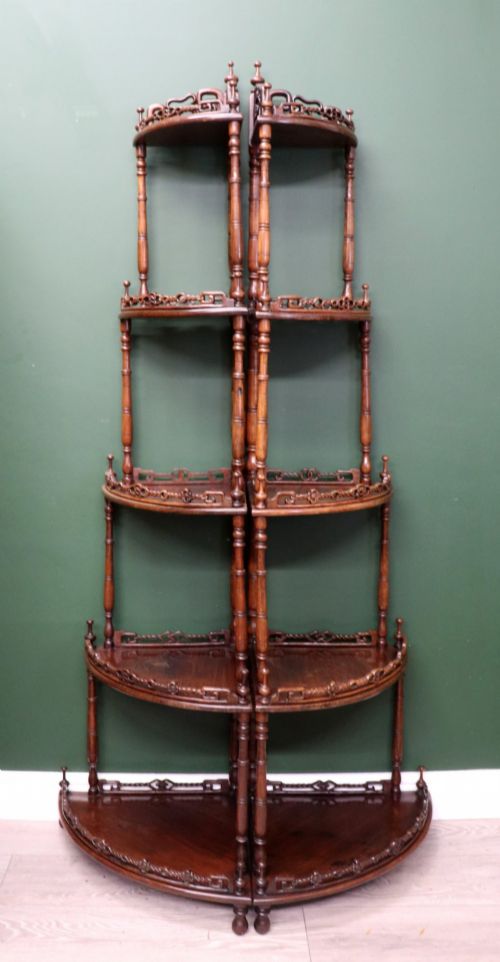
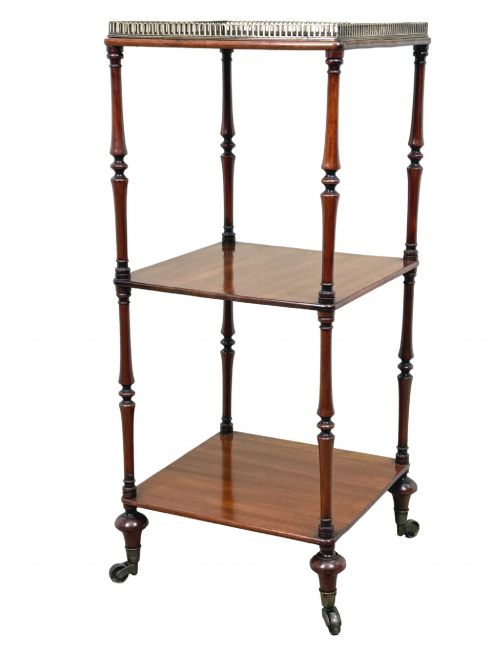
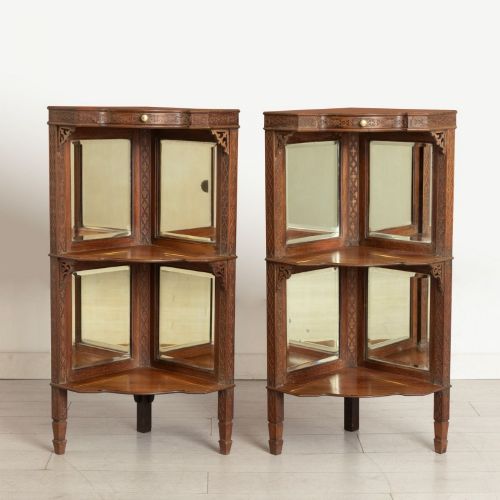
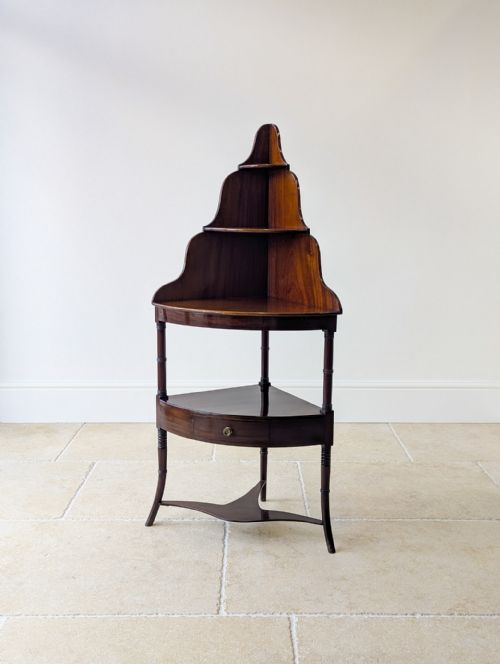
The version most commonly met on this page is the multi-tiered freestanding whatnot or etagere table, often constructed with three or four graduated shelves supported by turned or column uprights. Many examples incorporate single drawers, brass galleries or corner configurations to suit specific interior layouts.
How they were made
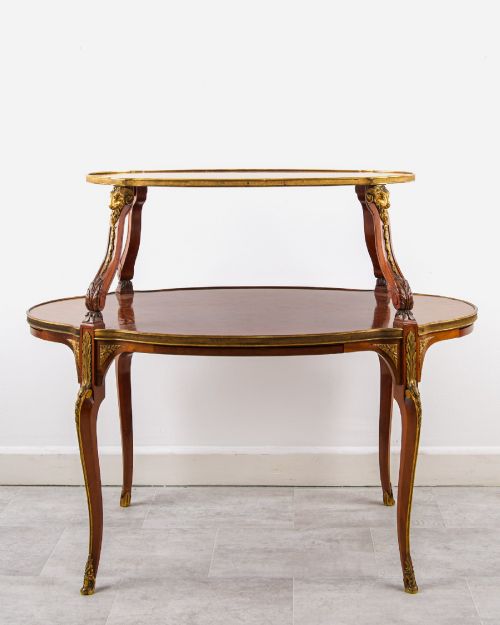
Makers utilised solid mahogany and rich veneers, frequently pairing the deep reddish timber with contrasting satinwood inlay, brass galleries, or ormolu mounts. Structural stability relied on precise joinery within the upright supports and tiered platforms.
Surface finishing involved hand polishing to accentuate the natural grain of the wood, while French influence introduced specialised mounts and mirrored panels on specific models.
Listings demonstrate forms ranging from simple three-tier corner stands and music racks to elaborate French-influenced display tables featuring brass galleries and mirror glass.
What varies in quality
The distinction between standard utility items and finer examples rests on the selection of timber figures, such as plum pudding mahogany, and the refinement of turned details. Superior pieces display thoughtful proportions and harmonious integration of secondary materials like ormolu or delicate inlay work.
Casting and finish quality in the metal components, including brass castors and galleries, separate workshops of note from everyday provincial production.
Edwards & Roberts·W. Turner Lord & Co·Gillows·Howard and Sons
The 19th Century Mahogany Etagere Glossary
- Etagere
- A piece of furniture consisting of a set of open shelves for displaying small ornaments. These tiered stands developed in France before becoming popular in British interiors.
- Whatnot
- A traditional British term for an open multi-shelved piece of furniture used for storage or display. It shares the form of the etagere and often includes drawers.
- Gallery
- A raised ornamental border running along the edge of a shelf or table top. Brass galleries prevent items from sliding off upper tiers.
- Ormolu
- Gilded bronze used as a decorative mount on furniture. This French technique adds metallic contrast to mahogany surfaces.
- Plum Pudding Mahogany
- A specific variety of mahogany timber showing distinctive speckled grain patterns resembling Christmas pudding. Cabinet makers reserved this figured wood for high-status commissions.
19th Century Mahogany Etagere: Frequently Asked Questions
What is an etagere used for?
These open tiered stands serve to display porcelain, books, small silver objects, or decorative collections. They provide vertical surface area without dominating the floor space of a room.
Historically, they also functioned as serving furniture or bedside utility tables depending on their specific form and tier count.
How do I identify a Victorian etagere?
Victorian examples often feature four tiers, turned upright supports, and occasional additions like carved mirror backs or bobbin turnings. The mahogany used in this period can range from plain stock to deeply figured veneers.
Cabinet construction techniques and characteristic hardware help distinguish these mid-to-late 19th century items from earlier Georgian or Regency pieces.
Where should I place an etagere?
Corner etageres fit neatly into unused room angles, while freestanding oval or rectangular versions suit placement beside seating or against plain walls. Their open shelving allows light to pass through, making them suitable for smaller interiors.
Avoid positioning them in direct sunlight to protect the polished mahogany surfaces from fading over time.
What is the difference between a whatnot and an etagere?
The terms are largely interchangeable, though whatnot is traditionally the English designation and etagere derives from French terminology. Both describe tiered shelving units designed for display and light storage.
Individual pieces labeled as etageres may occasionally show more continental decorative influences such as ormolu mounts or elaborate marquetry.