
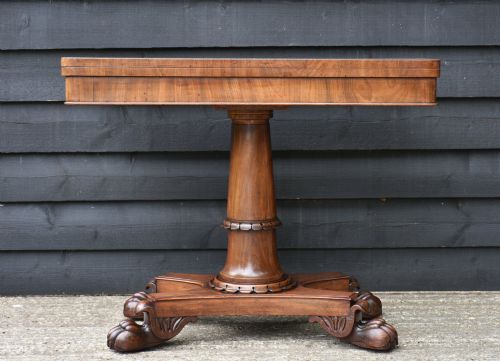
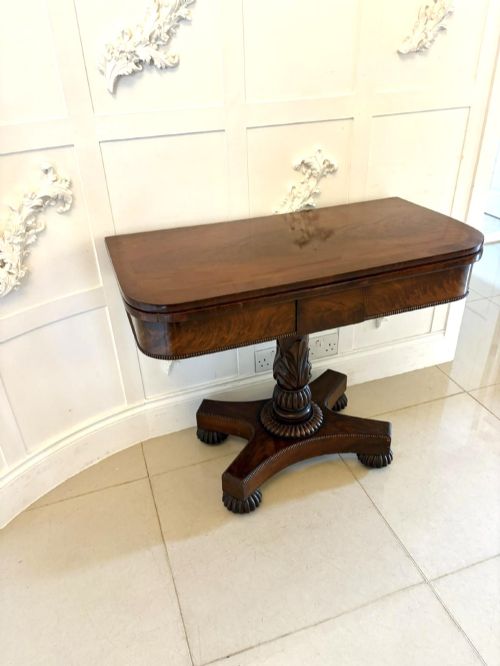
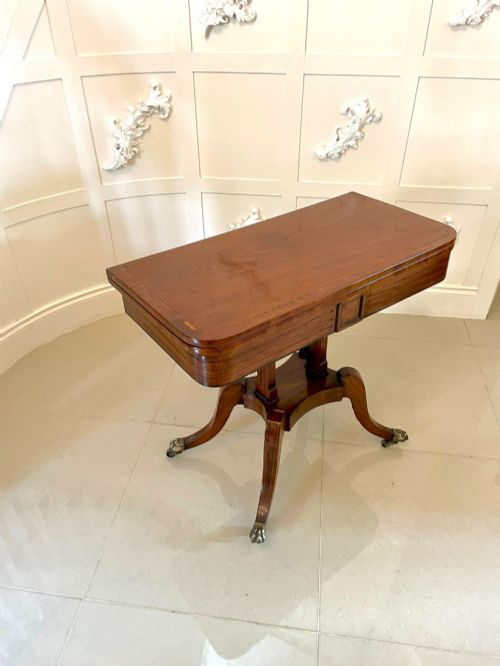

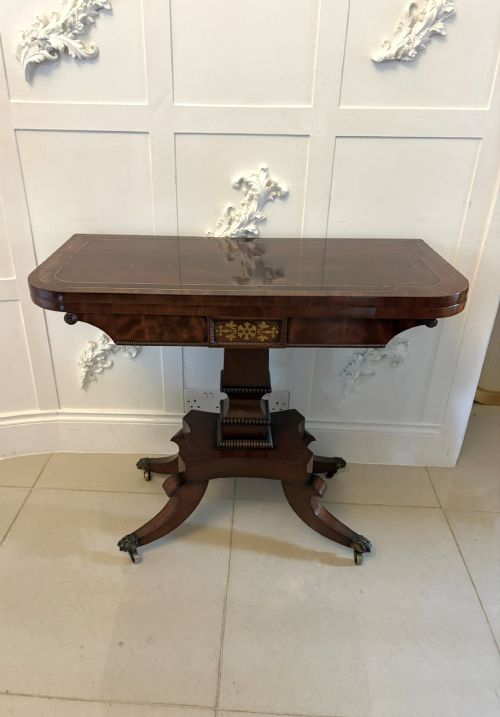

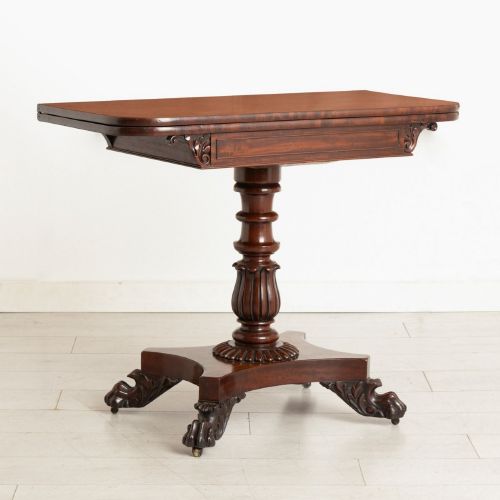
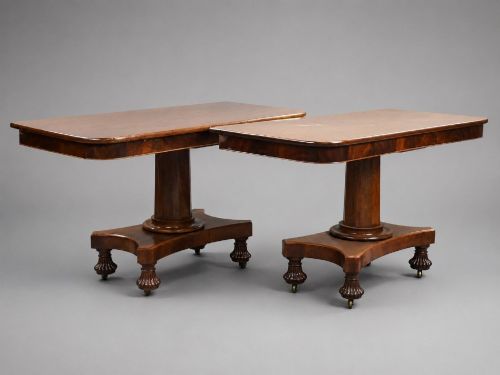
19th Century Mahogany Card Table
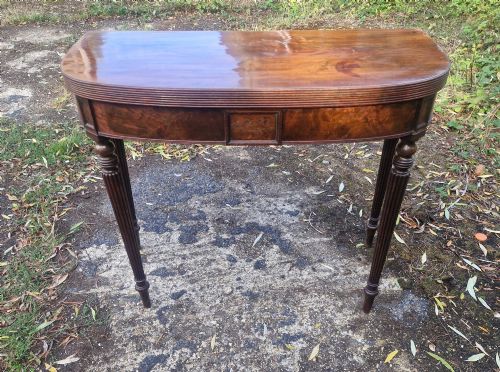
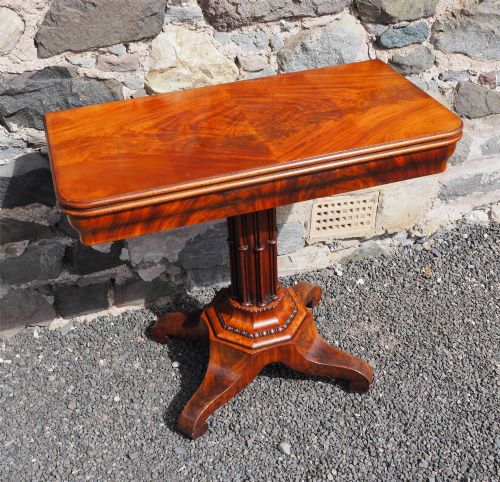
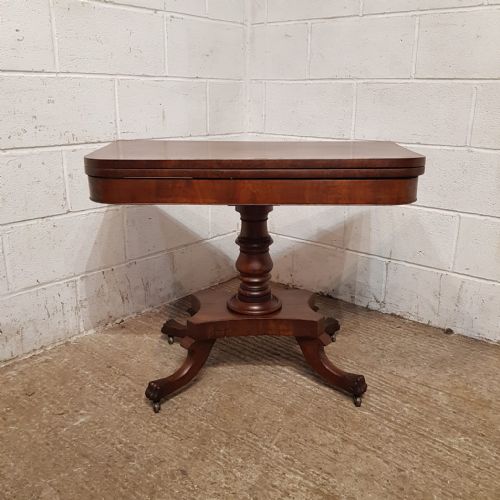
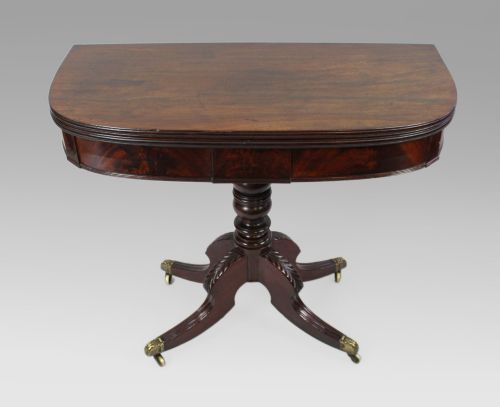
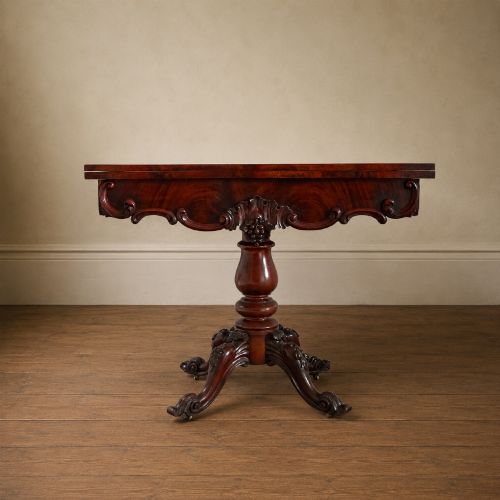
A 19th century mahogany card table offers versatile folding tops and refined timber figuring, serving as a dual-purpose piece for dining or gaming.
19th Century Mahogany Card Table
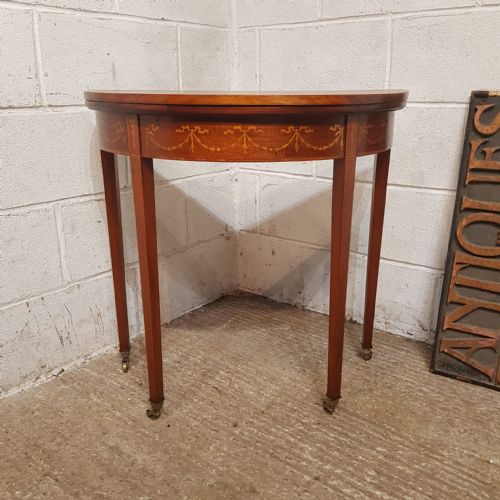
A 19th century mahogany card table combines clever folding or swivel mechanisms with compact proportions suited for living spaces. You will encounter Regency and William IV examples alongside Victorian iterations, each displaying varied geometric forms from demi-lune to D-shaped profiles.
The primary forms on this page include fold-over card tables, tea tables, and games tables that double as console or side tables. These pieces accommodate evening entertainment and formal parlour display through adaptable tops.
Originating across Georgian, Regency, and Victorian periods, these tables reflect shifting domestic habits where multi-functional furniture dominated middle and upper-class interiors.
Markers of quality
The crispness of brass inlay and the depth of figure in the mahogany veneer distinguish superior examples from plain utility furniture. Well-executed timber selection ensures that flame patterns match symmetrically across the fold-over top when opened.
Engineering integrity within the pivoting mechanism and drawer assembly dictates long-term durability. High-grade specimens retain rigid joints and smooth swivel actions without sagging or misalignment when weight rests on the leaf.
Some Victorian gaming tables hide secret compartments beneath the swivelling top, built specifically for concealing stray counters and deck markers.
Edwards & Roberts·Antoine Lampre, Paris·Maison Mottheau
The 19th Century Mahogany Card Table Glossary
- Concertina action
- An expandable frame mechanism that supports a fold-over table top evenly from all four sides when opened. This construction allows the rear legs to pull outward in unison with the folding leaf.
- Demi-lune
- A half-moon shape utilised for table tops and frames designed to sit flush against a wall. When folded, these tables occupy minimal space before opening into a full circle.
- Envelope card table
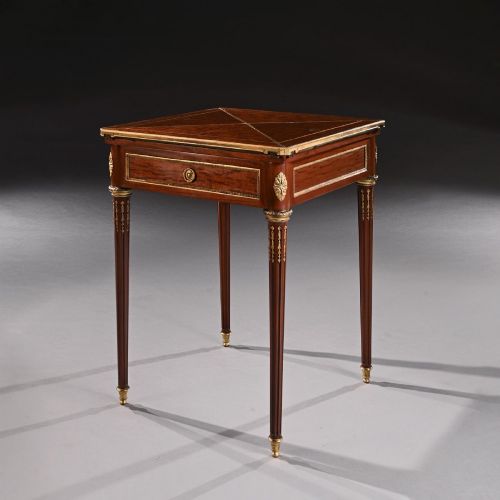
- A square table featuring four triangular flaps that fold inward toward the centre in a diagonal sequence. Unfolding the leaves reveals a baize-lined playing surface.
- Ormolu
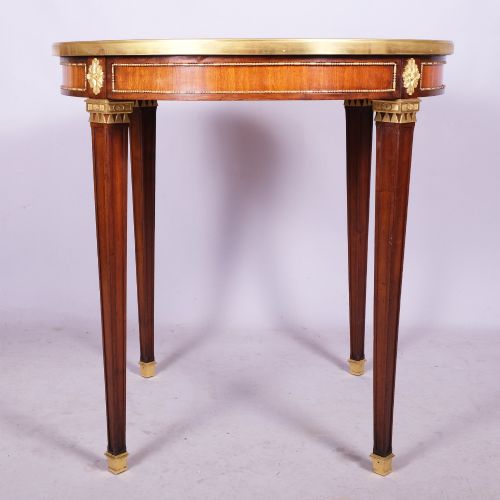
- Gilded bronze mounts applied to furniture for decorative enrichment. This technique appears frequently on French revival pieces.
- Marquetry
- Elaborate decorative patterns formed by fitting contrasting veneers into pre-cut timber cavities. Artisans employ various exotic woods to create floral or geometric compositions.
19th Century Mahogany Card Table: Frequently Asked Questions
How do I operate a fold-over card table?
Most tables feature a hinged top that lifts and rotates ninety degrees to rest upon the frame, or opens directly via a concertina action.
Take care to lift the top rather than dragging it across the pivot pin to protect the underlying timber structure.
Were these tables only used for playing cards?
While designed specifically for card games, many examples double easily as tea tables or console tables against a hallway wall.
The folding mechanism provided a compact surface that expanded only when guests arrived for evening entertainment.
How do I tell a Regency table from a Victorian one?
Regency pieces often display sharper brass inlay, sabre legs, and architectural restraint inspired by classical antiquity.
Victorian versions tend toward heavier proportions, turned pillars, and occasionally elaborate burr walnut or marquetry decoration.
How should I care for the mahogany timber?
Keep the wood away from direct heat sources and strong sunlight to prevent the mahogany finish from fading or cracking.
Apply a traditional wax polish sparingly to maintain the natural lustre of the polished surface.