





19th Century Mahogany Bench
A 19th century mahogany bench brings solid timber and historic seating into a hallway or living space with understated architectural presence.
19th Century Mahogany Bench
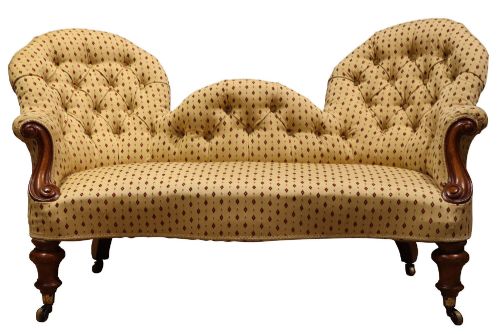
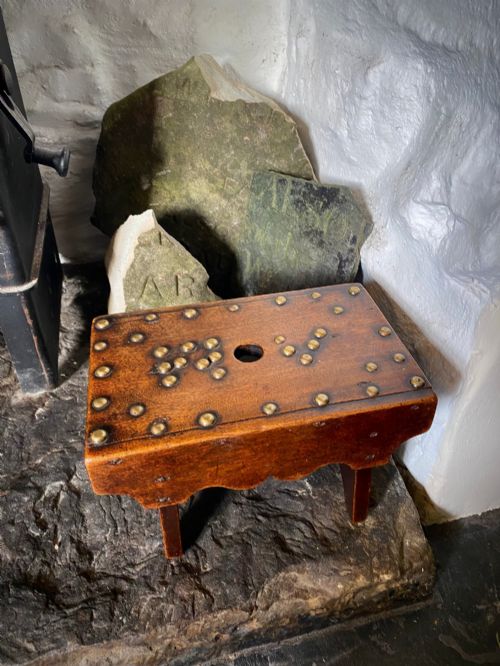
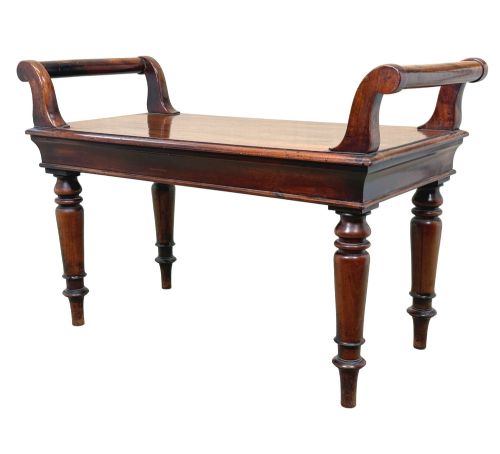
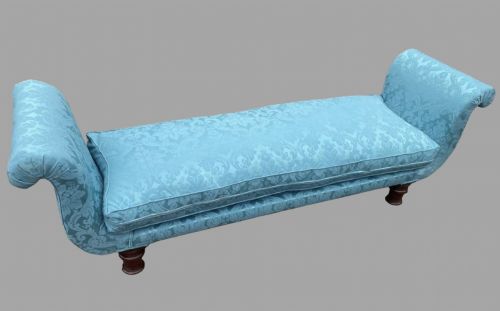
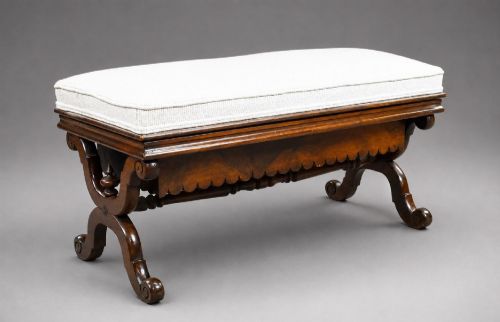
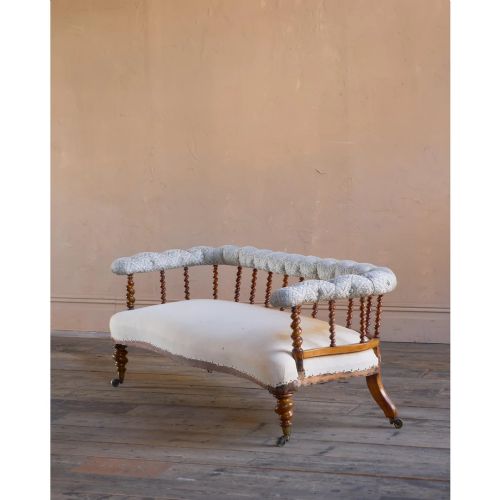
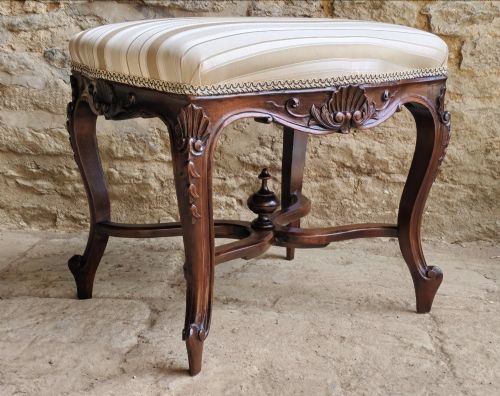
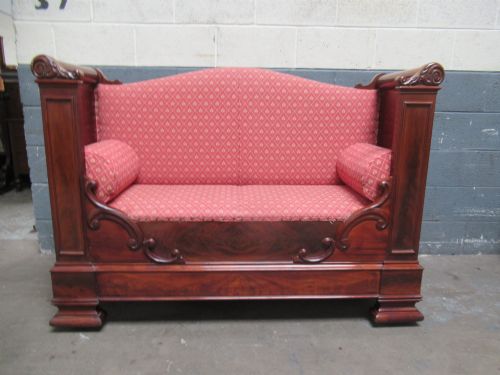
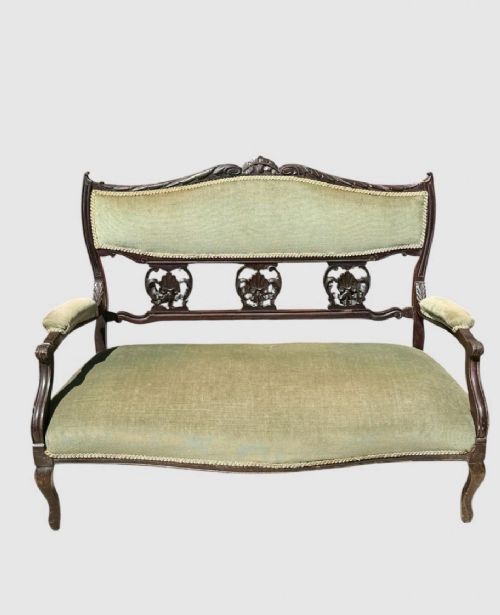
A 19th century mahogany bench typically encompasses hall benches, window seats, and long stools recorded across the Regency, Victorian, and William IV periods. The most frequent form met in daily search results is the hall bench or window seat, often showing solid timber frames and occasional carved details.
Makers and workshops of the era produced these seats for grand country houses and town residences alike. Pieces range from simple utilitarian designs to elaborate revival styles influenced by French Empire, Rococo, and Irish Chippendale aesthetics.
The materials span mahogany alongside secondary timbers, paired with upholstery fabrics, leather, cane, and hessian support. Survival rates show that sturdy construction allowed many examples to endure through subsequent centuries of domestic use.
Materials and Joinery
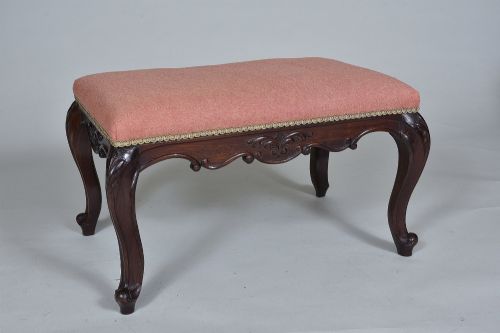
Construction relies heavily on solid mahogany and timber frames joined with traditional methods to bear weight over long spans. Turned or cabriole legs support the seat structures, whilst specific forms incorporate brass fittings and cane panels.
Upholstered versions utilise interior webbing, hessian, and stuffing beneath top coverings of textile, fabric, or leather. Carved decorative elements are hand-chisel worked directly into the dense mahogany substrate rather than applied as separate mouldings.
19th Century Mahogany Bench Retail Price Guide 2026
Typical asking prices for 19th century mahogany bench among the pieces listed under this phrase on Sellingantiques today, from the lower quarter to the upper quarter. They describe what is for sale here now, not the wider market.
Listings incorporate regional variations including English, Irish, French Empire, and Anglo-Indian interpretations of the nineteenth-century mahogany bench form.
Evaluating the Build and Finish
Quality rests in the selection of the mahogany timber and the crispness of any hand-carved ornament on the frame. Heavier, dense grain and tight joinery separate robust library or hallway pieces from lighter domestic seating.
Proportion and structural integrity dictate the standing of a bench, particularly in longer formats where sagging can occur without internal reinforcement. Original surfaces and untouched timber patination elevate an example above heavily stripped or excessively modernised pieces.
C. Hindley & Sons·Butlers of Dublin·Gillows
The 19th Century Mahogany Bench Glossary
- Mahogany
- A durable tropical hardwood imported for high-grade furniture throughout the Georgian and Victorian eras. Its reddish-brown colour deepens with age and polishing.
- Regency
- An architectural and furniture style spanning the early decades of the 19th century. It frequently draws inspiration from classical Greek, Roman, and French Empire motifs.
- William IV
- A transitional furniture period during the 1830s characterised by robust proportions. Pieces from this era often display heavy scroll ends and bold carved details.
- Window Seat
- A narrow form of bench designed to fit within a window recess. These typically feature scroll ends or low backs and padded upholstery.
- X-Frame
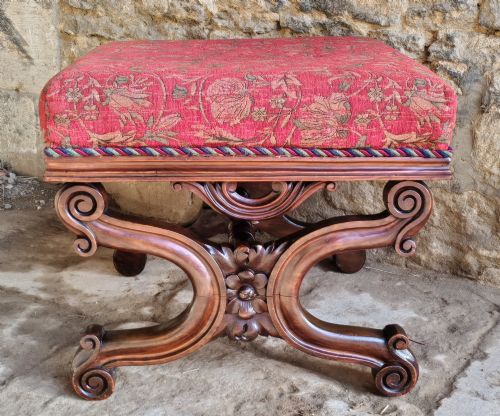
- A cross-stretcher base construction forming an X shape when viewed from the side. This folding-chair lineage provides exceptional structural support for stools and benches.
19th Century Mahogany Bench: Frequently Asked Questions
Where should I place a hall bench?
A hall bench serves as practical seating in an entryway, corridor, or at the foot of a bedroom bed. Its narrow profile allows it to occupy transitional spaces without blocking foot traffic.
Ensure the timber is kept away from direct heat sources and rapid temperature fluctuations to prevent the mahogany from drying out or splitting over time.
How do I care for the mahogany timber?
Dust the wood regularly with a dry, soft cloth to prevent particulate buildup on the polish. Apply a traditional beeswax sparingly when the surface appears dry to maintain the natural sheen.
Avoid silicone-based sprays, as these can penetrate the porous grain and alter the historic patination of the timber.
Are these benches suitable for daily seating?
Solid mahogany frames provide substantial structural strength for regular daily use in domestic settings. Upholstered versions offer softer seating whilst wooden planked versions remain remarkably resilient.
Checking the joints and underframe periodically ensures stability remains intact across generations of continued household service.
How do I distinguish Regency from Victorian pieces?
Regency pieces generally exhibit cleaner classical lines, lighter proportions, and restraint in ornament. Victorian examples often display heavier carving, more exuberant curves, and denser structural framing.
Reviewing the secondary timbers and the style of the joinery helps clarify the manufacturing decade when exterior decoration overlaps between periods.