



19th Century Lion Sculptures
These 19th century lion sculptures bring classical authority and spirited animalier movement into a room.
19th Century Lion Sculptures
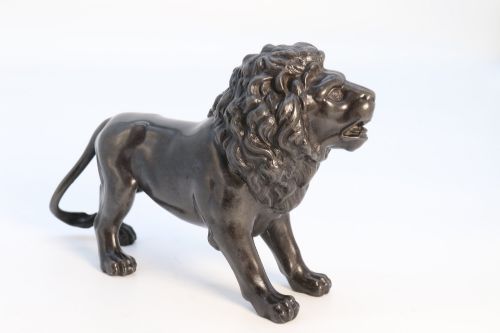
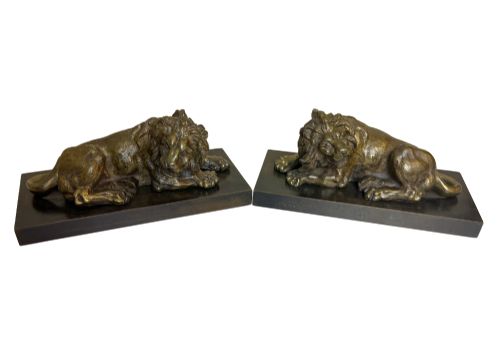
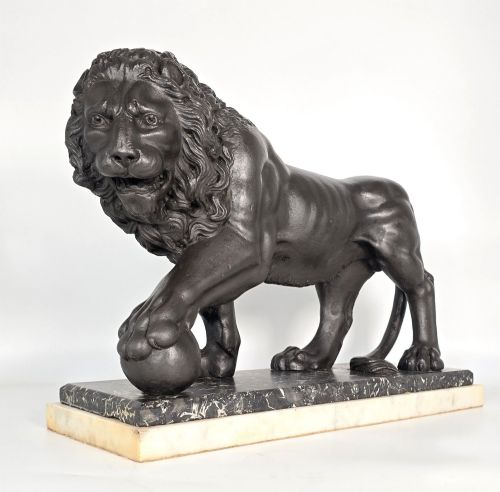
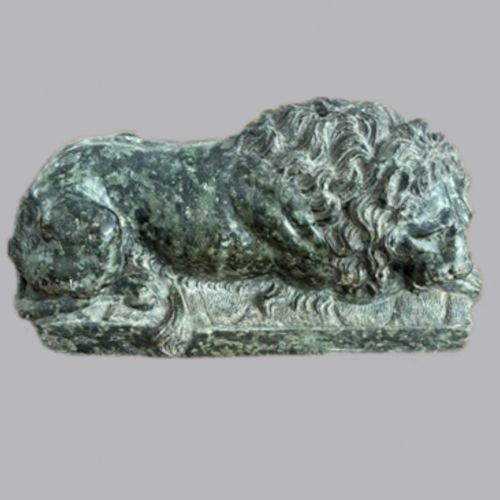
When you search for 19th century lion sculptures, you encounter everything from grand garden statues and architectural wall masks to small desk inkstands and Grand Tour cabinet bronzes. The forms draw heavily on classical precedents, notably the Medici and Canova lions in Italy, alongside vigorous French animalier studies of resting, pacing or roaring beasts.
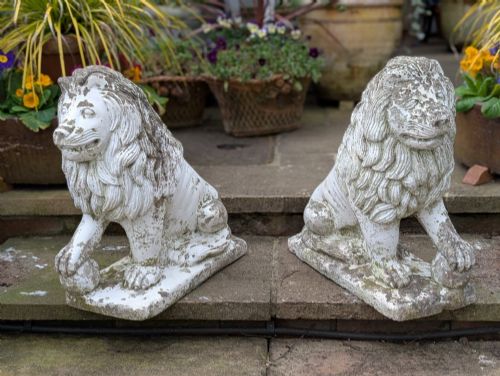
On this page, you are most likely to meet cast bronze figures mounted on marble plinths, heavy terracotta pairs intended for terraces, and carved walnut Black Forest heads. Makers and founders rendered these beasts in diverse mediums, ranging from cast iron doorstops to serpentine marble figures and painted terracotta.
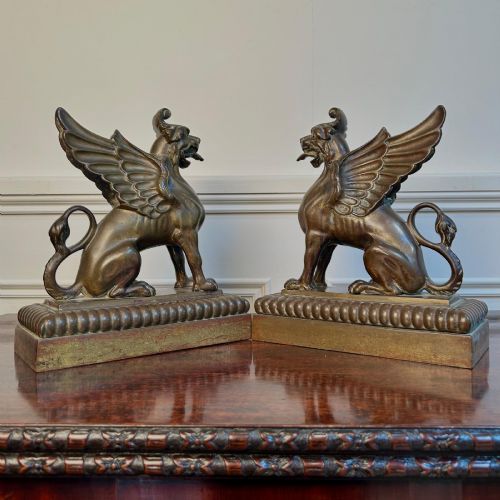
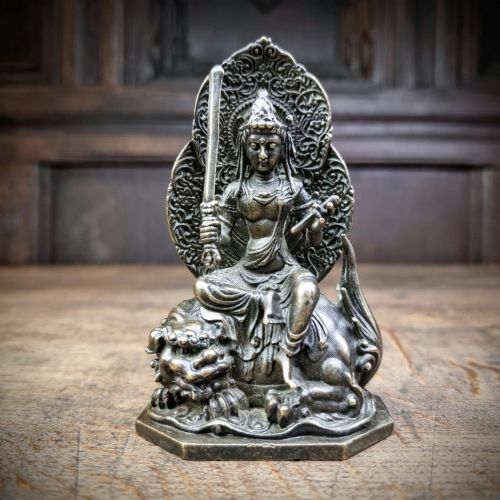
The selection extends beyond European classicism to include Chinese stone lions, Tibetan temple guardians, and bronze foo dogs. This mix reflects both the Victorian appetite for domestic display and the broader reach of nineteenth-century collecting, encompassing heraldic shields, fountain heads, and winged creatures inspired by Venice.
How they were made
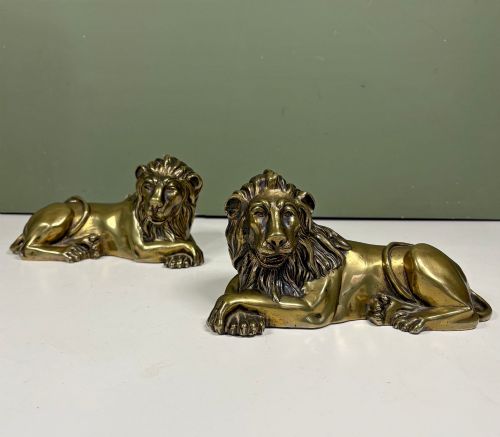
Foundries produced bronze sculptures using the lost-wax method or sand casting, often finishing the metal with patination or gilding before mounting the figures on marble or stone bases. Bronze casts frequently bear the signatures of notable animalier sculptors or founding houses like Barbedienne.
Carvers worked in walnut, teak and various stones, capturing dense musculature and fur detail with hand chisels. Terracotta examples required skilled moulding and firing, sometimes receiving a painted surface layer for enhanced decorative effect.
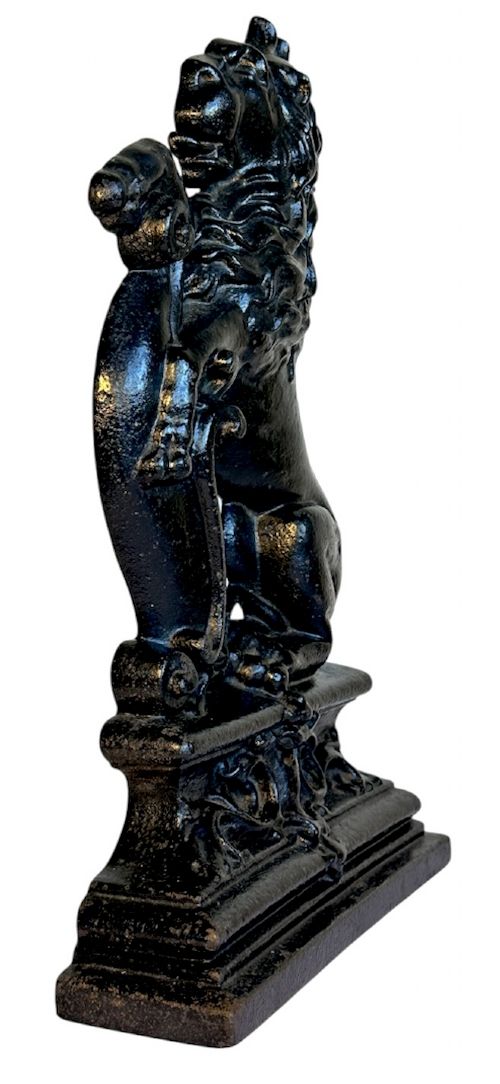
Cast iron production for utilitarian items such as doorstops involved pouring molten metal into sand moulds, yielding heavy, durable silhouettes with defined relief. Marble and serpentine pieces demanded precise stone-cutting and hand-polishing to achieve smooth planes and classical contours.
Several lions arrive with built-in inkwells, proving that even fierce neoclassical beasts had to carry clerical supplies.
What varies in quality
Material selection and mounting dictate the overall presence of the object. High-quality examples utilise dense green or serpentine marbles for plinths and solid walnut for carved heraldic panels, pairing robust architectural weight with balanced proportions rather than hollow or thin construction.
Paul-Édouard Delabrièrre·G. Gardet·Al Barye·Barbedienne·Le Courtier·Antoine-Felix Bouré·Luigi Frullini
The 19th Century Lion Sculptures Glossary
- Animalier
- A 19th-century artistic movement dedicated to the realistic depiction of animals. Sculptors in this tradition focused on capturing the anatomy and movement of beasts in bronze.
- Grand Tour
- The 19th-century custom of cultural travel through Europe undertaken by young upper-class men. Travellers purchased small-scale marble and bronze sculptures, such as miniature Medici lions, as souvenirs.
- Medici Lion
- One of a pair of marble lion sculptures guarding the Villa Medici in Rome, originating from classical antiquity and Renaissance additions. The posture, with one paw resting upon a sphere, became a standard template for later sculptors.
- Foo Dog
- A traditional Chinese architectural guardian lion, often cast in bronze or carved in stone. These mythical beasts typically appear as paired protectors flanking doorways or temple entrances.
- Black Forest
- A style of 19th-century wood carving originating from the mountainous region of Germany and Switzerland. Artisans produced deeply carved walnut items, including ferocious lion and tiger heads.
19th Century Lion Sculptures: Frequently Asked Questions
Where were these sculptures displayed originally?
Terracotta lions stood upon garden piers and terrace steps, while monumental marble versions guarded grand entrances.
Smaller bronze studies and inkstands sat upon library desks, mantelpieces, and cabinet tops within 19th-century drawing rooms.
What is a Black Forest lion carving?
Black Forest carvings consist of intricately hand-carved walnut depicting naturalistic animal forms, most commonly wall masks and trophy heads.
These pieces showcase deep relief work and textured fur, reflecting the rustic Swiss and German craftsmanship of the era.
Are cast iron lions later additions?
Cast iron examples functioned primarily as heavy doorstops or domestic stops during the Victorian period.
Foundries produced these utilitarian items in quantity, utilising robust metal casting to keep doors open in busy households.