



19th Century Letter Casket
A 19th century letter casket is a desk accessory built to hold correspondence, offering tactile charm and period craftsmanship to any study.
19th Century Letter Casket
A 19th century letter casket is a desk accessory designed to organise and protect correspondence, emerging across various European traditions during the Victorian, Regency, and Napoleon III periods. These pieces take forms such as stationery boxes, desk stands, and letter boxes, reflecting the rigorous correspondence habits of the era.
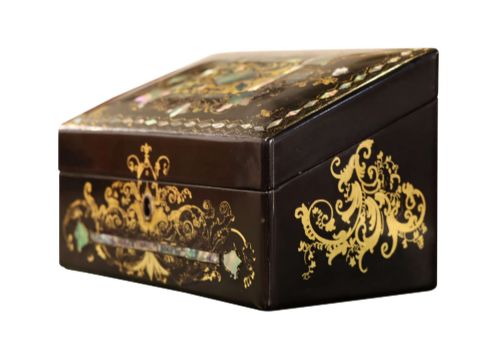
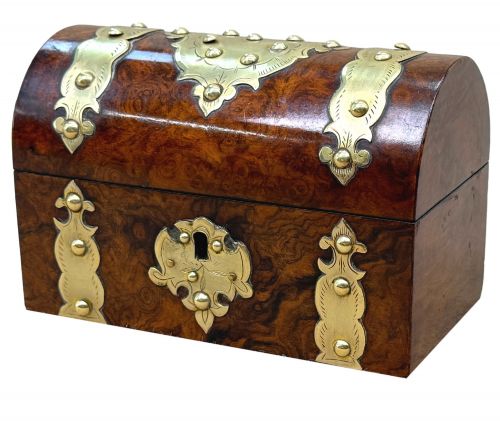
On this page, a buyer is most likely to meet Victorian and 19th-century examples fashioned from woods like walnut, burr walnut, coromandel, and pollard oak, often fitted with brass mounts or dome tops. French pieces also appear, bringing satinwood, marquetry, and ormolu into the mix.
These items served a domestic or professional purpose in studies and drawing rooms, housing paper and writing tools before the telephone era. Their survival offers a tangible connection to nineteenth-century desk organisation.
How they were made
Makers utilised timber foundations veneered in burr walnut, coromandel, satinwood, or pollard oak, sometimes forming papier-mâché and lacquer structures. These woods were chosen for their decorative grain and durability in daily use.
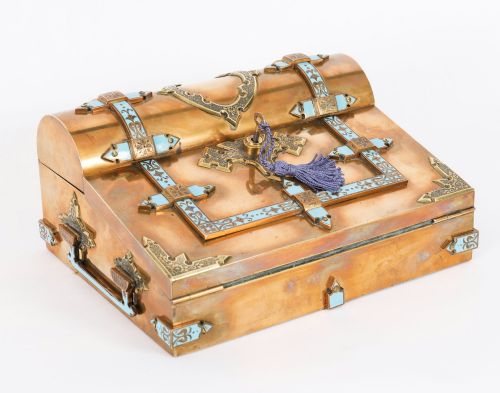
Metalwork played a structural and decorative role, with brass bindings, ormolu mounts, cut steel decoration, and mother of pearl inlay applied to enrich the exterior surfaces of the boxes.
19th Century Letter Casket Retail Price Guide 2026
Typical asking prices for 19th century letter casket among the pieces listed under this phrase on Sellingantiques today, from the lower quarter to the upper quarter. They describe what is for sale here now, not the wider market.
Materials recorded include brass, walnut, burr walnut, ormolu, papier-mâché, lacquer, and mother of pearl.
What varies in quality
The sophistication of the timber selection and marquetry distinguishes standard items from superior pieces, particularly where skilled grain matching or intricate inlay is evident. Finer examples integrate materials like ormolu and cut steel with precision.
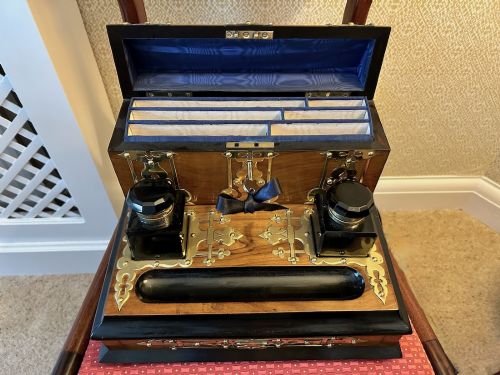
The complexity of the form itself separates ordinary boxes from exceptional specimens, such as those featuring dome tops, fitted interiors, or matched desk sets.
The 19th Century Letter Casket Glossary
- Stationery box
- A desk accessory designed to hold writing paper and envelopes upright. These containers often feature tiered compartments inside.
- Ormolu
- Gilded bronze used for decorative mounts and feet. This technique provides a bright metallic finish against wooden surfaces.
- Marquetry
- The art of applying pieces of veneer to a structure to form decorative patterns. This method creates pictorial or geometric designs on the lid and sides.
- Coromandel
- A dense, dark timber with contrasting streaks, prized for nineteenth-century luxury furniture and boxes. It provides a heavy and durable exterior.
- Papier-mâché
- A composite material made from paper pulp or layers of paper bound with glue, then lacquered and painted. It allows for smooth, dark surfaces suited to inlay.
19th Century Letter Casket: Frequently Asked Questions
What is a 19th century letter casket?
A 19th century letter casket is a decorative box created to store correspondence and writing paper on a desk.
These pieces reflect the craftsmanship of the Victorian and Regency eras, combining timber frames with metal mounts.
How were letter caskets used?
They were kept on desks or tables to organise incoming and outgoing letters before envelopes became universally standardised.
Households utilised them in studies and parlours to keep personal stationery neat and protected from dust.
What materials are common?
Walnut, burr walnut, coromandel, and pollard oak form the wooden bodies of many surviving examples.
Decorations frequently include brass bindings, ormolu mounts, mother of pearl, and lacquer work.
How do I identify French pieces?
French caskets from this era often display marquetry, satinwood, or ormolu mounts characteristic of the Regency and Napoleon III styles.
They tend to focus heavily on decorative surface patterns compared to plainer English counterparts.
Where should I place one?
These caskets sit well on modern desks, sideboards, or mantelpieces as functional storage for small items.
Their enclosed compartments keep contemporary clutter out of sight while adding period character to a room.