


19th Century Knife
These 19th century knife selections bring together steel blades, horn hilts, and regional metalwork that collectors prize for everyday historical utility.
19th Century Knife
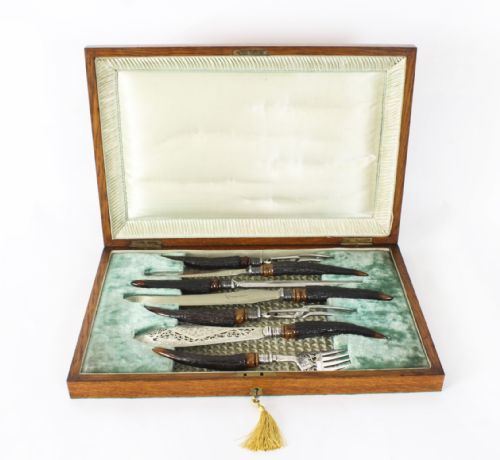
A 19th century knife encompasses a diverse array of edged tools, ranging from European dining cutlery and carving sets to regional daggers and folding multi-tools. Buyers navigating this category encounter domestic eating utensils alongside military and ethnographic weapons produced across global workshops.
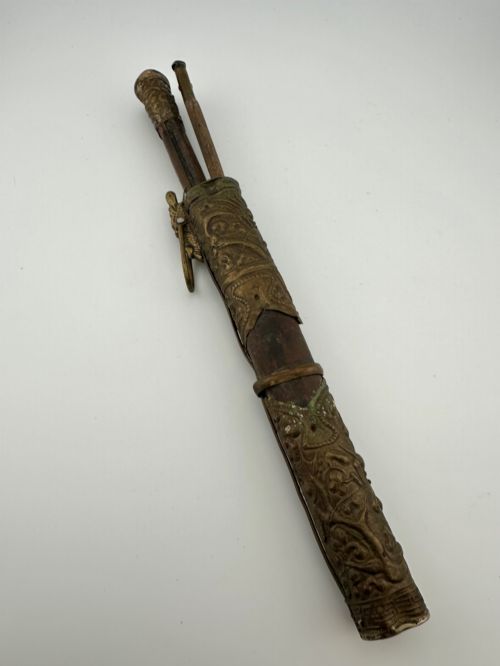
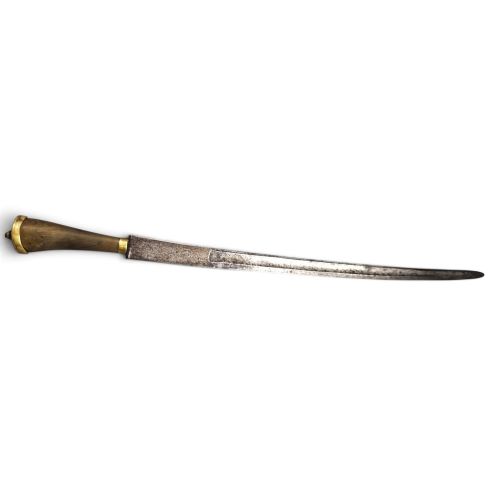
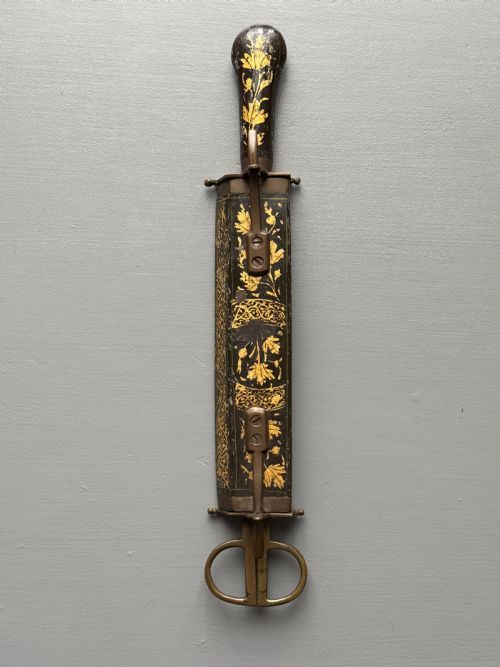
The versions most commonly met on this page include Victorian silver-plated carving sets, bone-handled Balkan daggers, and travel eating sets housed in brass or leather sheaths. These pieces span utility items designed for the table and specialised implements meant for campaign or personal carry.
Materials and construction methods
Makers utilised functional steel for blades, pairing them with natural grip materials such as horn, bone, mother-of-pearl, and wood. Metal mounts often incorporate brass, silver plate, or solid silver, reflecting the intended status of each piece.
Assembly techniques combined forged or blued steel with pinned handles and fitted sheaths made from leather, brass, or papier-mâché. Decorative elements frequently involved engraved detailing, blue and gilt treatments, or carved organic surfaces.
Listings feature 19th-century materials including steel, brass, wood, leather, silver plate, horn, silver, and mahogany.
Factors influencing quality and distinction
Quality rests upon the integrity of the original materials and the degree of specialist craftsmanship evident in the hilt and blade. Pieces featuring intact natural grips like bone or mother-of-pearl alongside preserved original sheaths command greater interest.
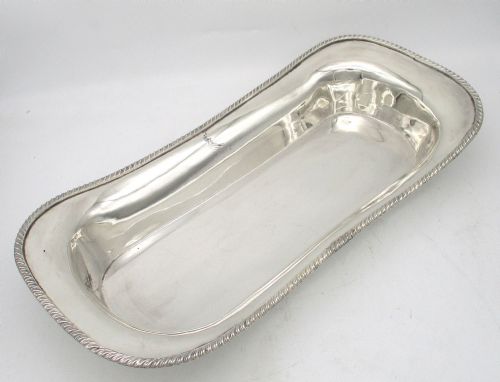
Distinction also arises from regional provenance and decorative execution, such as specialised etching on officer blades or finely carved bone handles. Simpler domestic kitchen storage boxes and utilitarian trays sit alongside finely ornamented daggers and multi-piece travelling sets.
The 19th Century Knife Glossary
- Pesh-Kabz
- A type of single-edged Indo-Persian dagger featuring a strong T-shaped spine. It was designed to pierce mail and heavy clothing.
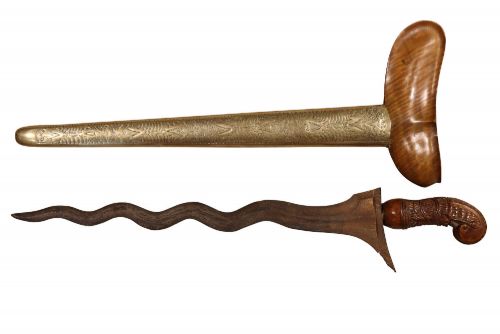
- Keris
- An asymmetrical dagger associated with the Malay archipelago. The blade often displays distinct pamor patterns formed by contrasting metals.
- Trousse
- A portable case or sheath containing a knife and companion utensils like chopsticks. These sets were common in Qing dynasty travels.
- Silver Plate
- A thin layer of silver applied to a base metal core such as iron or copper. This technique allowed manufacturers to produce table cutlery resembling solid silver at lower cost.
19th Century Knife: Frequently Asked Questions
How were folding multi-tools used?
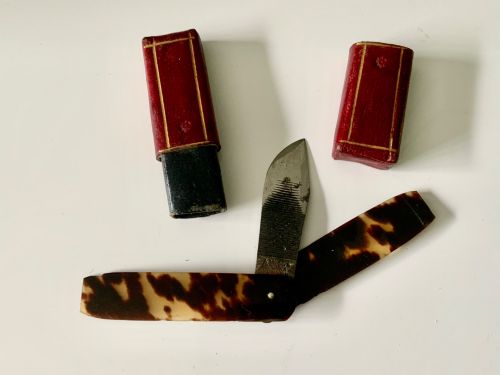
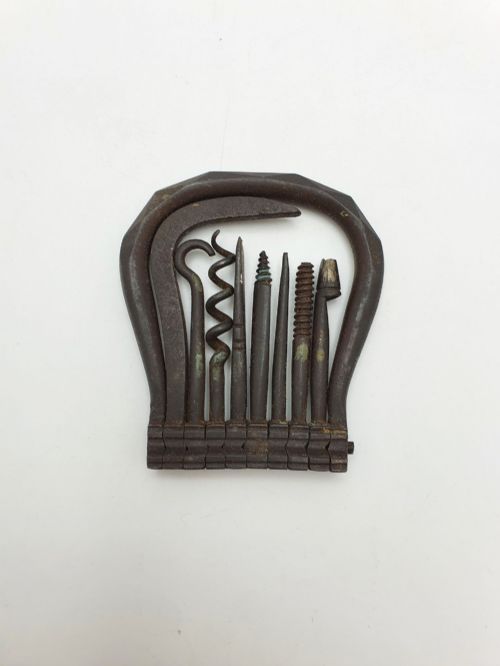
Nineteenth-century folding multi-tools served practical daily needs for travellers, workers, and sportsmen who required multiple implements in a single pocket-sized format.
They incorporated blades, picks, and specialised folding components assembled with iron frames and scales.
What is a travelling eating set?
Travelling eating sets provided portable dining utensils for individuals on the move during the Victorian era and earlier periods.
These sets typically combined knives, forks, or chopsticks within fitted brass or leather sheaths designed for secure transport.
How do I care for bone handles?
Bone and horn handles require stable environmental conditions away from direct heat sources and excessive moisture.
Gentle cleaning with a dry or slightly damp cloth preserves the natural surface texture without damaging the historic material.
Are regional daggers distinct from table cutlery?
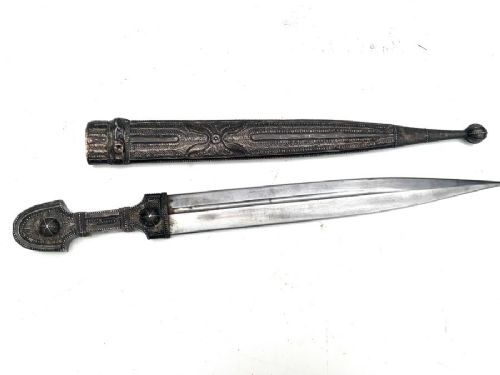
Regional daggers like the Kindjal or Pesh-Kabz served defensive or ceremonial roles rather than domestic dining functions.
Their robust steel blades and specialised grips contrast with the delicate silver plate and mother-of-pearl found on fruit and cheese cutlery sets.