

19th Century Interior Art
19th century interior art captures domestic and historical rooms in oil, watercolour, and engraving, offering a direct view into past domestic lives.
19th Century Interior Art
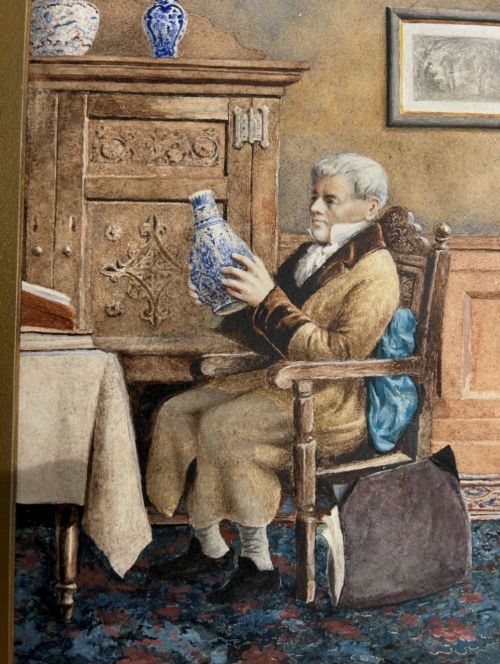
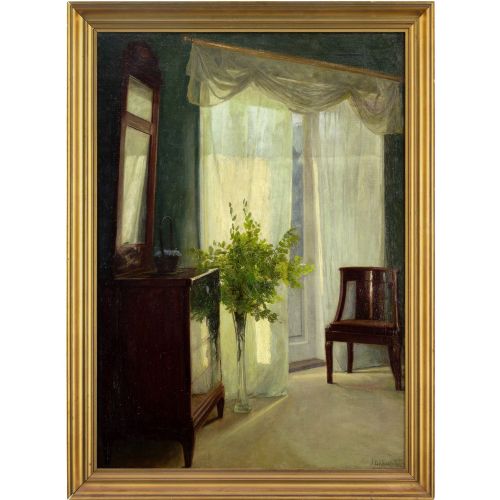
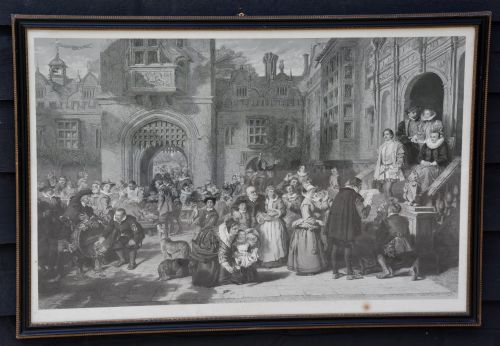
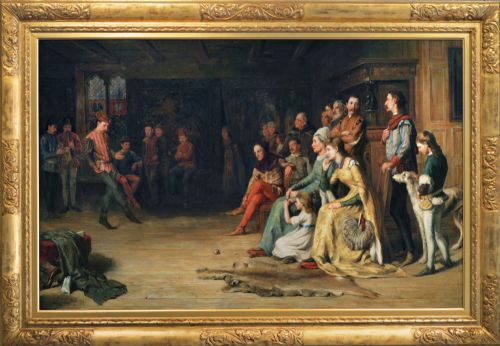
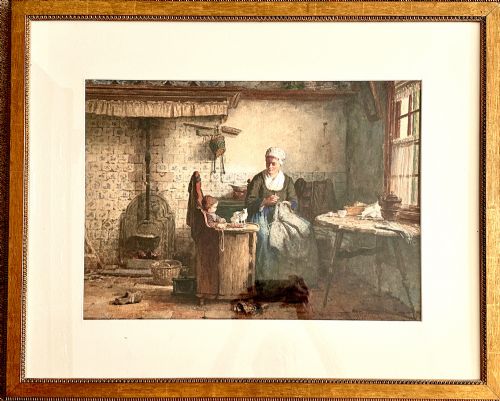
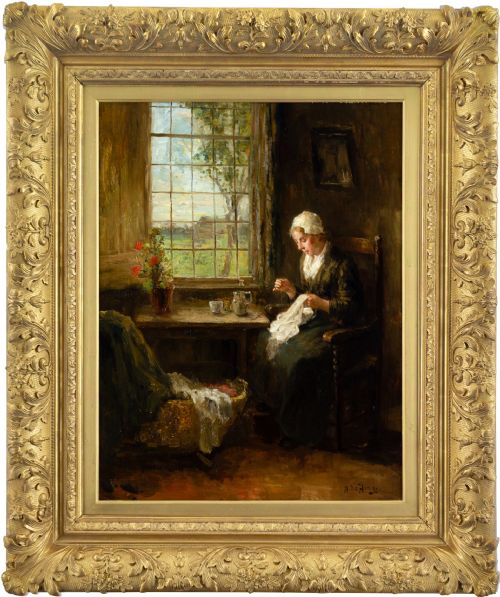
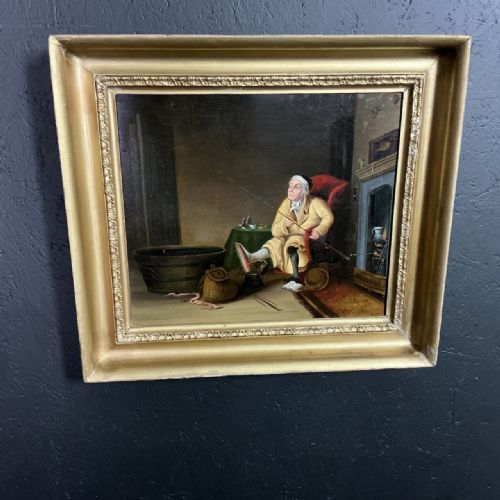
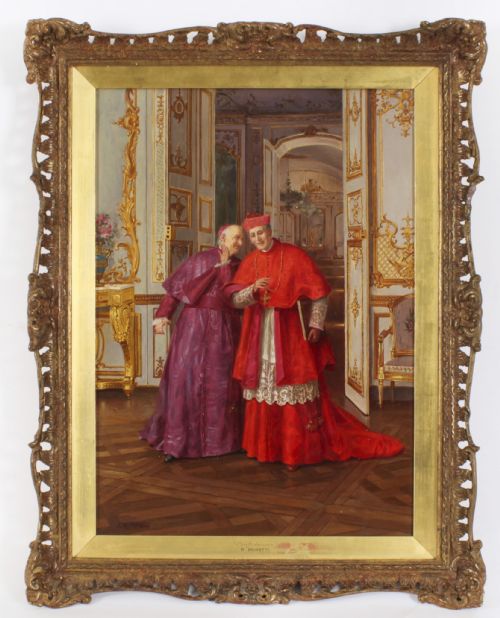
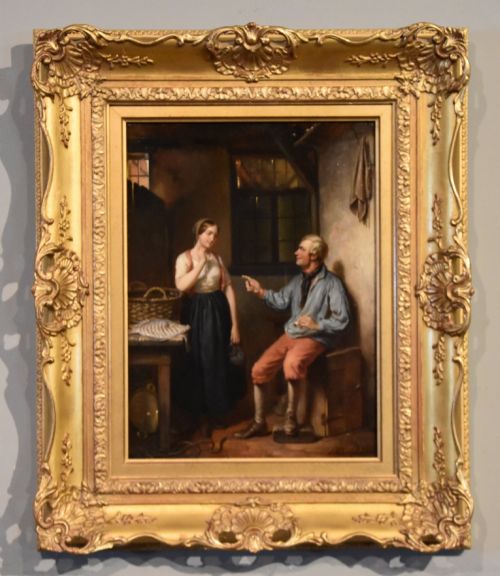
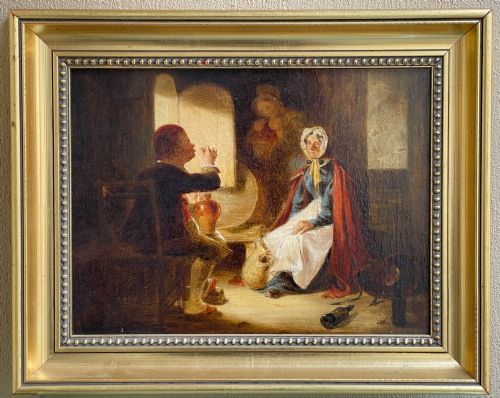
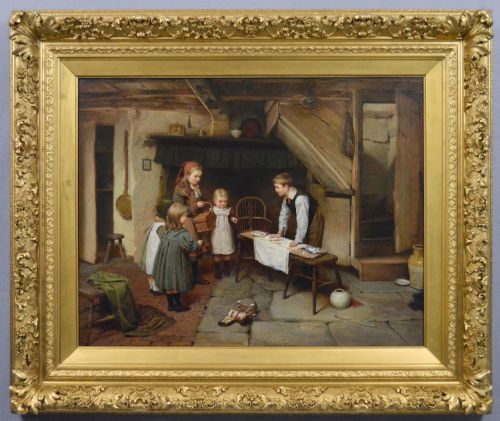
When you search for 19th century interior art, you encounter oil on canvas, watercolour paintings, and engravings depicting rooms, cottages, country houses, and tavern scenes. These works capture domestic life, historical genre scenes, and figures gathered in domestic or architectural spaces.
The pieces on this page stem from periods spanning the 1860s through to 1910, reflecting Victorian and academic realist sensibilities. You are most likely to meet framed oil paintings on canvas and panel, alongside detailed watercolour paintings of household rooms and figures.
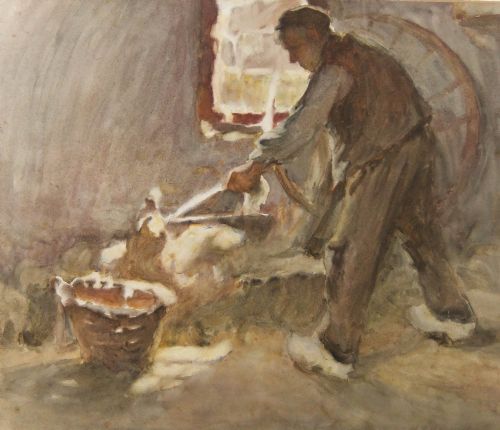
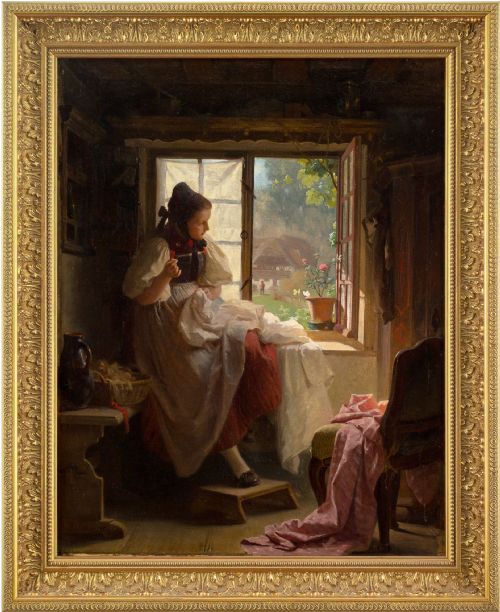
Subjects range from quiet hours by a window and tea time in country houses to card games and blacksmiths at work. The assortment relies heavily on British and European genre painting traditions from the nineteenth century.
Materials and Techniques
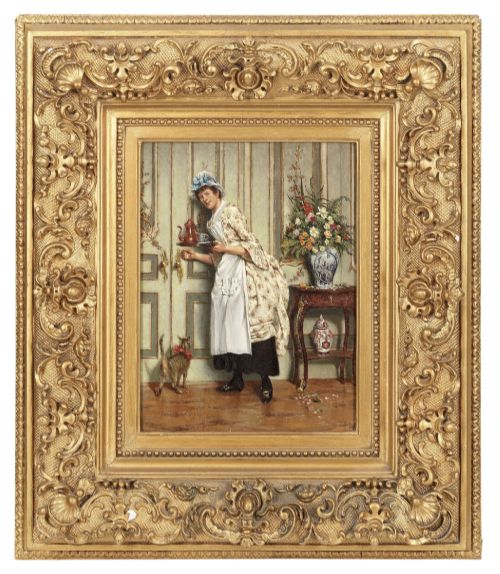
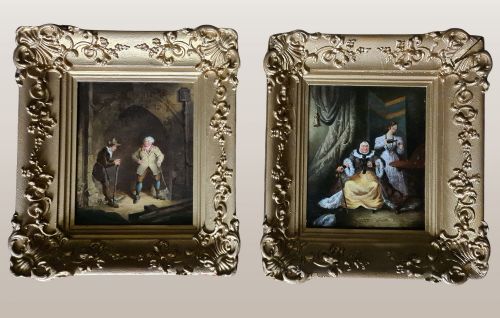
Artists of this era utilised oil on canvas, oil on panel, and paper for watercolours, mounting many works in giltwood and gesso frames enhanced by gold leaf. Several pieces incorporate original Hogarth frames, while others utilise simple wood surrounds.
The physical build involves canvas stretched over wooden frames or paper sheets laid down for watercolours, with gesso applied to wooden mouldings for decorative framing. Mediums include oil paint and watercolour pigments applied with fine brushes to build light and shadow across indoor architectural elements.
Listings feature oil on canvas, watercolour paintings, and engravings across the Victorian era.
Assessing the Work
Quality rests in the handling of light filtering through doorways or windows and the precision of figurative detail within the room. Stronger examples display deft brushwork on textiles, facial expressions, and architectural perspectives that ground the figures firmly in their space.
The integration of the frame with the painting alters the overall impact, where period giltwood or Hogarth mouldings complement the age of the canvas. The clarity of the domestic narrative and the preservation of the paint surface distinguish the finest examples.
Stephen Samuel Lewin·Henry Silkstone Hopwood·Max Kaltenmoser·James Hamilton·Hendrik Valkenberg·Bernard De Hoog·Renato Moretti·Jacob Akkersdijk·Harry Brooker·Johann Hamza·Benjamin Eugene Fichel·Alexander Rosell·Albert Clark·John Watkins Chapman·Charles Haigh Wood·Gabriel Puig Roda·Haynes King·James Kyd·Edwin Thomas Roberts·Robert Alexander Hillingford·George Smith·Edwin Hughes·Hermann Armin Kern
The 19th Century Interior Art Glossary
- Genre Painting
- A style depicting scenes from everyday life, typically involving ordinary people in domestic or social interiors. These works form the core of nineteenth-century domestic art.
- Giltwood
- Wood that has been covered with a thin layer of gold leaf or gold paint. It frequently appears on nineteenth-century picture frames.
- Gesso
- A paint mixture consisting of a neutral binder mixed with chalk, gypsum, or pigment. It served as a prepared base for wooden frames before gilding.
- Watercolour Painting
- Artwork executed with water-soluble pigments on paper. This medium produced detailed indoor studies and finished exhibition pieces.
19th Century Interior Art: Frequently Asked Questions
What subjects appear in interior art?
These pieces depict household rooms, tavern interiors, card players, and domestic pastimes such as sewing and reading.
They record the daily environments and social interactions observed by nineteenth-century artists.
How do I hang a framed oil painting?
Use sturdy wall fixings suited to the weight of the wood and gesso frame, ensuring the canvas hangs away from direct sunlight.
Stable indoor humidity protects both the canvas and the giltwood moulding from environmental stress.
How are watercolours different from oils?
Watercolours utilise pigment suspended in a water-soluble vehicle on paper, requiring protective glass framing.
Oils employ pigment bound in drying oil on stretched canvas or panel, presenting a heavier textured surface.
What defines a genre painting?
A genre painting portrays human subjects in everyday settings without heroic or mythological pretext.
These indoor scenes focus on narrative moments between family members, guests, or workers.