
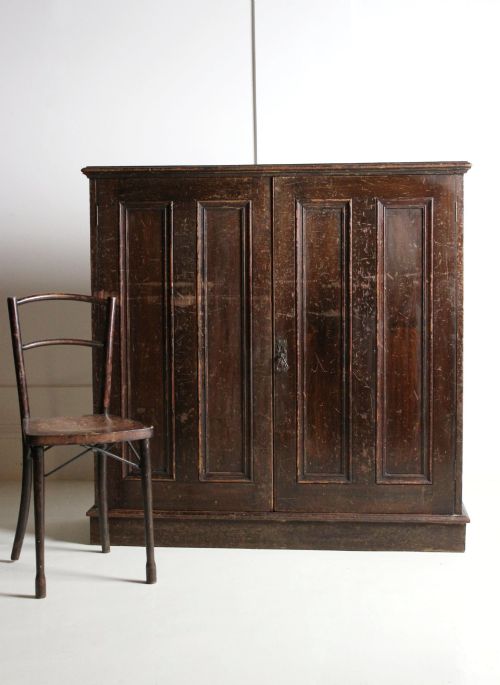
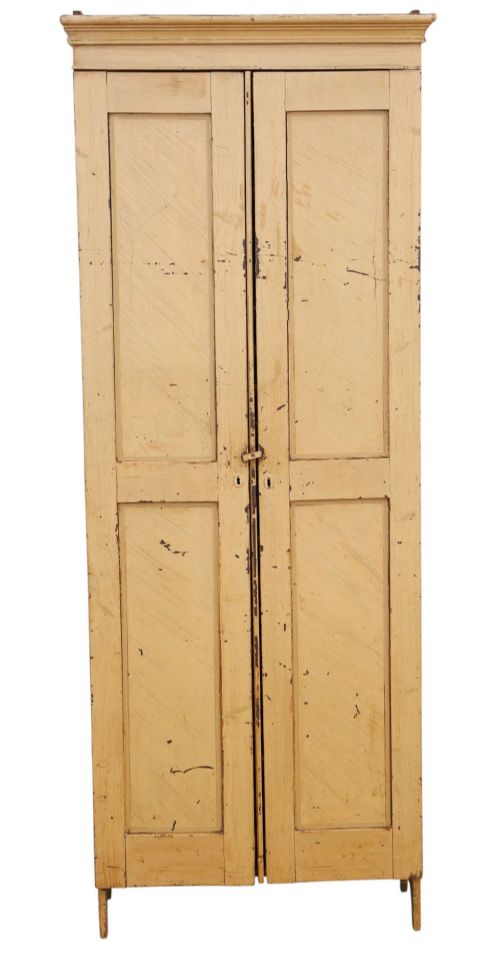
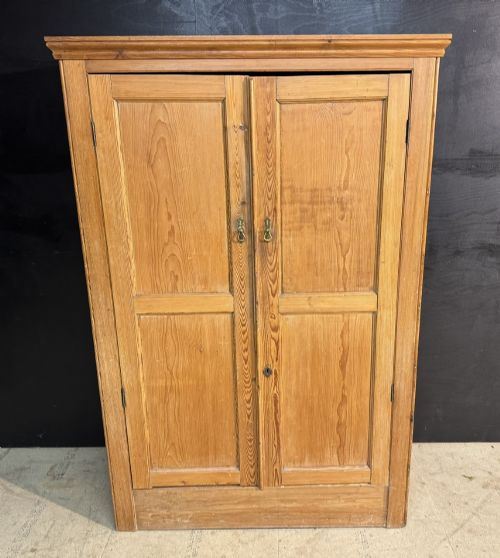
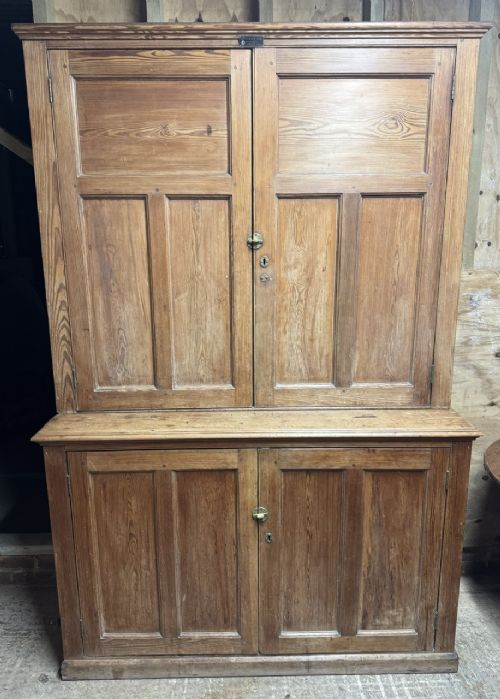
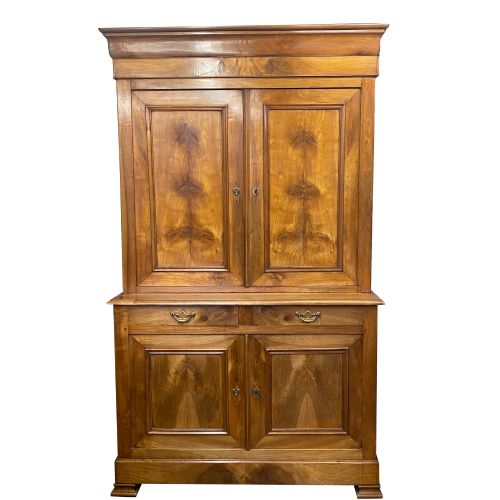
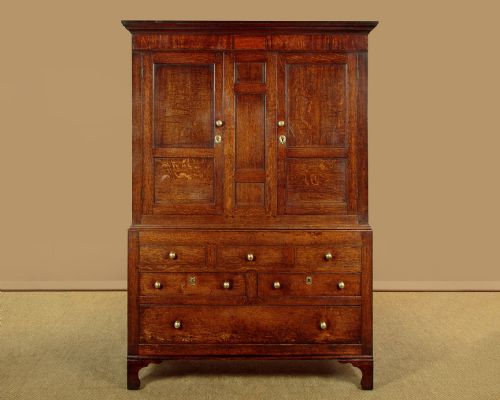
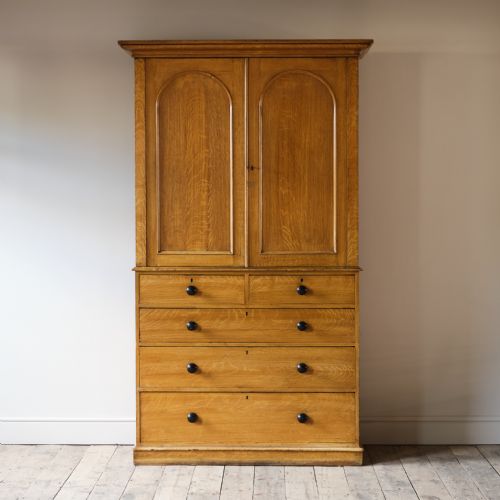
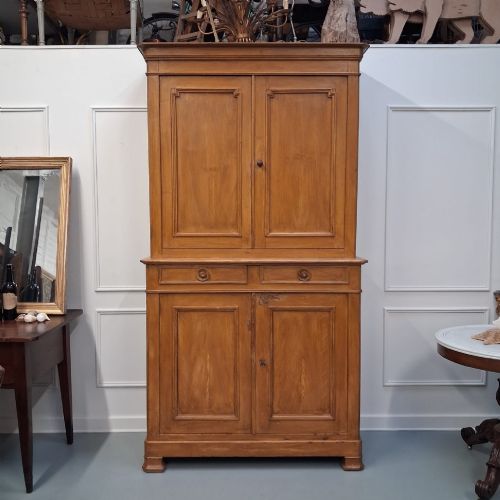
19th Century Housekeeper Cabinet
A 19th century housekeeper cabinet provides utilitarian storage with substantial proportions, offering generous shelving and a commanding presence for domestic organisation.
19th Century Housekeeper Cabinet
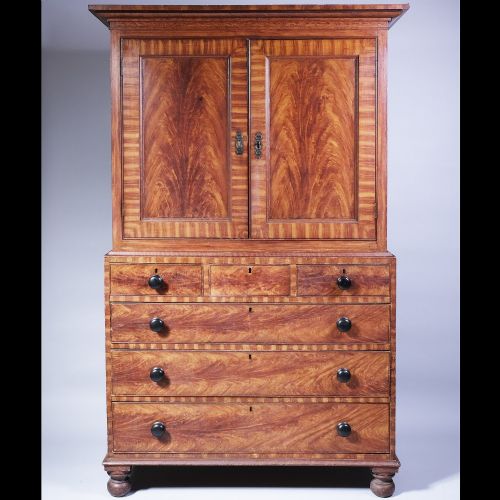
A 19th century housekeeper cabinet primarily serves as a utilitarian storage piece, frequently encountered in pine, oak, and cherry wood. These substantial cupboards originate from various domestic settings, ranging from English farmhouses to French provincial kitchens.
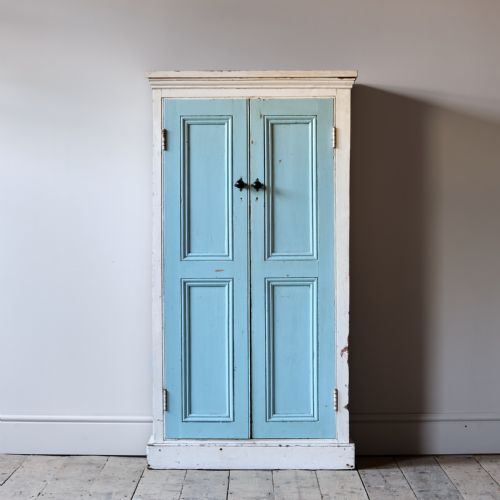
The selection includes regional variants such as Welsh oak press cupboards, Gustavian Swedish kitchen cabinets, and French food cupboards. Buyers most frequently meet pine examples finished in original paint, scumble glaze, or wax.
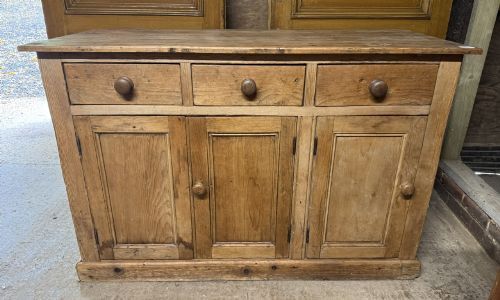
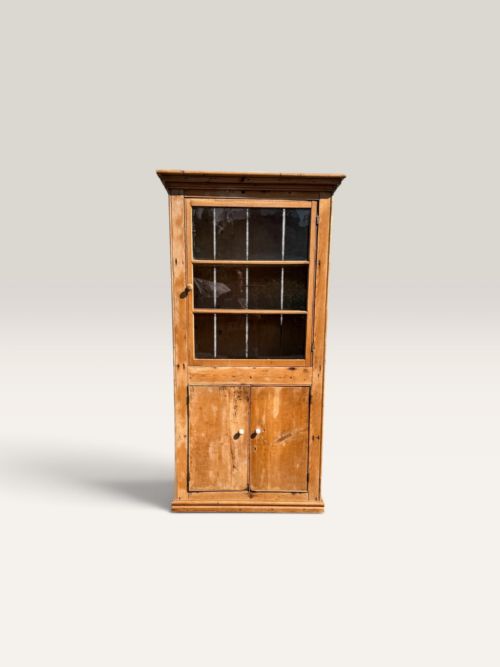
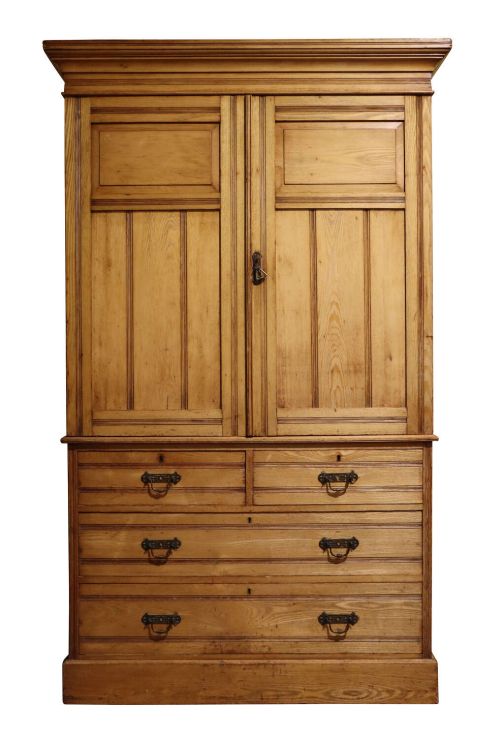
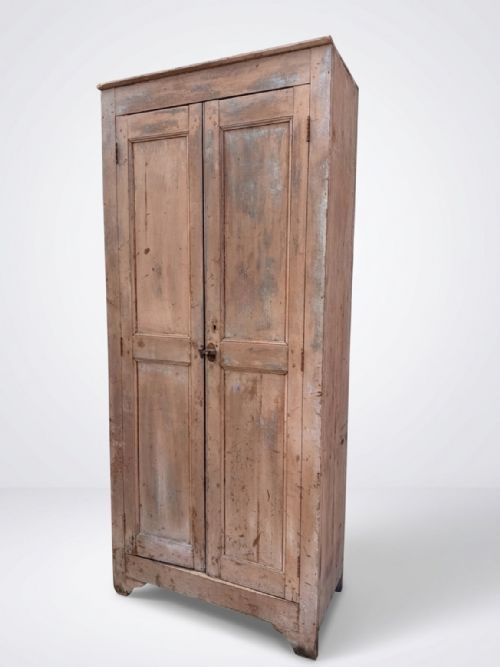
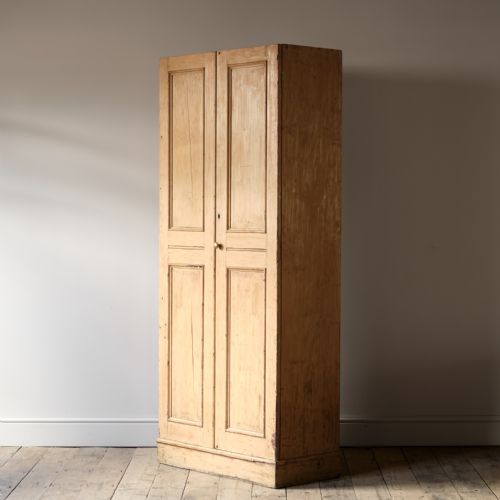
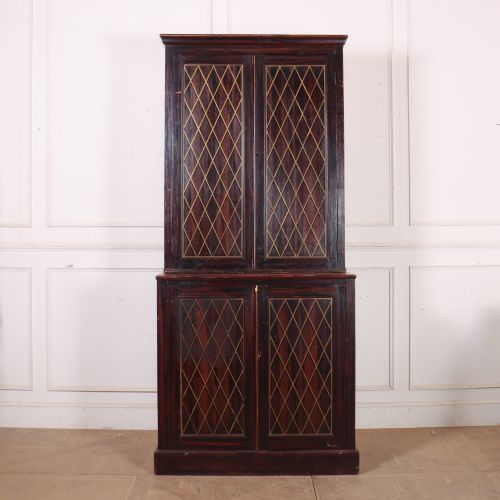
Forms span from tall narrow kitchen larders to two-part storage cabinets and linen presses. They often incorporate multiple doors and drawers designed originally for household provisions and linens.
How They Were Made
Construction relies heavily on solid timbers such as pine, oak, ash, and mahogany, assembled with traditional joinery suited to heavy daily domestic use. Iron and brass hardware, including hinges and latches, secure large doors built to hold substantial weight.
Surfaces frequently display historic finishes like original paint, scumble glazing, or flame mahogany veneers. Cabinet makers utilised local woods available within British, French, Scandinavian, and Welsh workshops.
Several pine cupboards wait patiently in their working paint, ready to guard your jam jars just as they did in eighteen fifty.
What Varies In Quality
The integrity of original surface treatments, such as early paint or scumble effects, significantly distinguishes pieces, alongside the choice of timber. Solid construction in woods like oak, cherry, or ash represents higher standard craftsmanship compared to simpler utility pine.
Proportion and scale dictate the visual weight of the piece, with well-balanced two-part cabinets and cleanly fitted doors showing superior workshop execution. Surviving original iron and brass hardware also indicates a higher grade of domestic furniture.
Maple & Co.·Heals
The 19th Century Housekeeper Cabinet Glossary
- Press cupboard
- A large storage piece traditionally used for linens and clothing, often featuring sliding trays or shelves behind upper doors.
- Scumble paint
- A decorative surface technique where a translucent glaze is manipulated over a base coat to imitate grain or texture.
- Linen press
- A tall cabinet combining upper storage space for folded textiles with lower drawers.
- Gustavian
- The Swedish neoclassical style characterised by restrained classical detailing and pale painted finishes.
- Larder cupboard
- A tall ventilated or enclosed cabinet designed for food storage in domestic kitchens.
19th Century Housekeeper Cabinet: Frequently Asked Questions
What is a 19th century housekeeper cabinet?
A 19th century housekeeper cabinet is a large utility piece built to store household provisions, linens, and food in domestic quarters. These cupboards provided essential storage before fitted kitchens became common.
They typically feature large doors, internal shelving, and sometimes lower drawers, constructed from timbers like pine, oak, and cherry.
Where were these cabinets used?
These cabinets originated in domestic service areas such as pantries, sculleries, and large country kitchens. Housekeepers utilised them to organise dry goods, tableware, and household linens.
Their sturdy construction suited busy working environments across British, French, and Scandinavian homes.
How do I identify painted finishes?
Historic painted finishes include original layers of pigment, scumble glaze, or milk paint applied during the nineteenth century. Examination under natural light often reveals wear patterns consistent with age.
Many pine examples retain traces of their initial decorative treatment beneath later layers of wax.
Can these cabinets fit modern kitchens?
Their generous proportions require substantial wall space and clearance for opening large doors. Measuring ceiling height and floor depth ensures they fit comfortably into contemporary rooms.
They function well as freestanding larders, linen storage, or dining room display units.