

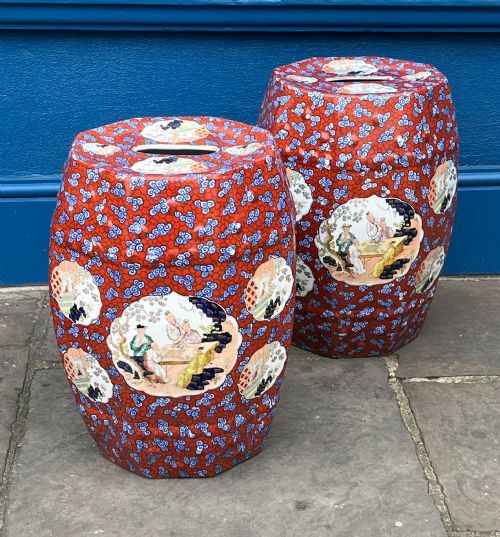
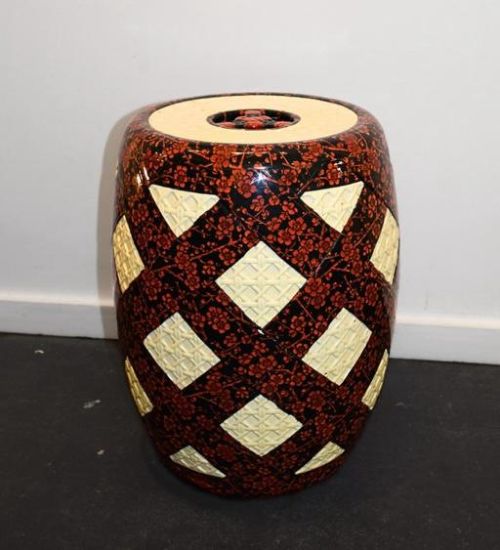


19th Century Garden Stool
These 19th century garden stool pieces offer robust utility and striking ornament for terrace and conservatory alike.
19th Century Garden Stool
A 19th century garden stool provides sturdy seating and decorative punctuation for outdoor spaces and glasshouses. The selection on this page centres primarily on barrel and drum-shaped forms originating from China and Britain during the Victorian and Qing Dynasty periods.
Makers fashioned these pieces to serve multiple functions, acting as low occasional tables, side tables, and conservatory seats alongside traditional garden use. Buyers encounter durable ceramic, porcelain, ironstone, and dense Hongmu hardwood structures across the inventory.
How they were made
Potters and artisans utilised heavy ceramic, creamware, ironstone, and porcelain, applying rich glazes and intricate hand-painted details including blue and white pigments and rose medallion motifs. These materials ensured the seats withstood outdoor environments while maintaining refined visual appeal.
Woodworkers carved dense Hongmu hardwood and incorporated mother-of-pearl inlay to build barrel-form tables and stools. This combination of ceramic moulding and hardwood joinery defines the structural techniques of the era.
19th Century Garden Stool Retail Price Guide 2026
Typical asking prices for 19th century garden stool among the pieces listed under this phrase on Sellingantiques today, from the lower quarter to the upper quarter. They describe what is for sale here now, not the wider market.
What varies in quality
Quality rests in the precision of the hand-carved hardwood details, the depth of mother-of-pearl inlay, and the crispness of painted ceramic glazes. Pieces featuring complex clobbered decoration or elaborate rose medallion scenes demonstrate higher artistic ambition.
The choice of material creates a distinct hierarchy, ranging from standard glazed earthenware to dense Hongmu timber and fine porcelain. Structural integrity in barrel forms and the preservation of original surface finishes determine the standing of each piece.
Minton
The 19th Century Garden Stool Glossary
- Hongmu
- A dense, dark tropical hardwood utilised for Chinese furniture and barrel-form stands. It translates literally to red wood and provides exceptional weight and durability.
- Rose Medallion
- A distinct style of Chinese porcelain decoration featuring segmented panels of figures, birds, and flowers painted in vibrant pinks and greens. This motif appears frequently on nineteenth-century garden seats.
- Ironstone
- A heavy, durable type of British ceramic developed as a robust alternative to porcelain. It takes glazes exceptionally well and resists chipping.
- Clobbered
- A ceramic term describing older glazed wares that received secondary overglaze decoration and firing later in their history. This process often added colourful Chinoiserie details to plain white or blue pieces.
19th Century Garden Stool: Frequently Asked Questions
Where should I place a garden stool?
These pieces suit conservatories, covered patios, and shaded garden corners where moisture levels remain moderate. They function effectively as standalone seats or sturdy supports for small objects.
Interior settings also benefit from their compact footprint, allowing them to serve as bedside stands or living room side tables next to upholstery.
Can ceramic stools stay outside in winter?
Ceramic and porcelain pieces endure mild outdoor conditions, but severe frost risks cracking glazed earthenware and stoneware. Bringing unheated garden seats indoors during freezing weather protects the material.
Hardwood and Hongmu examples require complete shelter from rain and damp ground to preserve the timber and mother-of-pearl inlay.
How do I distinguish Chinese from British pieces?
Chinese pieces typically display traditional barrel or drum forms with pierced coin motifs, blue and white painting, or rose medallion enamel work. Materials span porcelain and carved Hongmu hardwood.
British iterations often utilise creamware, ironstone, or glazed earthenware, reflecting Victorian tastes and domestic ceramic manufacturing traditions of the nineteenth century.
Were these seats actually used outdoors?
Victorian and Qing Dynasty households deployed these sturdy ceramic and wooden drums on verandas, in courtyards, and among garden plantings. Their heavy weight kept them stable on soil and stone surfaces.
Over time, many migrated indoors to conservatories and antechambers as ornamental furniture rather than purely utilitarian garden equipment.