
19th Century French Bureau Plat
A 19th century french bureau plat is a freestanding writing table designed for the centre of a room, prized for its refined ornamentation and practical surface.
19th Century French Bureau Plat
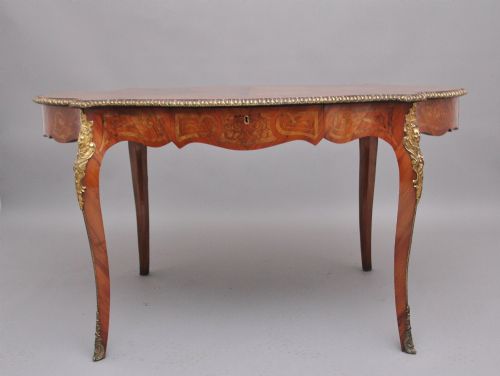
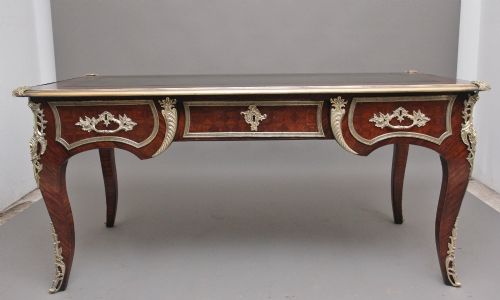
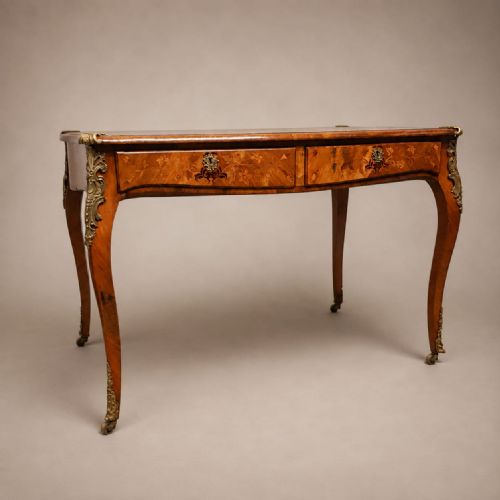
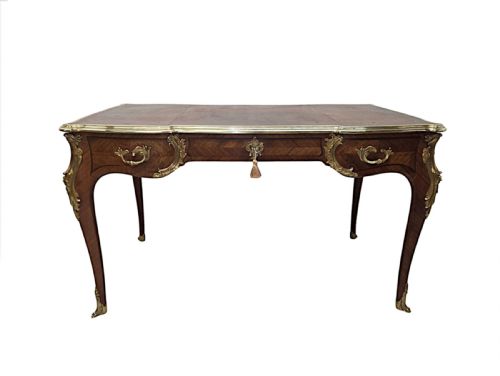
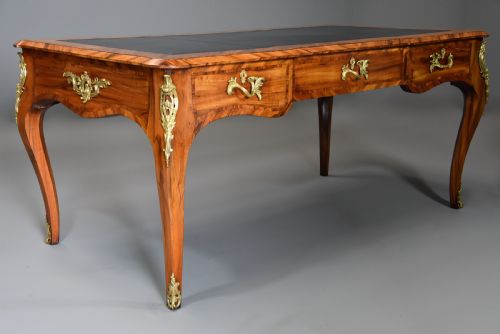
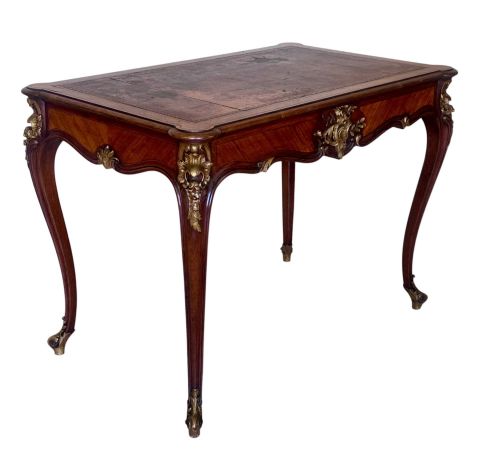
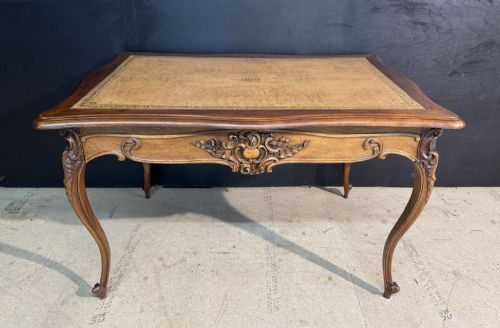
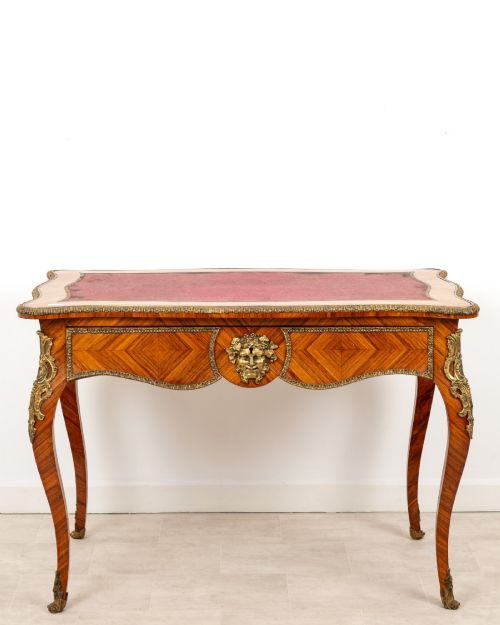
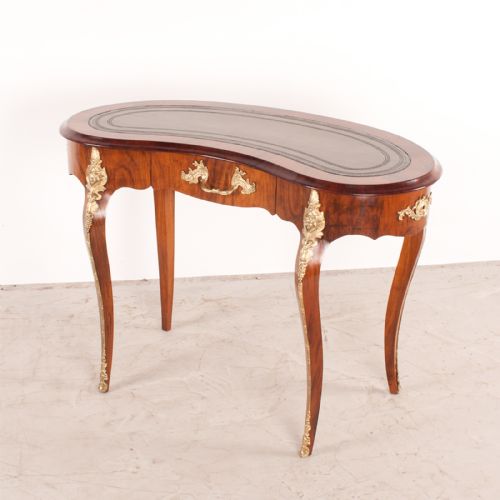
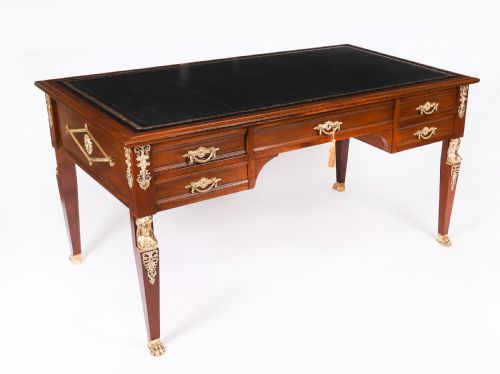
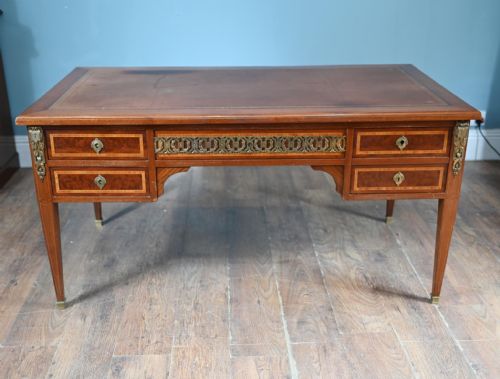
A 19th century french bureau plat functions primarily as a writing table or centre table, distinguished by a wide, flat writing surface inset with leather. These pieces generally stand on cabriole or tapered legs and often feature frieze drawers for storage.
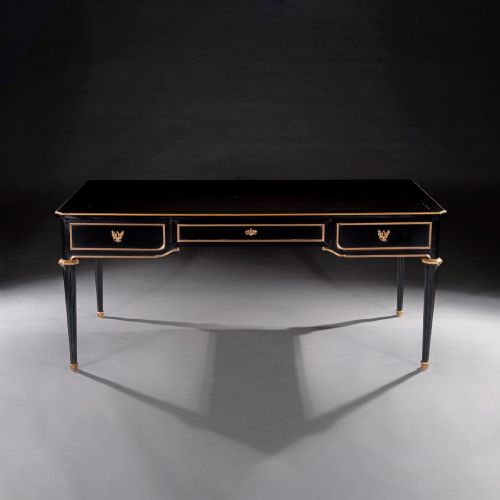
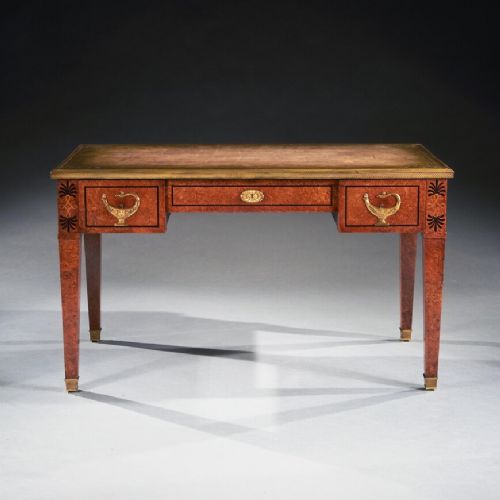
The versions met most frequently on this page belong to the Louis XV and Louis XVI revivals, displaying either the exuberant curves of French Rococo or the restrained symmetry of Neoclassical design. Makers adapted these historical idioms during the nineteenth century to suit formal salons and private libraries.
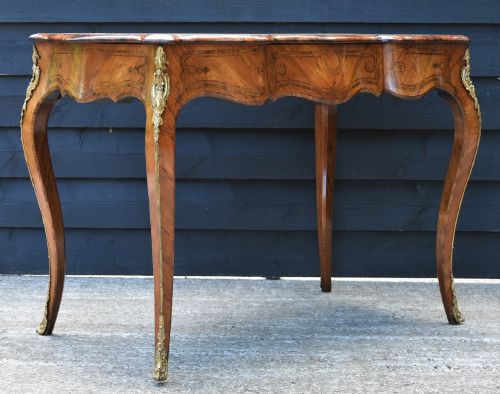
Originating predominantly from French workshops, these desks range from restrained mahogany models to highly decorated pieces veneered in exotic timbers and enriched with gilt metal mounts. Their freestanding nature means finished work appears on all four sides, allowing placement away from walls.
How they were made
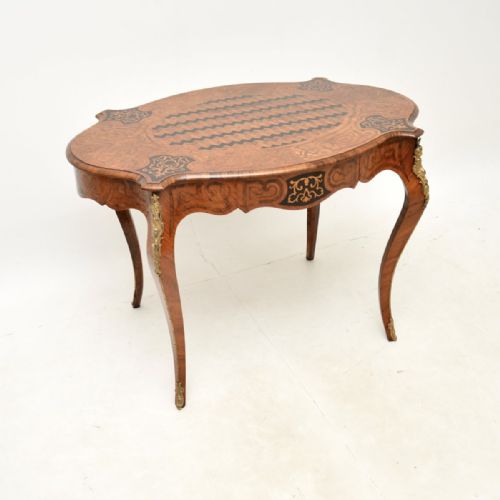
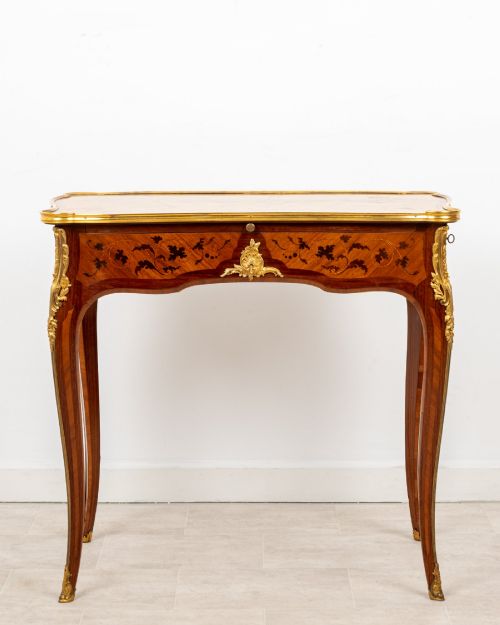
Cabinetmakers constructed these tables using a solid timber carcase of oak, walnut, or mahogany, which was then layered with decorative veneers such as kingwood, rosewood, tulipwood, or amboyna. Marquetry and parquetry patterns arranged grain variations into geometric designs or floral motifs across the top and sides.
Gilt bronze and ormolu mounts were cast, chased, and applied to corners, legs, and drawer edges to accentuate the structural lines. Leather writing surfaces were typically tooled with gold leaf around the perimeter, fitted precisely into recessed wooden frames.
Some nineteenth century writing tables included hidden side slides to extend the surface area while keeping inkwells safely out of reach.
What varies in quality
Quality reveals itself in the crispness of the bronze casting and the precision of the veneer work, where superior examples display fluid hand-chasing on metal mounts and seamless alignment of wood grains. The depth and warmth of the polished timber finish further distinguish workshop standards.
Internal construction methods dictate longevity, with finer desks utilising solid drawer linings and hand-cut dovetailing rather than machine-made substitutes. The weight and thickness of the applied ormolu indicate the maker's investment in materials and time.
Francois Linke·CH. Jeanselme & Co·Durand·Paul Sormani
The 19th Century French Bureau Plat Glossary
- Bureau plat
- A freestanding writing table with a flat top, usually fitted with drawers in the frieze.
- Ormolu
- Gilt bronze mounts applied to furniture for decorative enrichment, cast and finished by hand.
- Kingwood
- A dense, heavily figured exotic timber utilised extensively for veneering fine French cabinetry.
- Marquetry
- Decorative veneer patterns arranged to form pictures or ornamental designs across a surface.
- Cabriole leg
- An S-curved furniture leg inspired by animal limbs, characteristic of Louis XV revival styles.
19th Century French Bureau Plat: Frequently Asked Questions
Where should a bureau plat be placed?
Because these desks are finished on all sides, they sit best in the middle of a room rather than against a wall. This allows the mounts and veneers to be viewed from any angle.
Ensure there is adequate clearance around the table for chairs and movement, as their generous proportions require open space to command the room properly.
How do I care for the leather top?
The leather writing surface benefits from occasional cleaning with a slightly damp cloth followed by a neutral leather cream to keep the material supple. Avoid excessive moisture and harsh chemical cleaners.
Keep direct sunlight away from the leather and timber to prevent fading and drying of the natural materials over time.
How do I distinguish Louis XV and Louis XVI styles?
Louis XV style pieces rely on asymmetrical curves, cabriole legs, and elaborate rococo ormolu mounts. The overall aesthetic feels flowing and organic.
Louis XVI style moves towards straight lines, symmetrical geometry, fluted tapered legs, and neoclassical restraint inspired by antiquity.