


19th Century Farmyard Painting
A 19th century farmyard painting captures the daily life and animals of the rural past through oil on canvas.
19th Century Farmyard Painting
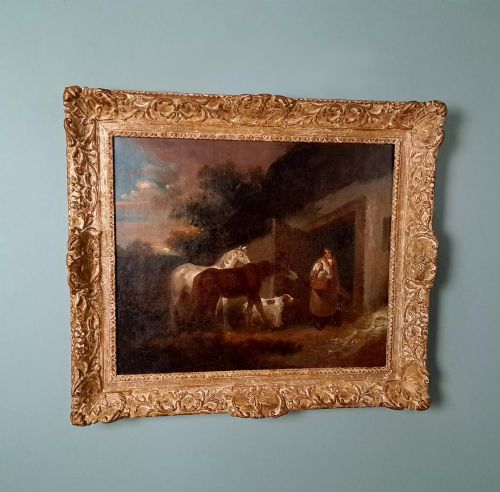
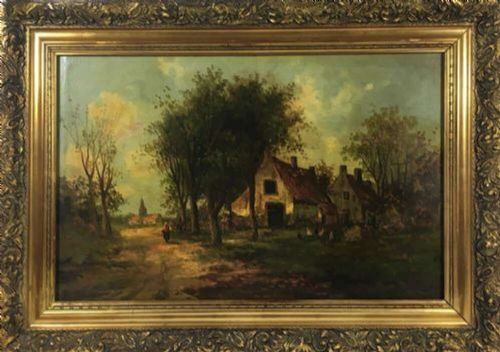
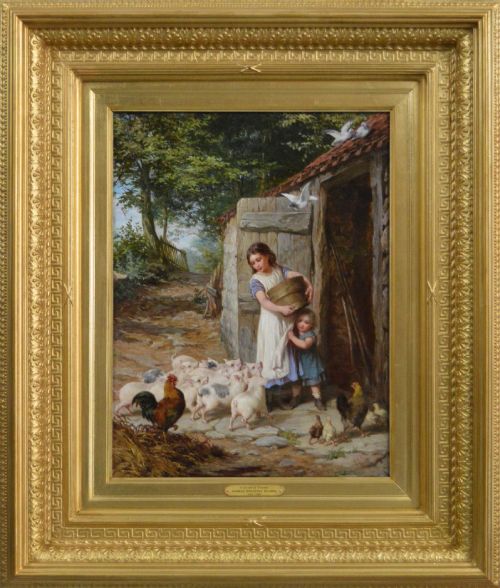
A 19th century farmyard painting depicts rural scenes featuring horses, pigs, poultry, and cattle within agricultural landscapes.
The version most commonly met on this page is an oil painting on canvas, often framed in giltwood, originating from the Victorian period.
These works range from detailed animal studies by known artists to broader pastoral landscapes showing labourers and farm buildings.
Materials and construction
Artists painted primarily with oil paint on stretched canvas or occasionally wood panels, building up layers to create texture and depth.
Frames are frequently constructed from wood with gesso and gold leaf finishes, varying from simple moulded profiles to ornate giltwood designs.
Materials recorded in these listings include oil on canvas, wood panels, gesso, and gold leaf.
Assessing the work
Quality rests on the precision of the animal anatomy, the handling of light within the landscape, and the cohesion of the composition.
Works by established named painters demonstrate superior brushwork and narrative detail compared to anonymous or follower pieces.
John Frederick Herring Jnr·William Joseph Shayer Senior·George Augustus Holmes·Claude Cardon·Arthur Charles Dodd·Edgar Hunt·Thomas Blinks·Georgina Lara
The 19th Century Farmyard Painting Glossary
- Oil on Canvas
- Pigment mixed with drying oil applied to a woven fabric support. This was the standard medium for fine art throughout the period.
- Giltwood
- Wood carved and coated with gold leaf or gold paint. Frames of this type complement the warm tones of pastoral oil paintings.
- Barbizon School
- A French movement of painters dedicated to realism in landscape art. These works emphasise naturalism over idealized classical scenes.
- Genre Painting
- The pictorial representation of scenes from everyday life. In this context, it includes domestic animals and farm workers going about daily tasks.
- Gesso
- A plaster-like mixture applied to wood frames before gilding. It provides a smooth surface for laying down gold leaf.
19th Century Farmyard Painting: Frequently Asked Questions
What animals appear most often?
Horses, pigs, chickens, and ducks dominate the imagery across these canvases. They reflect the practical livestock of the working nineteenth-century farm.
Cattle, sheep, and goats also appear in broader landscape compositions alongside figures and working dogs.
How should I hang an oil painting?
Hang the canvas away from direct sunlight and fluctuating heat sources to protect the oil paint and wood frame. Stable indoor conditions prevent cracking in the canvas and gesso.
Ensure the wall fixings match the weight of the framed artwork securely.
Are these works signed by the artist?
Many canvases bear signatures or initials from the period, while others remain unattributed or represent the work of followers. Unsigned pieces are often catalogued by school or style.
Documentation and framing can sometimes offer clues regarding the origin of unsigned works.
What distinguishes Victorian pastoral art?
Victorian pastoral art focuses on the idealized yet recognizable daily routines of rural life. Artists prioritized naturalistic observation of animals and landscape details.
This approach differs from earlier romantic landscapes by grounding the scene in accurate depictions of farm labour.