




19th Century Draft Screen
A 19th century draft screen divides a room or shields a hearth from sudden chills, bringing substantial period presence to a modern interior.
19th Century Draft Screen
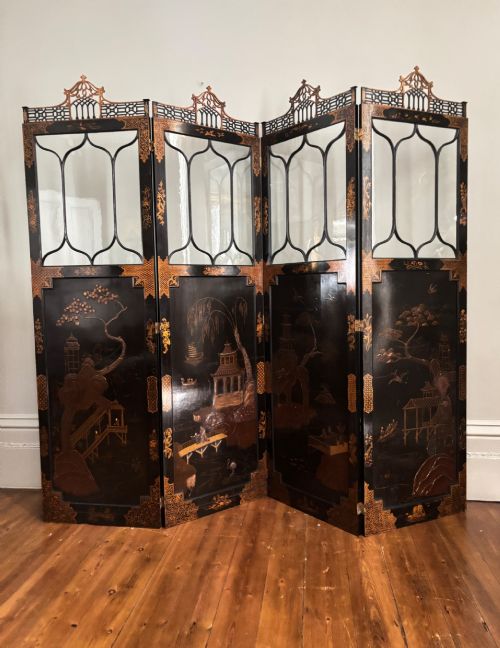
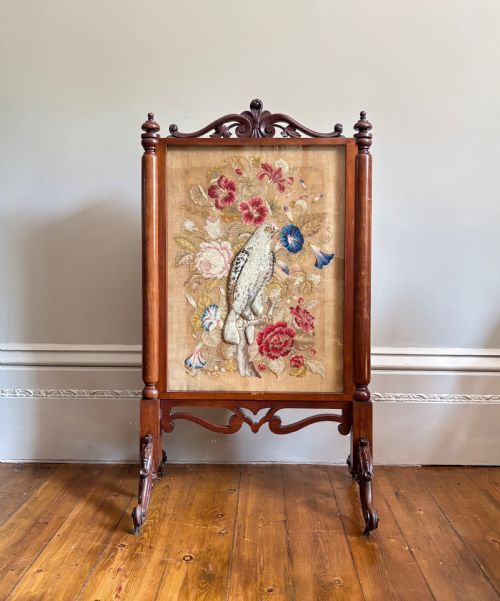
A 19th century draft screen primarily takes the form of multi-fold room dividers or single-panel firescreens designed to block air movement and radiant heat. The selection encompasses large country house folding screens alongside smaller hearth-bound firescreens.
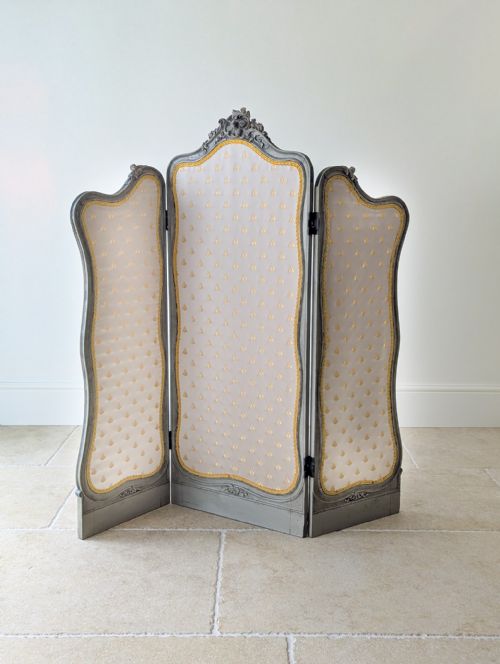
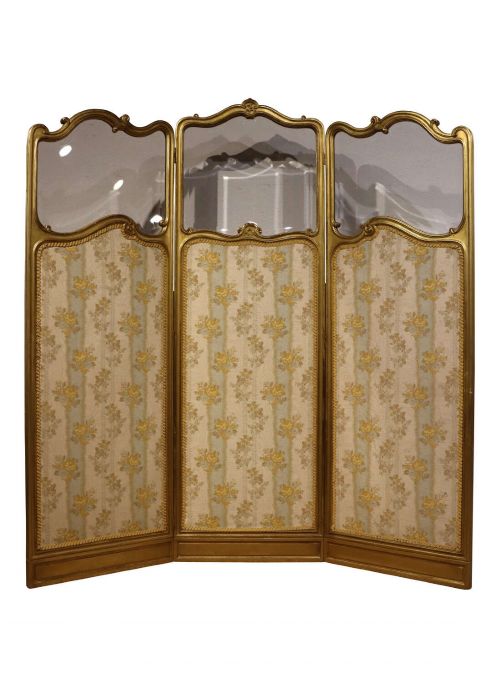
Makers of the period utilised timber frames in mahogany, rosewood, and giltwood to support textile, glass, and painted panels. These pieces reflect Victorian, French Chateau, and Chinese Chippendale styles.
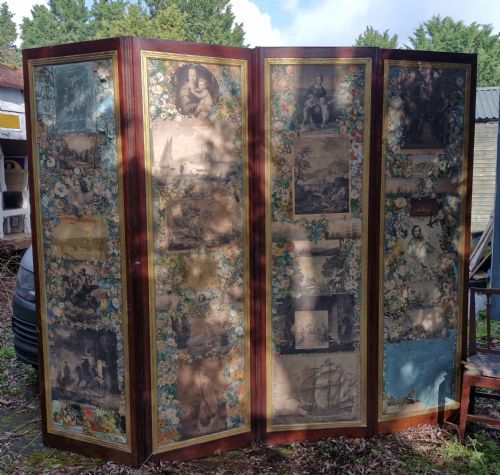
Most examples found on this page date from the middle to the late decades of the century, constructed with three or four hinged folds or sliding leaves.
How they were made
Carpenters constructed folding frames from timbers such as mahogany, rosewood, and giltwood, joining multiple panels with hinges to allow flexible movement. Wooden frames often received hand-carved detailing or gilded finishes in French and Victorian revival styles.
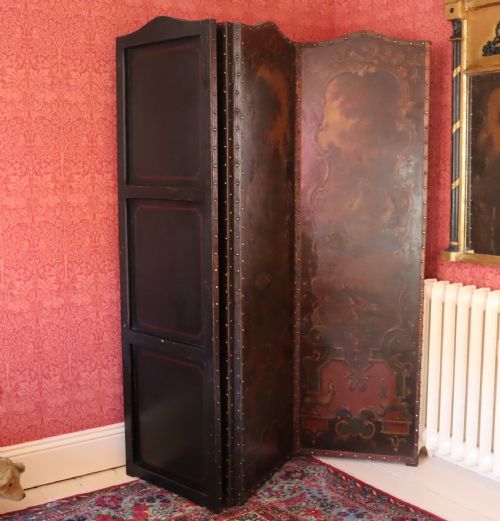
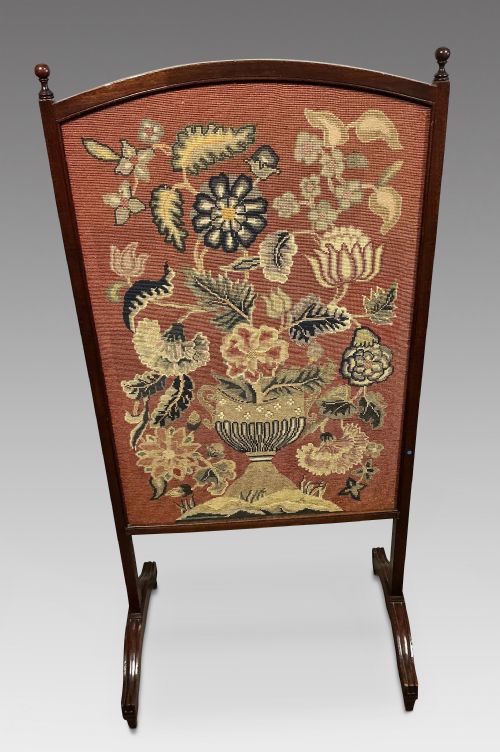
Panels incorporated diverse materials including hand-painted leather, canvas, wool tapestry, and Berlin work needlepoint. Some firescreens and room dividers featured glazed upper sections set with bevelled glass or protected delicate silk inserts.
Screens let you instantly banish a gloomy corner or hide a pile of laundry behind magnificent painted leather.
What varies in quality
The calibre of a 19th century draft screen rests on the execution of its panel inserts and the solidity of its timber frame. Hand-painted leather, Aubusson tapestry, and detailed needlework elevate a piece far above simpler fabric or plain canvas versions.
Structural heft and scale distinguish finer country house examples from standard domestic pieces. Timber selection, such as dense mahogany or carved rosewood, alongside robust brass hardware and bevelled glass, marks the upper tier of production.
The 19th Century Draft Screen Glossary
- Berlin work
- A style of needlepoint embroidery popular in the mid-19th century, typically worked in wool on canvas from coloured charted designs.
- Aubusson
- A style of hand-woven tapestry originating from France, frequently incorporated into decorative folding screens.
- Firescreen
- A single-panel screen placed before a fireplace to block excess heat when the hearth is not in active use.
- Coromandel
- A dense, dark East Indian timber often utilised for high-status orientalist folding screens.
- Giltwood
- Timber that has been coated with a thin layer of gold leaf or gesso, common in French Chateau and Victorian revival pieces.
19th Century Draft Screen: Frequently Asked Questions
How were 19th century draft screens used?
These screens served to block cold air circulating across large rooms and deflected radiant heat from fireplaces away from seated occupants. Multi-fold versions also created private dressing areas or divided expansive Victorian living spaces.
Smaller firescreens stood directly on the hearth, protecting rooms from dying embers and sudden drafts down the chimney. Their movable panels allowed occupants to adjust protection against changing temperatures throughout the day.
What is the difference between a room divider and a firescreen?
Room dividers are tall, multi-fold screens designed to partition floor space and block drafts at body height across a room. They feature three or four large panels covered in leather, tapestry, or painted canvas.
Firescreens are much smaller, single-panel pieces positioned exclusively in front of a fireplace. They often incorporate pull-out leaves or adjustable needlepoint panels rather than full-height folding sections.
How do I identify a Victorian screen?
Victorian examples frequently display characteristic revival styles such as Rococo curves, heavy mahogany frames, and Berlin work tapestry panels. Construction dates generally align with the mid to late 19th century.
Materials like hand-carved rosewood, brass hardware, and wool needlepoint further point to domestic production during this era. Craftsmanship often mirrors prevailing architectural tastes found in large country houses.
Where should I place a screen in a modern home?
A folding screen functions effectively in open-plan spaces to define separate zones, such as a dining area or reading corner. Placing one near a door helps intercept actual air currents.
Shorter firescreens work well positioned against decorative fireplaces or used as low decorative partitions against blank walls. Their panels add textile texture and colour to contemporary interiors.
What materials are common in these screens?
Frames rely on hardwoods including mahogany, rosewood, and giltwood, while structural support often includes brass hinges. Panels utilise textiles like wool tapestry, canvas, and silk.
Alternative surfaces include hand-painted leather and bevelled glass inserts. These materials reflect both English domestic preferences and French decorative influences.