



19th Century Domed Chest
A 19th century domed chest brings architectural presence and practical storage to a room, ranging from grand painted coffers to compact tea caddies.
19th Century Domed Chest
A 19th century domed chest spans large floor trunks, strong boxes, and tabletop tea caddies. The curve of the lid defines the group, designed originally to shed water or provide internal clearance for fitted trays.
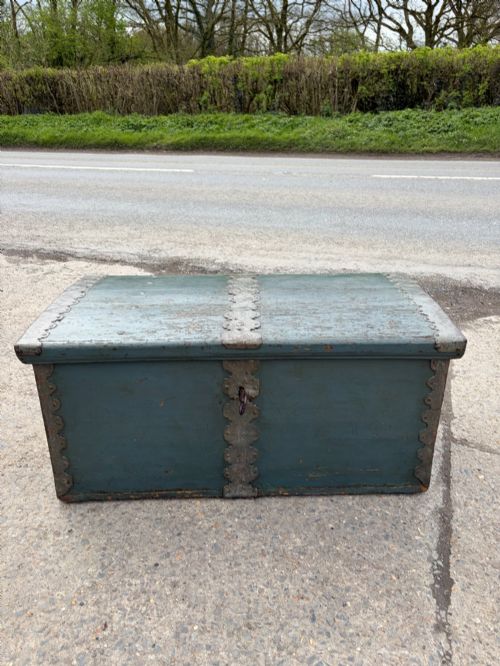
Scandinavian painted pine marriage chests and coffers form a distinct strand among the pieces found here. These items often carry hand-painted decoration reflecting folk art traditions.
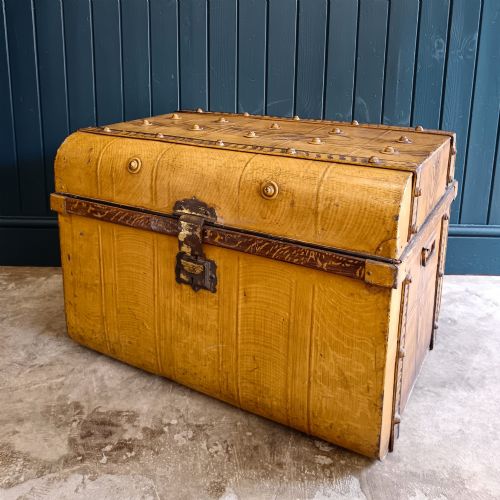
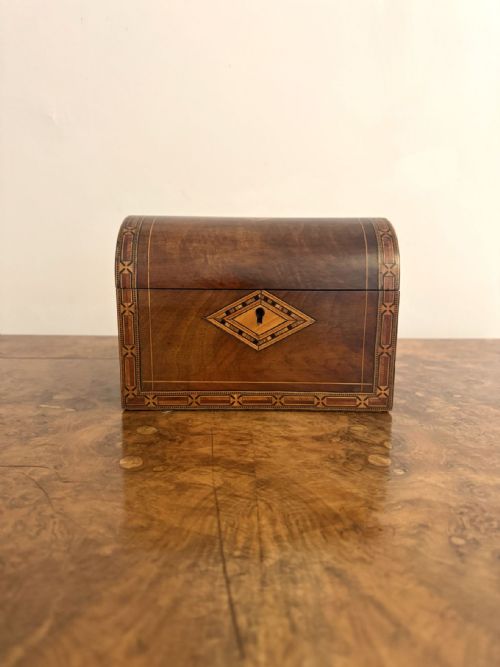
Travel pieces also appear in this category, including steel steamer trunks and leather-clad trunks bearing the marks of transport. Alongside these sit refined stationary boxes and tea caddies executed in walnut, coromandel, and amboyna.
Materials and construction methods
Makers utilised native and exotic timbers including pine, oak, walnut, and coromandel, often applying veneers such as burr wood and Tunbridge inlay. Iron, wrought iron, and brass provide structural reinforcement through hinges, corner mounts, and binding straps.
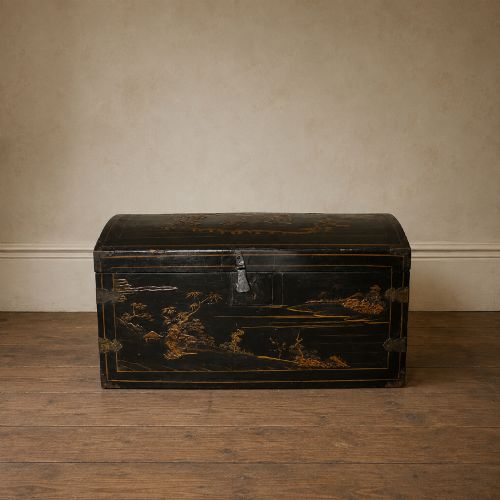
Surface treatment defines many examples, from original paint and black lacquer with gilt decoration to plain polished wood. Construction relies on dovetailed joints for boxes and robust framing for larger trunks and coffers.
Materials recorded across the selection include iron, pine, brass, lacquer, gilt, walnut, coromandel, and amboyna.
Differentiating quality across the range
Quality rests upon the preservation of original surfaces, such as untouched paint on Scandinavian marriage chests and crisp gilt on Chinese export lacquer. The integrity of internal fittings, including tea caddy compartments and stationary dividers, also elevates an example.
The sophistication of cabinetwork marks the division between standard utility boxes and high-status pieces. Finely executed Tunbridge inlay, complex burr veneers, and substantial brass mounts distinguish superior work from simpler pine construction.
The 19th Century Domed Chest Glossary
- Coffer
- A heavy wooden chest traditionally used for storing valuables or household goods. These pieces often feature sturdy lid construction and iron binding.
- Tea caddy
- A small box designed specifically for storing dry tea leaves. During this era, many adopted curved lids and fitted interior compartments.
- Tunbridge inlay
- A meticulous woodworking technique creating intricate mosaic patterns from tiny pieces of naturally coloured woods. This decoration appears on select nineteenth-century boxes.
- Coromandel
- A dense, heavily figured timber imported from Asia, valued for its rich dark brown colour and striking grain. Cabinetmakers utilised it for luxury boxes and caddies.
- Marriage chest
- A painted wooden trunk commissioned or given to celebrate a wedding, frequently inscribed with dates or initials. These items sit firmly within folk art and regional traditions.
19th Century Domed Chest: Frequently Asked Questions
What were domed chests used for originally?
Large domed chests served primarily for travel and secure domestic storage, protecting textiles, documents, and valuables from dust and moisture. The curved lid provided extra vertical space inside and helped shed liquid during transit.
Smaller lidded containers, such as tea caddies and stationary boxes, functioned on tables and desks to safeguard precious commodities like tea leaves and correspondence.
How do I care for a painted pine chest?
Keep painted wooden chests away from direct sunlight and steady heat sources to prevent the wood from shrinking and the historic paint from flaking. Dust gently with a dry, soft cloth and avoid chemical cleaning products that might strip the original finish.
Maintain stable room humidity to protect both the pine structure and any iron or brass mounts attached to the exterior.
How can I tell a Swedish marriage chest apart?
Swedish marriage chests usually feature hand-painted folk art decoration directly onto a pine or oak carcase, often incorporating floral motifs, dates, or initials. Their proportions tend to be stout and functional, with sturdy metal hinges and carrying handles.
These pieces reflect specific regional Scandinavian country styles rather than formal British cabinetmaking traditions.
What is the difference between a coffer and a trunk?
A coffer generally denotes a heavier, stationary wooden chest used inside a domestic setting for storing household wealth or linens. They frequently exhibit robust frame construction and detailed carving or paintwork.
A trunk typically implies an item intended for travel, featuring reinforced metal bands, handles, and materials like leather or steel designed to withstand the rigours of transit.