

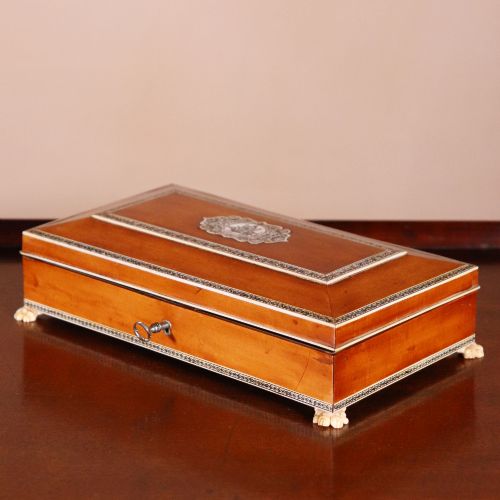
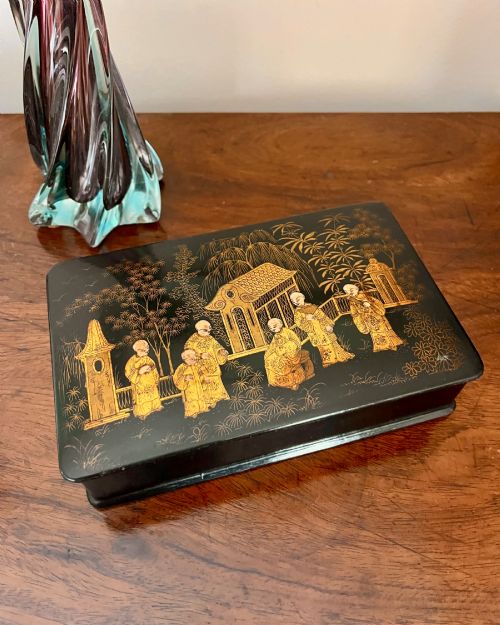
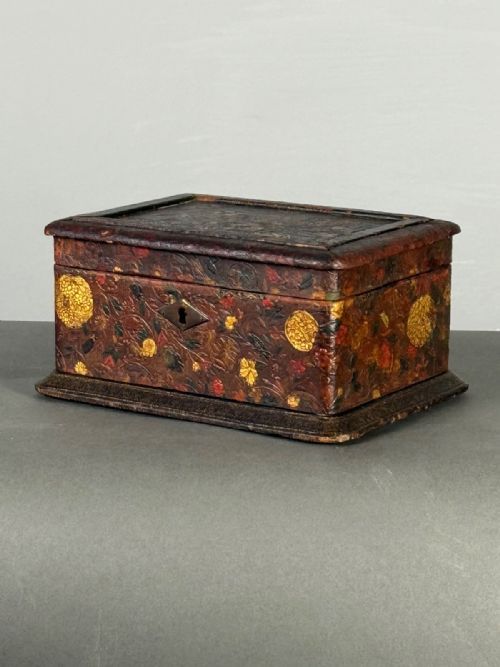
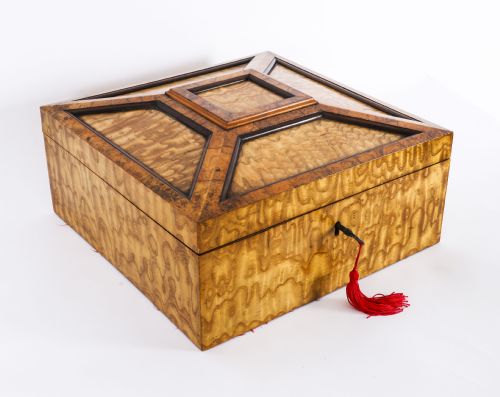




19th Century Document Casket
A 19th century document casket stores papers and valuables securely while bringing period timber and brass into a room.
19th Century Document Casket
A 19th century document casket serves as a secure desktop repository for papers, correspondence, and valuables. These pieces range from utilitarian strong boxes to elaborate stationery and presentation boxes designed for elite interiors.
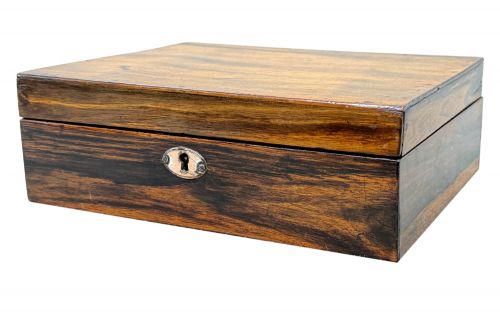
The selections encountered here span the Georgian and Victorian eras, taking the form of rectangular chests, slope-front boxes, and low desks. Woods such as rosewood, burr walnut, mahogany, and pine dominate the structural forms across these decades.
Origins stretch from English workshops to continental centres like Paris and Sorrento, alongside Scandinavian folk art pieces and Anglo-Indian productions. Buyers frequently meet rosewood and mahogany document boxes fitted with brass bindings and lockplates.
Materials and construction
Cabinetmakers constructed these caskets using dense hardwoods like rosewood, coromandel, and walnut over softer carcass timbers. Surfaces often feature marquetry inlay, Tunbridge ware, or carved details such as bone, fruitwood, and ebony elements.
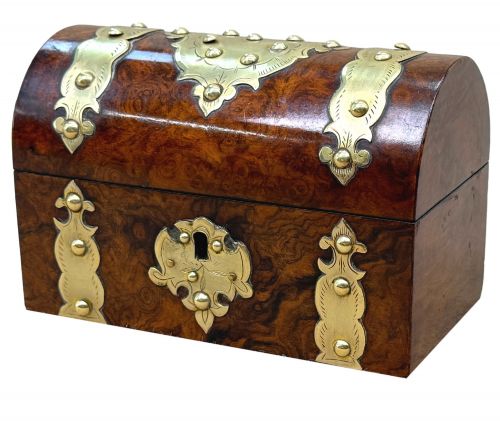
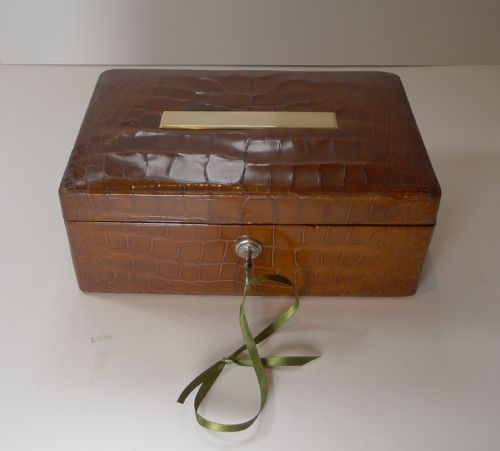
Metalwork played a structural and decorative role, utilising brass mounts, hinges, and lockplates, sometimes with heavy iron strapping on utilitarian strong boxes. Leather, lacquer, and polychrome finishes appear alongside reptile skin and carved wood variants.
19th Century Document Casket Retail Price Guide 2026
Typical asking prices for 19th century document casket among the pieces listed under this phrase on Sellingantiques today, from the lower quarter to the upper quarter. They describe what is for sale here now, not the wider market.
One surviving Regency document box arrived engraved with the single initial 'K', preserving a quiet mystery about its original owner.
Markers of distinction
Quality rests in the precision of the timber matching, particularly in burr veneers and marquetry inlay, where continuous grain patterns elevate the piece. The complexity of internal fittings, such as secret compartments and satinwood stationery slots, marks higher workmanship.
Hardware execution separates standard workshop items from exceptional commissions. Integrated brass lock mechanisms, robust hinges, and crisp hand-engraved mounts demonstrate superior workshop standards.
Susse Freres·Pugin
The 19th Century Document Casket Glossary
- Burr walnut
- A figured timber derived from the irregular growths of the walnut tree. It produces intricate, swirling grain patterns highly prized for decorative box veneers.
- Marquetry
- The art of applying small pieces of veneer to a structure to form decorative patterns. Craftsmen utilised fruitwood and exotic timbers to create pictorial scenes on desktop boxes.
- Sorrento ware
- Woodworking originating from the Italian town of Sorrento, featuring intricate micro-mosaic and marquetry inlay. Olive wood forms the common base for these decorative caskets.
- Tunbridge ware
- Small wooden items decorated with mosaic patterns assembled from thousands of tiny coloured wood blocks. This specialty originated in Kent during the period.
- Writing slope
- A portable desk that folds open to reveal a slanted leather or velvet writing surface. These objects often include inkwell compartments and secret drawers beneath the slope.
19th Century Document Casket: Frequently Asked Questions
What fits inside a document casket?
These boxes accommodate folded letters, legal documents, stationery, and small valuables. Many contain dedicated compartments for pens, inkwells, and stamps.
Larger variations function as desktop chests for important household papers and receipts.
How do I care for antique wood boxes?
Keep wooden caskets away from direct sunlight and heat sources to prevent veneer splitting and timber shrinkage. Occasional application of quality wax feeds the antique polish.
Avoid excessive moisture on leather linings and metal mounts during cleaning.
Were these boxes locked originally?
Most document caskets featured functional brass locks to secure confidential papers and private correspondence. Many survive with working keys or original escutcheons.
Strong boxes utilised heavier iron mechanisms for maximum security.
How are regional styles identified?
Regional origins reveal themselves through timber choices and decorative techniques, such as olive wood for Italian Sorrento pieces or pine for Scandinavian folk art. English makers favoured mahogany and rosewood with brass banding.
Anglo-Indian boxes display distinct carved relief work and exotic woods like ebony.