

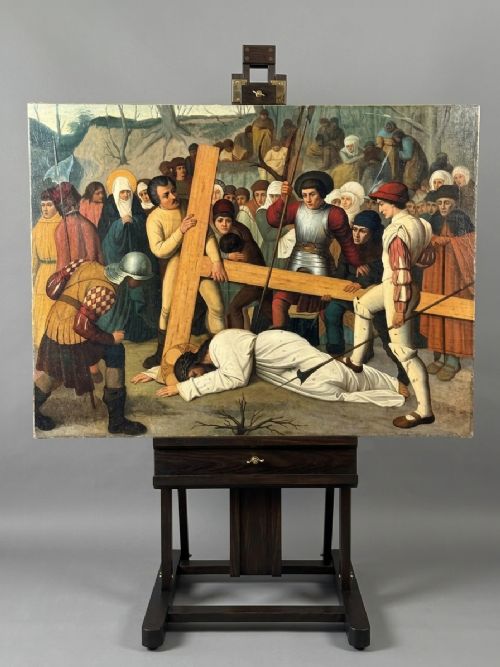


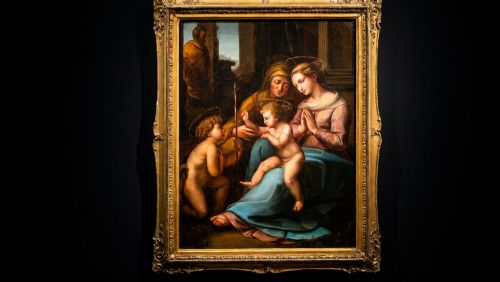

19th Century Devotional Painting
These 19th century devotional painting examples are sacred works of art created for prayer and contemplation, prized by collectors for their spiritual depth and historical hand.
19th Century Devotional Painting
When you search for a 19th century devotional painting, you encounter sacred imagery produced across Europe, frequently drawing inspiration from earlier Renaissance and Baroque masters. These works range from intimate depictions of the Holy Family and Christ the Saviour to elaborate compositions associated with religious houses and domestic shrines.
You are most likely to meet pieces executed in oil on canvas, alongside unique folk art interpretations and items incorporating gesso and gilt wood frames. The subjects frequently echo traditional iconography, portraying figures such as Our Lady of Sorrow and the Madonna and Child in distinct revival styles.
The selection reflects both academic adherence to historical painters and simpler folk traditions from Central European schools. Buyers encounter works directly linked to followers of renowned artists as well as anonymous regional hands expressing deep religious sentiment.
Materials and construction
Makers built these pieces primarily using oil paint applied to canvas, often supported by wooden stretcher frames. Selected works integrate gold leaf and gesso to create luminous halos and ornate decorative borders that enhance the sacred atmosphere.
The physical construction relies on traditional canvas preparation and layering techniques common to European fine art workshops of the period. Secondary framing elements frequently employ carved gilt wood to elevate the visual impact of the central canvas.
19th Century Devotional Painting Retail Price Guide 2026
Typical asking prices for 19th century devotional painting among the pieces listed under this phrase on Sellingantiques today, from the lower quarter to the upper quarter. They describe what is for sale here now, not the wider market.
Listings feature works in oil on canvas and wood, incorporating gesso and gold leaf across Renaissance Revival and folk art styles.
Quality variations in sacred art
The distinction between standard decorative pieces and superior works lies in the handling of facial expression, drapery, and anatomical proportion. Superior examples display confident brushwork and emotional resonance that successfully capture the solemnity of their subjects.
The integrity of the original surface and the harmony between the canvas and its frame significantly influence the standing of a piece. Finer works maintain their pigment stability and structural cohesion, revealing the refined hand of a skilled follower or regional master.
Jozef Jansessens·Costantino Frixione·Raphael·Girolamo Dai Libri·Guido Reni
The 19th Century Devotional Painting Glossary
- Oil on Canvas
- A traditional painting medium where pigments are suspended in drying oils and applied to a stretched fabric support. This combination allows for rich colour blending and lasting durability.
- Gilt Wood
- Timber that has been decorated with a thin layer of gold leaf or powder. It provides a reflective, ornate border suitable for sacred imagery.
- Gesso
- A paint mixture consisting of a binder mixed with chalk, gypsum, or pigment. It serves as a prepared surface for gilding and fine detailing.
- Renaissance Revival
- An artistic movement reviving the forms, techniques, and ideals of fifteenth and sixteenth century European art. It heavily influences the composition of many religious canvases.
- Folk Art
- Artistic work created within a popular culture tradition, often reflecting regional practices rather than academic training. These pieces possess a direct and unpretentious charm.
19th Century Devotional Painting: Frequently Asked Questions
What is a 19th century devotional painting?
These works are sacred oil paintings created during the eighteen hundreds for personal prayer, chapel decoration, or domestic contemplation. They frequently reinterpret earlier Renaissance and Baroque masterworks to serve contemporary religious devotion.
Collectors prize them for their historical connection to European spiritual traditions and the quality of their painterly execution.
How were these religious paintings used?
Owners placed these canvases in private homes, household shrines, and small chapels to aid in daily prayer and meditation. They served as focal points for spiritual reflection and communal worship.
Over time, many transitioned from active religious objects into cherished items of historical fine art.
How do I live with antique devotional art?
Integrating these pieces into a modern interior involves hanging them away from direct sunlight to protect the oil pigments and sensitive gilt frames. Pairing them with understated lighting allows the rich tones of the canvas to stand out.
They work well as striking focal points in living spaces or quiet corners dedicated to contemplation.
How do I identify different styles?
Identifying styles involves examining the brushwork, the treatment of light, and the compositional debt to earlier periods like the Renaissance or Gothic eras. Regional schools often display distinct folk characteristics that separate them from academic workshop productions.
Comparing the handling of subjects like the Madonna or Christ to known masterworks clarifies the specific revival movement.