








19th Century Desk Companion
A 19th century desk companion brings order and elegance to writing, drawing together the inkstands, boxes and cabinets that equipped the Victorian study.
19th Century Desk Companion
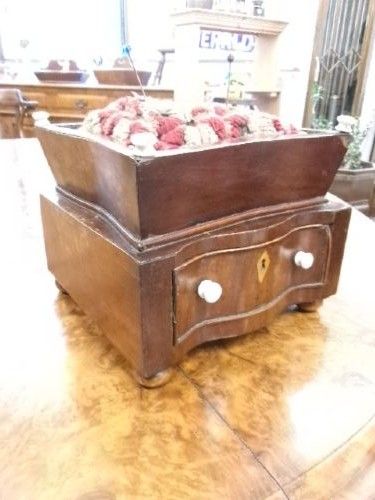
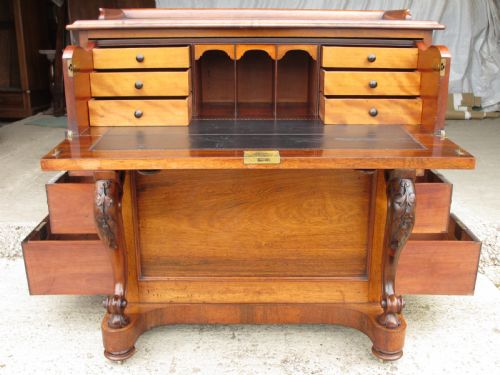
A 19th century desk companion encompasses the portable and stationary writing equipment used to manage correspondence during the Victorian and Regency eras. These items range from compact inkwells and desk stands to larger writing boxes, stationery cabinets and cigar humidors.
The versions most commonly met on this page are desk stands and inkstands fashioned from figured timbers and mounted with brass, alongside papier-mache sets. They reflect the high priority placed on correspondence and personal organisation in nineteenth-century domestic and professional life.
How they were made
Cabinet makers utilised dense hardwoods such as rosewood, walnut, coromandel and mahogany as foundations, often selecting burr veneers for decorative impact. These woods were frequently inlaid with brass or pewter in geometric and foliate patterns.
Metalwork played a structural and decorative role, with cast or chased ormolu and brass applied to hinges, handles and inkwell frames. Papier-mache surfaces received layered lacquer and intricate inlay, while glass formed the removable inkwell inserts.
19th Century Desk Companion Retail Price Guide 2026
Typical asking prices for 19th century desk companion among the pieces listed under this phrase on Sellingantiques today, from the lower quarter to the upper quarter. They describe what is for sale here now, not the wider market.
Listings feature walnut, rosewood, coromandel, and mahogany, reflecting the popularity of exotic hardwoods in nineteenth-century desk accessories.
What varies in quality
The distinction between standard items and superior examples lies in the selection of timber and the precision of the parquetry or metal inlay. Finely figured burr walnut and coromandel command attention through their natural grain, while simpler oak and mahogany pieces focus on utilitarian construction.
Interior fittings also dictate standard, where matched cut-glass inkwells with hallmarked silver collars or intricate pen trays elevate a desk stand above simpler counterparts with plain glass or replacement elements.
The 19th Century Desk Companion Glossary
- Coromandel wood
- A heavy, durable timber imported from Asia, characterised by dark brown colouring with dramatic black stripes.
- Ormolu
- A gilded bronze technique used for decorative mounts and fittings on nineteenth-century furniture and desk accessories.
- Papier-mache
- A composite material made from paper pulp mixed with glue and resin, pressed into moulds and lacquered to form smooth, decorated surfaces.
- Stationery cabinet
- A tabletop desk accessory designed with compartments and pigeonholes to hold writing paper and envelopes upright.
- Davenport
- A compact form of writing desk featuring a sloping top above a pedestal of drawers, popular during the Victorian period.
19th Century Desk Companion: Frequently Asked Questions
What is a 19th century desk companion?
A 19th century desk companion is an umbrella term for the portable and stationary accessories used for writing during the Victorian and Regency periods. These items include inkstands, writing boxes, stationery cabinets and desk sets.
Designed to keep ink, pens and paper organised, these objects combined practical utility with decorative display. They sat upon desks in libraries, parlours and studies.
How were inkstands used?
Inkstands held glass inkwells alongside troughs for dipping pens and small compartments for sealing wax and stamps. They provided a stable base for the writer.
Larger versions remained stationary on a desk, while portable writing boxes contained integrated inkwells for travel. The materials matched the status of the owner and the decor of the room.
How do I date a desk accessory?
Dating relies on identifying the prevailing style, such as Regency, Victorian Gothic Revival or Napoleon III, combined with material choices like coromandel or papier-mache. Construction methods and lock types also offer clues.
Comparative study of recorded pieces from the nineteenth century helps narrow the decade of manufacture. Hallmarks on metal mounts can provide precise year markers where present.
How do I care for antique wood?
Care for nineteenth-century wood and brass requires stable humidity and protection from direct sunlight to prevent timber splitting and fading. Gentle dusting with a soft cloth maintains the finish.
Avoid liquid polishes and instead use traditional wax sparingly to nourish the grain of walnut, rosewood and coromandel. Metal mounts should be kept dry to avoid corrosion.