




19th Century Day Bed
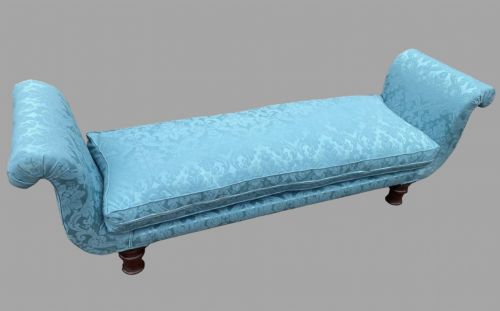
A 19th century day bed brings elegance and architectural presence to a room, offering a place for daytime repose that bridges the gap between sofa and bed.
19th Century Day Bed
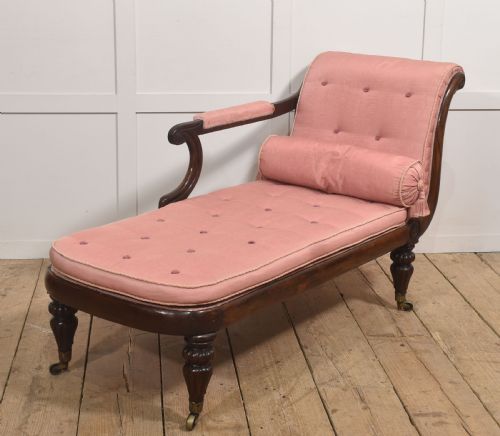
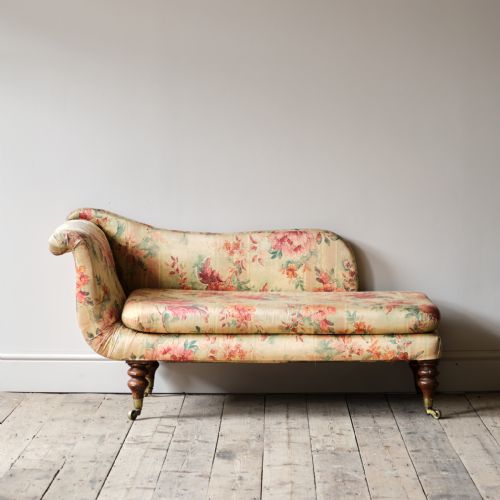
A 19th century day bed encompasses forms designed for reclining, spanning daybeds, chaise longues, settees, and window seats from various periods.
The versions most commonly met include French lit bateau designs, English Regency and Victorian mahogany frames, and Howard style country house daybeds upholstered in velvet or linen.
Originating from diverse stylistic influences such as French Empire, William IV, and Aesthetic Movement aesthetics, these pieces serve functional seating and lounging roles in interiors.
How they were made
Cabinetmakers constructed the frames using dense timbers like mahogany, walnut, rosewood, and timber, often shaped with turned legs, sabre legs, or barrel backs.
Seating and backing utilised supportive cane work, woven wicker, or padded upholstery finished in velvet, fabric, or floral linen, sometimes mounted with brass or gilt metal.
Listings feature woods such as mahogany, rosewood, walnut, and timber, alongside brass details and upholstery in velvet, fabric, and linen.
What varies in quality
The standard of carving, turning, and joinery separates standard production items from pieces bearing maker attributions or distinct stylistic confidence.
The choice of primary timber, such as solid Rio rosewood or figured mahogany, alongside the retention of original cane seating or high-grade upholstery fabrics, defines the tier of the piece.
H. Goodall & Sons·Miles & Edwards·Jas Shoolbred·Maple & Co
The 19th Century Day Bed Glossary
- Chaise Longue
- An upholstered sofa in the form of a chair with a long seat for reclining. This French form appears frequently in Regency and Victorian variants.
- Lit Bateau
- A French bed style with curving head and footboards resembling a boat. These forms bring a distinctive scroll profile to day bed designs.
- Cane Seating
- Woven rattan material used for chair seats and back panels. It provides a lightweight yet durable surface on wooden frames.
- Sabre Leg
- A convex curving furniture leg that tapers toward the foot. This form is typical of Regency and Empire design influences.
- Drop Back
- A mechanism or structural adjustment allowing the back of the seating unit to lower. This modification transforms the piece from a seat into a lying surface.
19th Century Day Bed: Frequently Asked Questions
How do I use a day bed at home?
A day bed functions as a versatile seating option during daytime hours, fitting neatly into drawing rooms, libraries, or large hallways. It provides a comfortable spot for reading or resting without dominating the room like a full bed.
Position the piece against a wall or float it within a larger space depending on the back design. Adding cushions makes it suitable for relaxed lounging while retaining its formal silhouette.
How do I identify a Regency day bed?
Regency day beds display classical architectural influences, often incorporating elements like sabre legs, scroll ends, and dark woods such as mahogany or rosewood. These pieces date from the early decades of the nineteenth century.
Look for restrained mounts, linear forms, and details inspired by ancient Greek or Roman design. The craftsmanship reflects the neoclassical tastes prevailing under the Regency.
Are these day beds comfortable for sleeping?
Nineteenth-century day beds vary in comfort depending on the depth of the frame and the quality of the upholstery or squab mattress used. Many were built primarily for daytime reclining rather than overnight sleeping.
Adding a custom mattress or high-density cushion makes modern usage practical. The internal dimensions and cane work condition dictate how much support the frame offers.