


19th Century Crapaud
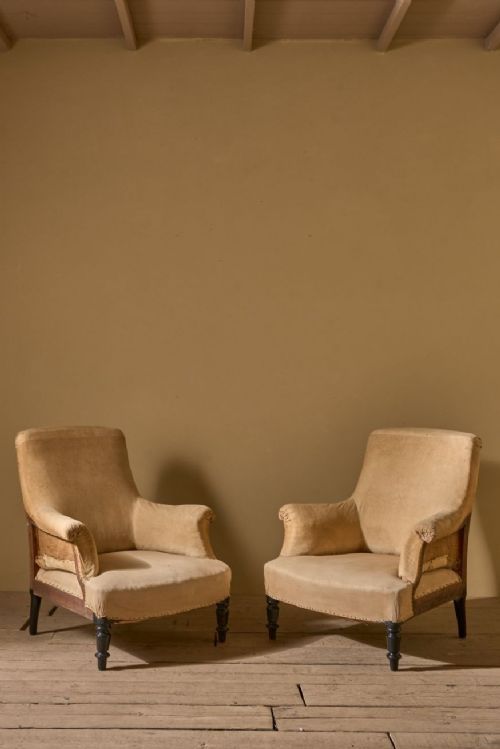
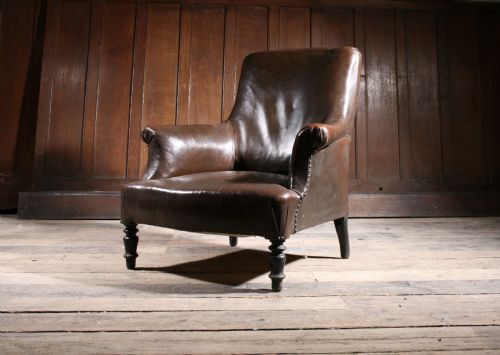
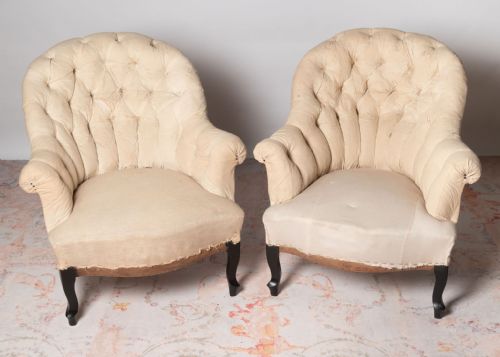
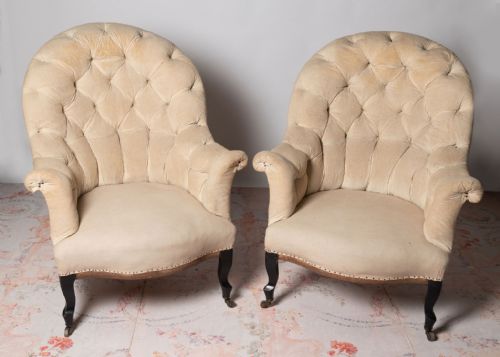
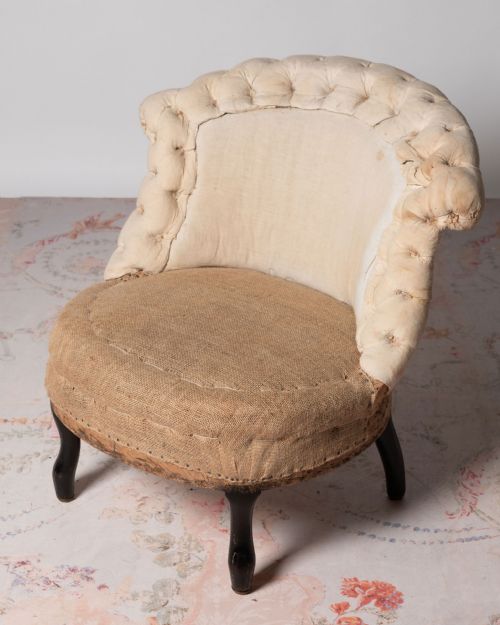
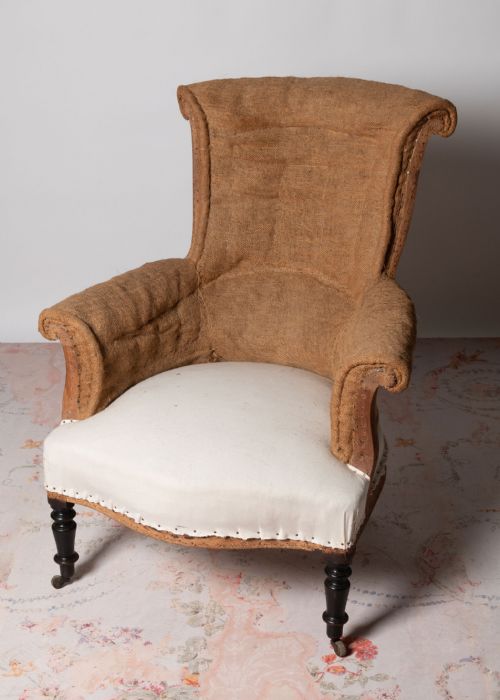
These 19th century crapaud armchairs are low, upholstered French seats built for lounging, offering deep comfort and classic Napoleon III style.
19th Century Crapaud
A 19th century crapaud is a low, fully upholstered armchair designed in France during the 19th century and the period around 1900. These seats often appear in pairs or as single armchairs with distinct French styles such as Napoleon III and French Country.
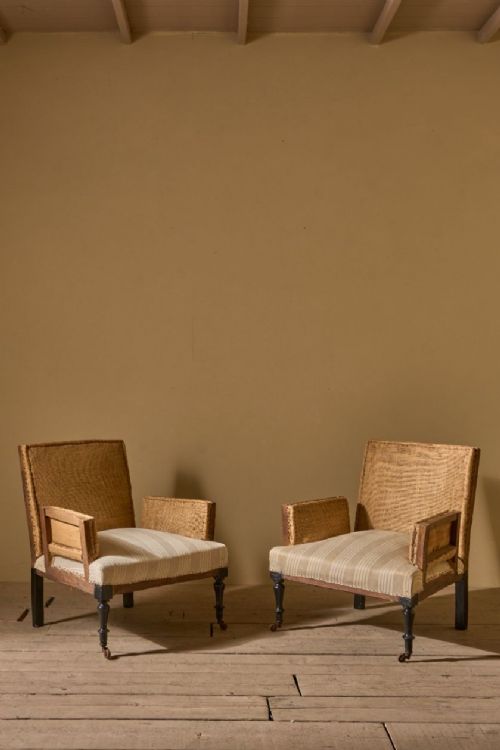
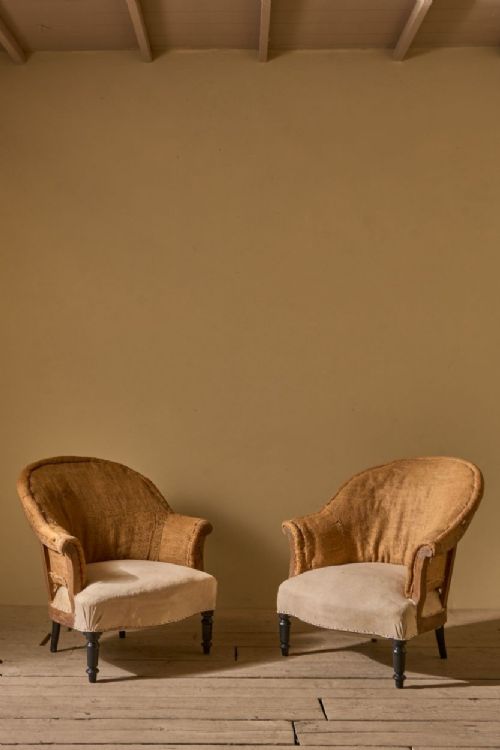
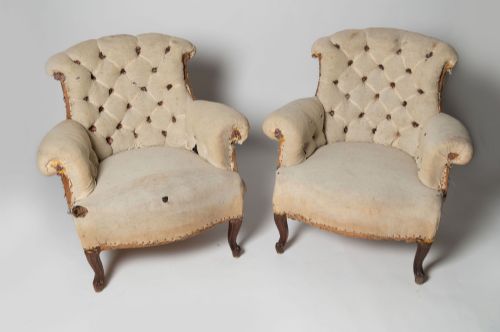
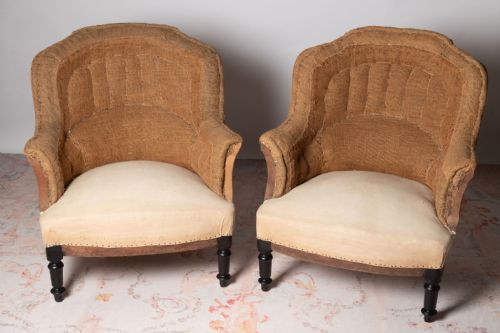
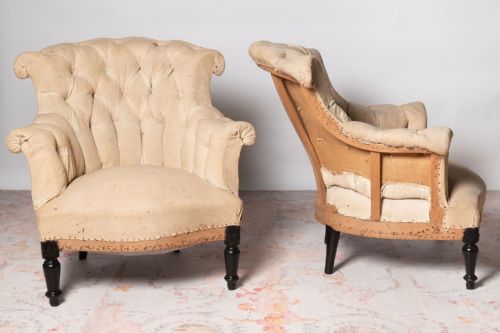
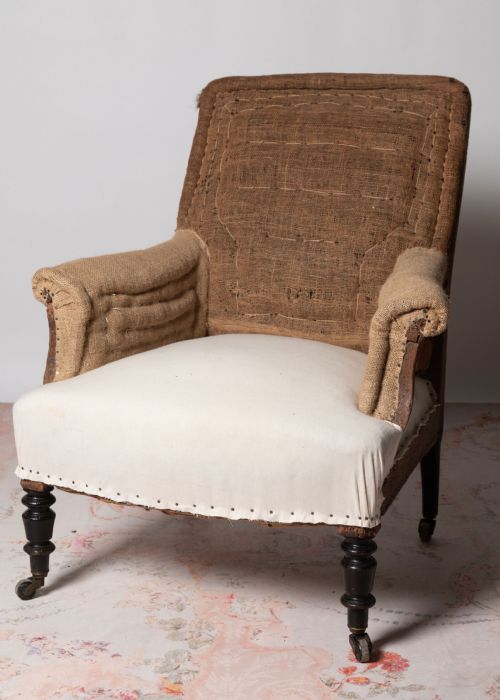
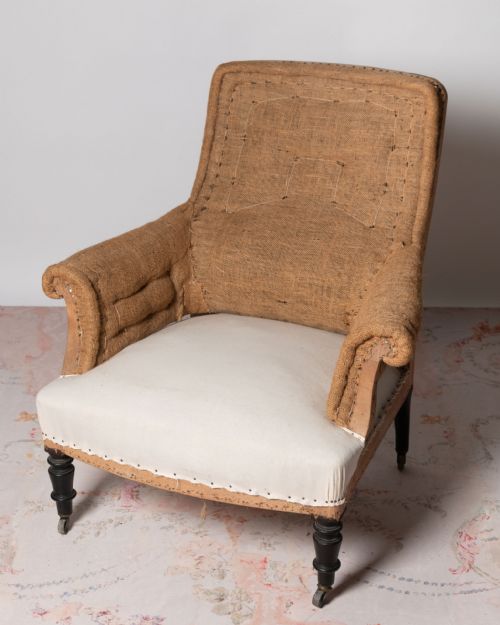
Buyers looking at this page will encounter low armchairs featuring square backs, high buttoned curved backs, and square sides. Most examples originate from France and reflect the domestic seating preferences of the nineteenth century.
The form prioritises comfort through low profiles and heavy padding. These chairs function well as intimate parlour seating or bedroom armchairs in period interiors.
Materials and construction
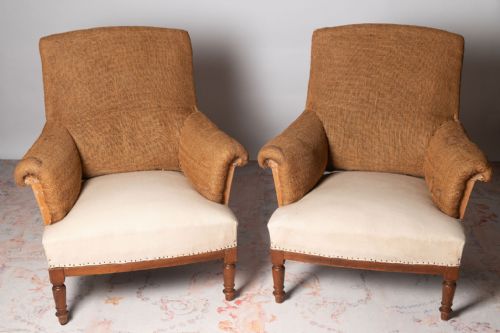
Makers built the hidden frames of these armchairs using sturdy woods such as beech. This timber provided the structural strength required to support heavy padding and daily use.
Upholstery techniques relied on natural textiles like hessian, linen, cotton, and calico to build up the dense cushioning. Brass details occasionally appeared as finishing tacks securing the fabric to the wooden frame.
The French named these plump little seats crapauds because their squat, heavily padded shapes reminded people of resting toads.
Distinctions in quality
The refinement of the upholstery work separates simpler pieces from finer examples. Chairs featuring complex buttoning and precise shaping of the curved back demand greater skill from the upholsterer.
The integrity of the underlying beech frame and the choice of original textiles dictate the overall standing of an armchair. Pieces retaining sound structural timber and traditional stuffing hold more interest for collectors.
The 19th Century Crapaud Glossary
- Crapaud
- A French low upholstered armchair originating in the nineteenth century. The name translates literally as toad, describing the squat and padded silhouette.
- Napoleon III style
- A French design movement spanning the mid-to-late nineteenth century characterised by eclectic revivalism and deep upholstery. It draws inspiration from earlier royal periods while embracing domestic comfort.
- Hessian
- A coarse woven fabric made from jute or hemp fibres. It served as the traditional foundation layer for webbing and stuffing inside nineteenth-century seats.
- Calico
- A plain-woven cotton textile used extensively as an inner lining or base cover beneath decorative outer fabrics on antique chairs.
- Beech
- A dense and durable hardwood commonly utilised for the concealed frames of French upholstered seating.
19th Century Crapaud: Frequently Asked Questions
What is a crapaud chair?
A crapaud is a low, fully upholstered French armchair from the nineteenth century designed for comfort and low seating.
These pieces typically feature heavy padding that conceals the wooden frame entirely, earning them their toad-like moniker.
How do I date a 19th century crapaud?
Dating relies on examining the framing timbers, upholstery foundations, and stylistic markers associated with the Napoleon III era.
Evidence points to production primarily across the nineteenth century and around 1900, using beech frames and traditional textiles like hessian.
Where were crapaud armchairs made?
These armchairs originated in France, reflecting French cabinet-making and upholstery traditions of the 1800s.
They were built for domestic interiors, ranging from formal French chateaux to provincial country homes.
How do I use a crapaud in a room?
Their low profile makes these armchairs suitable for pairing with low tables or placing in bedroom corners.
They provide compact seating without blocking sightlines across a living space.