




19th Century Costume Painting
These 19th century costume painting works capture historical attire, theatrical characters and domestic scenes rendered in oil and watercolour.
19th Century Costume Painting
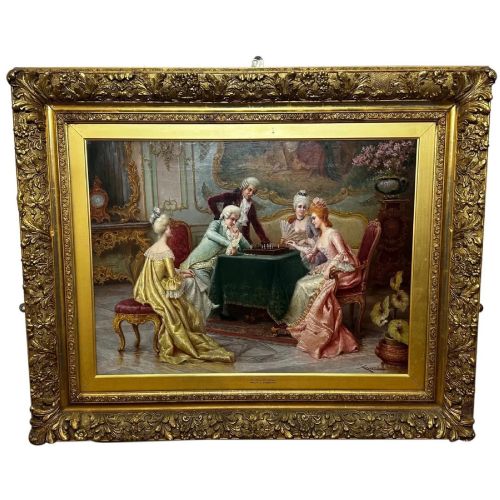
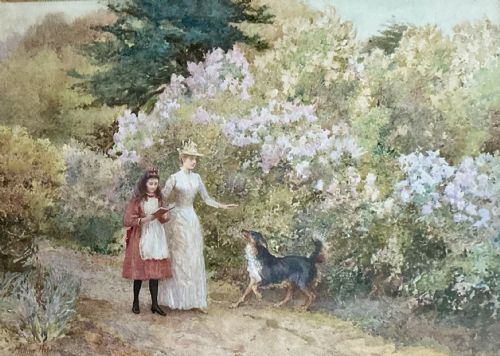
A 19th century costume painting depicts individuals dressed in historical clothing, theatrical garments or regional dress, focusing heavily on the textiles and period details of the attire. The works appearing here range from intimate watercolours of actors and musicians to large oil paintings of historical genre scenes.
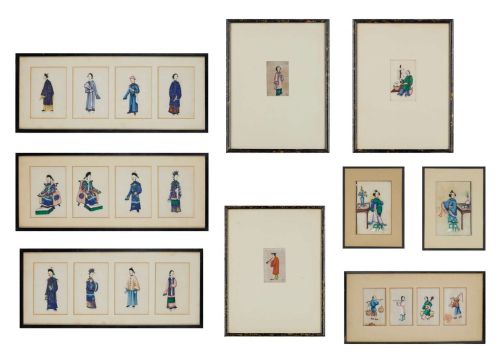
Many of these pieces capture historical Italian and French subjects, often showing figures engaged in leisure, music or card games within period interiors. Alongside European works, this category encompasses Chinese pith paper paintings documenting Qing dynasty figures in traditional dress.
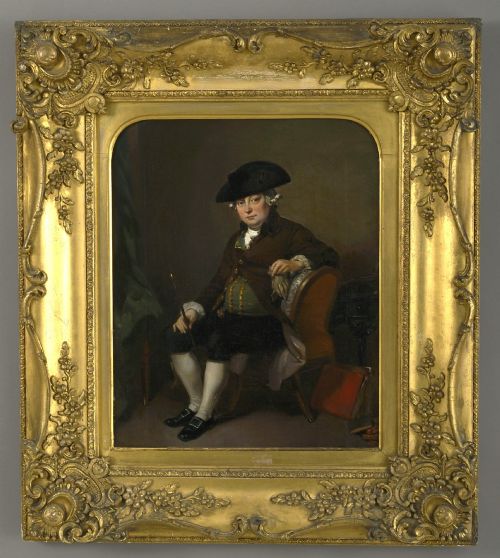
The physical formats vary from small watercolours on paper to substantial oil paintings on canvas, panel and board. Framed examples frequently utilise period giltwood and gesso frames that complement the character of the artwork.
How they were made
Painters of this period utilised oil on canvas, panel or board to achieve rich depth in fabric textures, while others preferred watercolour on paper for delicate transparency and fine detail. Chinese pith paper paintings relied on a fragile, spongy plant material that absorbed watercolour pigments with distinctive luminosity.
Frames constructed from wood with gesso and gilt finishes were commonly applied to house and protect these artworks, reflecting the decorative standards of the nineteenth century.
Materials recorded across these artworks include paper, wood, glass, oil, watercolour, giltwood and gesso.
What varies in quality
The finesse of the brushwork and the precision rendered in the folds, lace and patterns of the clothing determine the visual success of the piece. Artists who managed light on silk, velvet and metallic embroidery demonstrate superior draftsmanship.
Condition plays a role, particularly in works on paper and delicate pith material where moisture or light exposure can alter the pigments over time. The integrity of the original support and the presence of a period matching frame add to the coherence of the object.
Samuel De Wilde·George Kilburne·Arthur Hopkins·Robert Alexander Hillingford·Martinetti·Hans Temple·Arturo Orselli·Pierre Louis Joseph De Coninck·Willem Johannes Martens·Frederick Tayler·Marcel Brunery·Edmund Alphonse Andre·Adolphe Alexandre Lesrel·Belisario Gioja·George Perfect Harding·Franz Russ The Elder
The 19th Century Costume Painting Glossary
- Pith paper
- A delicate material cut from the pith of the Tetrapanax papyrifer plant, used extensively in China for watercolour painting during the Qing dynasty. It possesses a velvety texture that accepts vibrant colour.
- Genre painting
- A category of art depicting scenes from everyday life, often featuring ordinary people engaged in domestic tasks, social gatherings or leisure activities. In this context, these scenes heavily feature historical costume.
- Gesso
- A plaster-like mixture applied to wooden frames or panels as a base for moulding and gilding. It provides a smooth surface for decorative relief work.
- Academic historicism
- An artistic approach rooted in rigorous academic training that depicts historical subjects and costumes with high attention to archaeological and period accuracy.
19th Century Costume Painting: Frequently Asked Questions
What is a costume painting?
A costume painting is a work of art that places primary emphasis on the historical, theatrical or regional clothing worn by the subjects. These pieces record the detailed textiles, accessories and fashions of earlier eras.
Artists used these garments to tell a narrative or to evoke a specific historical atmosphere, often drawing on past centuries for inspiration.
How were pith paper paintings made?
Chinese pith paintings were created by slicing the spongy interior of a specific plant into thin sheets and pressing them flat. Artists then applied watercolour directly to this delicate surface.
This material produces a unique three-dimensional, velvety appearance that makes the colours appear unusually luminous.
Where should I hang these paintings?
These works suit traditional drawing rooms, studies or hallways where period furnishings create a complementary environment. Keeping them away from direct sunlight protects vulnerable watercolours and paper supports.
Pairing oil paintings with period giltwood frames enhances their presence on panelled or neutral walls.
How do I date a 19th century painting?
Dating relies on artist signatures, biographical records, exhibition labels and stylistic markers within the dress and interior decor. The materials of the support, such as prepared canvas or board, also offer clues.
Frames can occasionally provide secondary evidence, though many artworks were reframed later in their history.