



19th Century Copper Plaque
These 19th century copper plaque examples bring varied international metalwork and enamelling into domestic interiors.
19th Century Copper Plaque
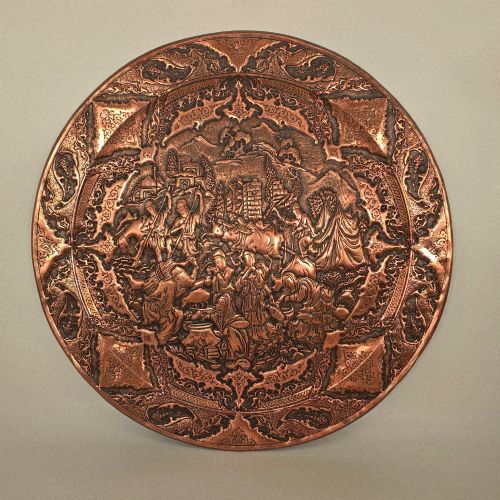
The 19th century copper plaque designation covers a diverse range of wall art, trays, and decorative chargers originating from British, European, Middle Eastern, and East Asian workshops. A buyer searching this phrase encounters everything from European mythological reliefs to Japanese Meiji period enamel work.
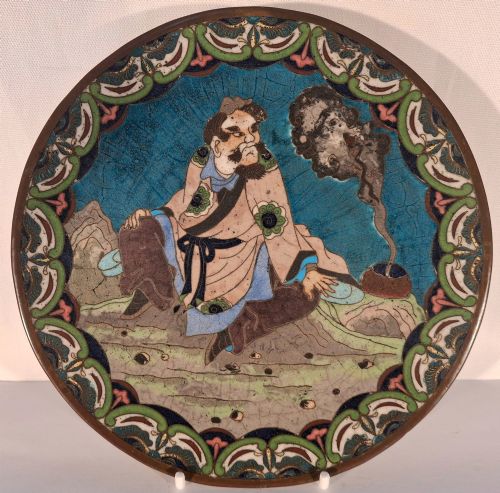
The pieces appearing on this page lean heavily towards Japanese cloisonne enamel chargers and European repousse or cast wall reliefs. Forms vary from round dishes and oval trays to large rectangular panels and shields.
Geographic origins span widely across the evidence, including Ottoman Syrian, Indo-Persian, and French Limoges traditions alongside Japanese production. Each region contributes distinct decorative vocabularies and manufacturing methods to the genre.
Materials and construction techniques
Makers utilised copper as the primary substrate, frequently combining it with brass wire for cloisonne partitions or framing elements in wood and gilded wood. Bronze and brass also appear in relief castings and supporting mounts.
Surface decoration relies heavily on repousse hammering, where artisans pushed the metal from the reverse to create raised sculptural reliefs of figures such as Diana the huntress. Enamelling techniques, including Japanese cloisonne and Limoges enamel, introduce vibrant colour palettes across many plates and panels.
19th Century Copper Plaque Retail Price Guide 2026
Typical asking prices for 19th century copper plaque among the pieces listed under this phrase on Sellingantiques today, from the lower quarter to the upper quarter. They describe what is for sale here now, not the wider market.
Materials appearing across the inventory include copper, brass, bronze, wood, enamel, and cloisonne enamel with brass wire.
Factors determining quality
Execution and depth of hand-hammered repousse work differentiate standard production from superior pieces, with sharper facial expressions and crisper drapery denoting skilled metalworkers. In cloisonne examples, the precision of the brass wire compartments and the evenness of the fired enamel fields dictate the level of craftsmanship.
The distinction between a workshop production and a signed masterwork rests in the complexity of the design and the control of the medium. Finer specimens exhibit intricate multi-coloured enamel blending or deeply modelled bronze and copper reliefs that retain sharp detail across the entire surface.
Gustav Grohe·Samson
The 19th Century Copper Plaque Glossary
- Repousse
- A metalworking technique where the artisan hammers a sheet of copper from the reverse side to form a raised design on the front. Fine details are subsequently refined from the front using chisels and punches.
- Cloisonne
- An enamelling method where thin brass or metal wires are soldered to a copper base to create cells, which are then filled with coloured glass paste and fired. This technique reached high complexity during the Japanese Meiji period.
- Charger
- A large decorative plate intended primarily for display on walls, cabinets, or sideboards rather than for practical dining use. These pieces often feature pictorial or symbolic scenes executed in relief or enamel.
- Limoges enamel
- Painted enamelwork produced in the French city of Limoges, typically depicting mythological or historical subjects on a copper support. The method involves applying layers of opaque and translucent glass powders.
- Meiji Period
- The era in Japanese history spanning from 1868 to 1912, noted in this context for exceptional metalwork and cloisonne enamel production geared towards international export markets.
19th Century Copper Plaque: Frequently Asked Questions
How were these wall plaques displayed?
Most of these large decorative chargers and panels were produced with integral suspension loops or mounting holes to allow prominent placement on domestic walls. They served as focal points in Victorian and Edwardian reception rooms.
Smaller trays and dishes might have rested on side tables or stands, but the heavier repousse shields and framed panels were strictly intended for vertical display.
What is the difference between repousse and casting?
Repousse involves working a sheet of copper by hand using hammers and punches from the reverse side to push the metal outward. This creates a lightweight relief panel with unique tool marks on the back.
Cast bronze or copper pieces are poured into moulds in a liquid state, resulting in heavier objects with uniform thickness and sharp, repeating surface details.
How do I identify Japanese Meiji period work?
Japanese Meiji pieces on this page are typically distinguished by precise cloisonne enamel featuring naturalistic subjects such as koi, dragons, shrimp, and samurai figures. The wirework is exceptionally fine and geometric.
Many of these items bear artist signatures on the reverse or within the composition, reflecting the high status of metalwork during that era.
Are these copper items fragile?
Solid copper and bronze panels are structurally robust, though thin repousse metal can dent or distort if subjected to heavy impact. Care should be taken with edges and raised relief elements.
Enamelled pieces require more cautious handling because the glass paste fired onto the copper surface can chip or crack if dropped or exposed to sudden thermal shock.