




19th Century Colonial Chairs
These 19th century colonial chairs bring sturdy hardwood frames and woven cane seats from distant trade routes straight into the home.
19th Century Colonial Chairs
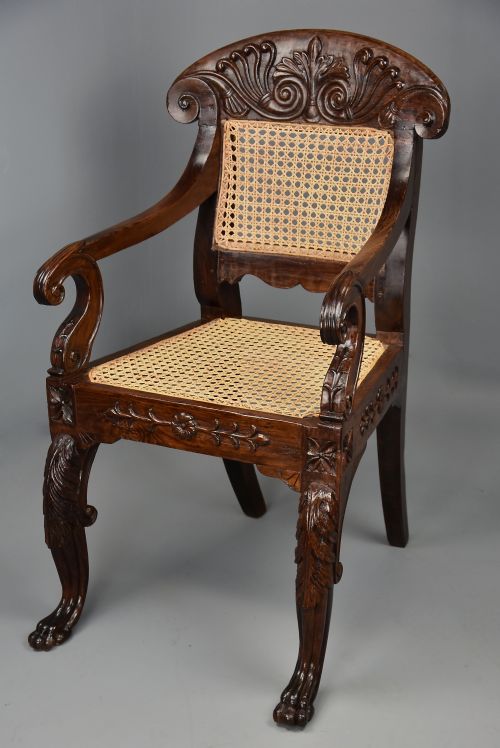
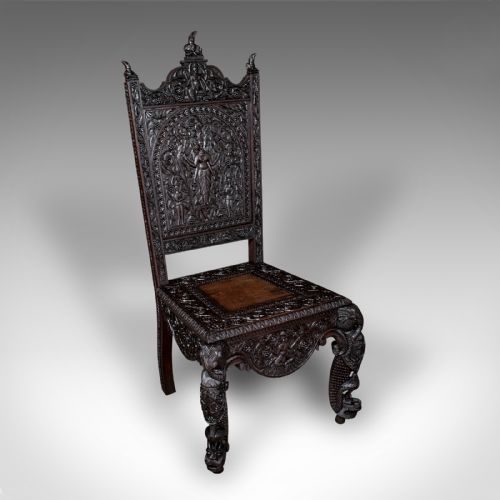
19th century colonial chairs represent a meeting of European seating forms with the dense hardwoods of India, Ceylon, and other trading territories. The items gathered here span armchairs, side chairs, dining chairs, desk chairs, hall chairs, and accent chairs.
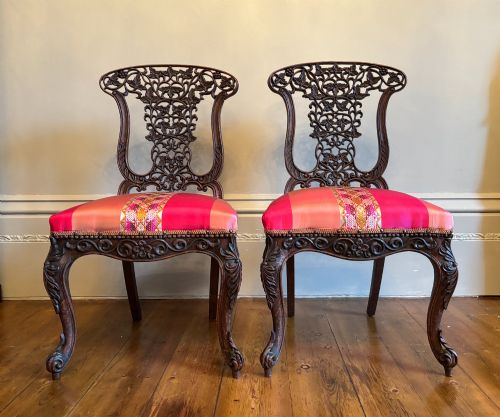
Most pieces on this page lean heavily towards Anglo-Indian and Ceylonese origins, alongside specific Victorian campaign and American colonial iterations. They arrive from various decades of the 19th century, carrying stylistic traits from Georgian, Regency, and William IV periods.
Forms range from solid ebony, padauk, and rosewood armchairs to slatted American kitchen chairs and folding campaign seats. Buyers encounter everything from carved planter's chairs with extending arms to sets of dining chairs intended for formal colonial households.
How they were made
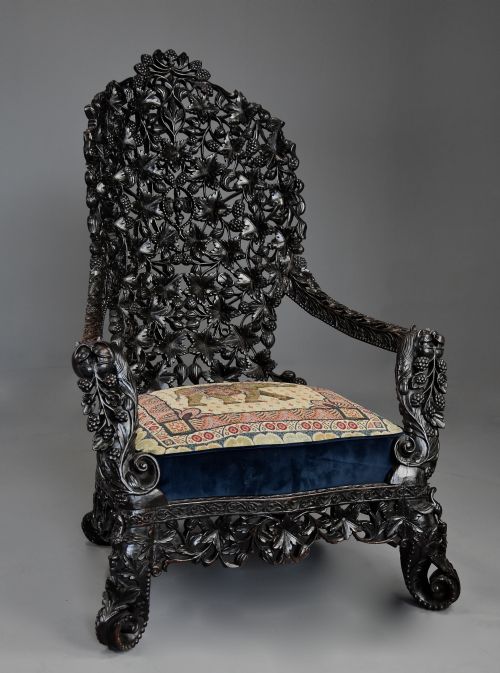
Cabinetmakers utilised dense tropical timbers such as teak, ebony, rosewood, padauk, satinwood, and various hardwoods to withstand humid climates and heavy daily use. These heavy woods were carved with intricate floral or geometric motifs, particularly in workshops associated with Anglo-Indian and Ceylonese production.
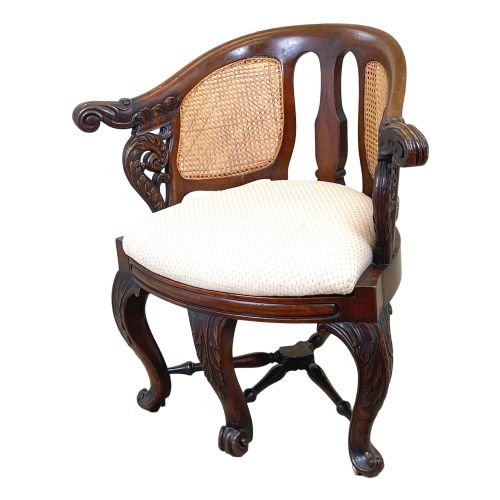
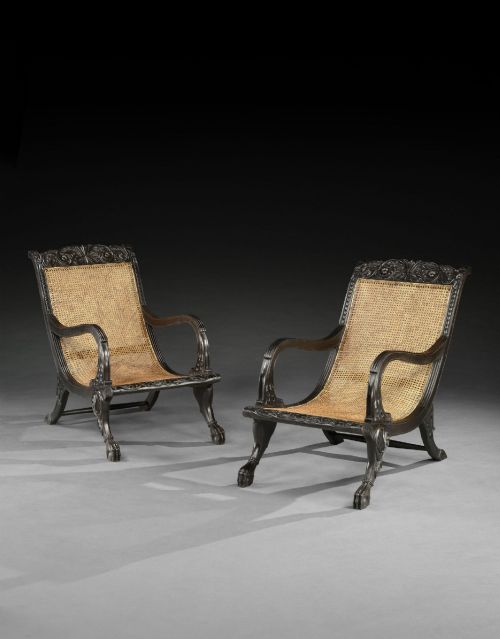
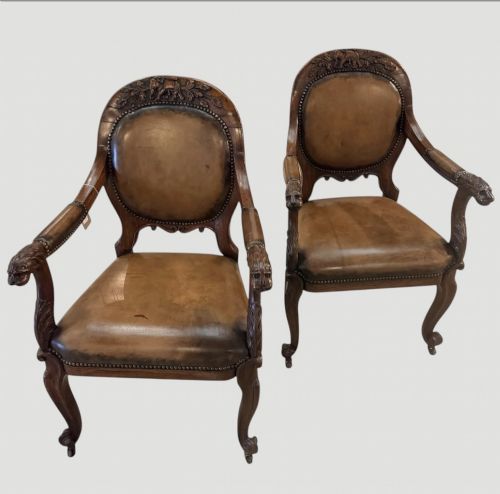
Seating surfaces frequently relied on woven cane or durable leather inserts fitted into solid frames. Brass hardware, such as hinges and campaign fittings, appeared on folding or transportable models designed for military and administrative travel.
Structural joinery prioritized mechanical resilience, often pairing pegged tenons with heavy framing timbers. Upholstery, where present, was secured to solid wooden foundations using traditional tacking methods.
19th Century Colonial Chairs Retail Price Guide 2026
Typical asking prices for 19th century colonial chairs among the pieces listed under this phrase on Sellingantiques today, from the lower quarter to the upper quarter. They describe what is for sale here now, not the wider market.
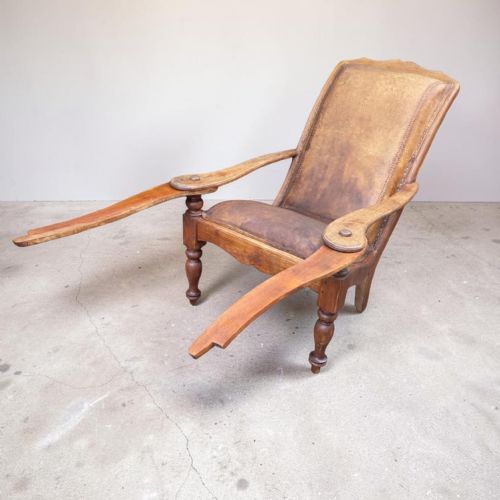
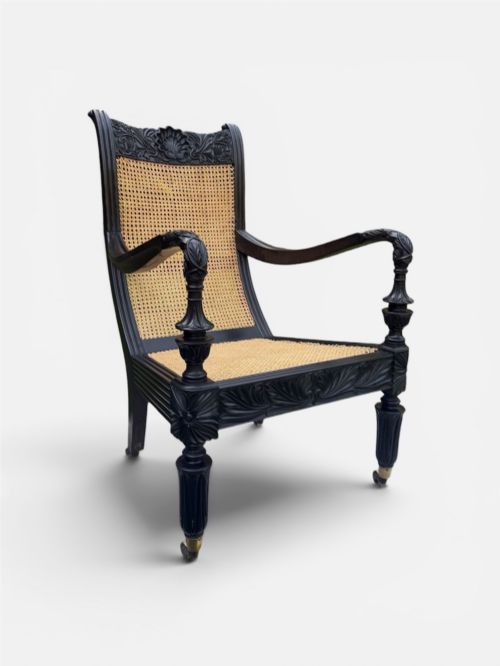
Armrests on planter's chairs extend long enough to double as footrests for an afternoon nap on a shaded veranda.
What varies in quality
The distinction between ordinary and exceptional examples rests upon the depth and crispness of the hand-carved detail across the hardwood frame. Pieces exhibiting deeply undercut foliage or figurative work reflect superior workshop standards compared to simpler, flat-carved surfaces.
Material selection dictates much of the physical weight and visual resonance, with solid ebony, padauk, and dense rosewood standing apart from lighter regional hardwoods. The integrity of original cane work and untouched leather surfaces also separates untouched survivals from heavily restored iterations.
The 19th Century Colonial Chairs Glossary
- Padauk
- A heavy, durable tropical hardwood with a reddish-brown hue often seen in Anglo-Indian furniture. It accepts fine carving without splintering.
- Cane
- Plant material woven into an open mesh pattern for chair seats and backs. This technique allowed cool airflow in warm colonial climates.
- Planter's chair
- An armchair featuring long, extending arms designed to support stretched legs. These chairs offered relaxation on verandas and porches.
- Campaign chair
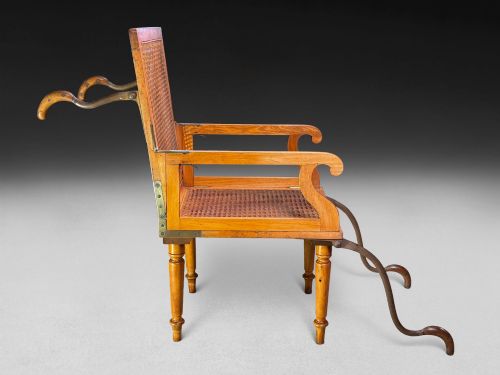
- Portable furniture constructed to fold or dismantle for military officers and travellers. Brass fixtures typically secure the moving joints.
- Bürgermeister chair
- A substantial, often elaborately carved desk or arm chair with a rounded back. The form derives from Dutch colonial influence.
19th Century Colonial Chairs: Frequently Asked Questions
What is an Anglo-Indian chair?
Anglo-Indian chairs are seating pieces made in India during the period of British rule, combining European furniture forms with local woodworking traditions.
They typically employ regional timbers like padauk, teak, or rosewood, often featuring dense hand-carved ornamentation executed by local artisans.
How do I care for cane seats?
Cane seating requires moderate humidity to prevent the natural fibres from becoming brittle and snapping under weight.
Cleaning should involve only a damp cloth, avoiding harsh polishes that can clog the woven mesh.
Were these chairs made for travel?
Certain forms, such as campaign chairs and folding models, were specifically engineered for officers and administrators moving across regions.
They utilise folding frames and durable brass hardware to withstand repeated packing and assembly.
How do I identify a planter's chair?
Planter's chairs are distinguished by their exceptionally long, extending armrests designed for resting the feet.
They were built for lounging on verandas and frequently include deep wooden frames paired with caned or leather seats.