



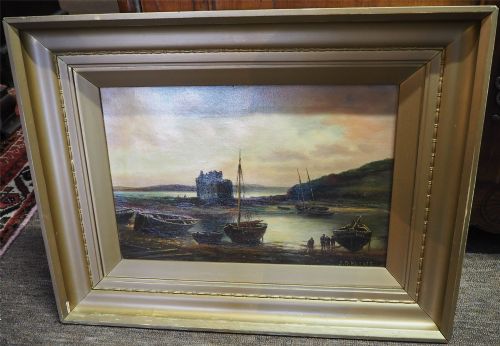
19th Century Coastal Scenes
19th century coastal scenes capture maritime life, bustling harbours and dramatic shores through the eyes of Victorian painters working in oil and watercolour.
19th Century Coastal Scenes
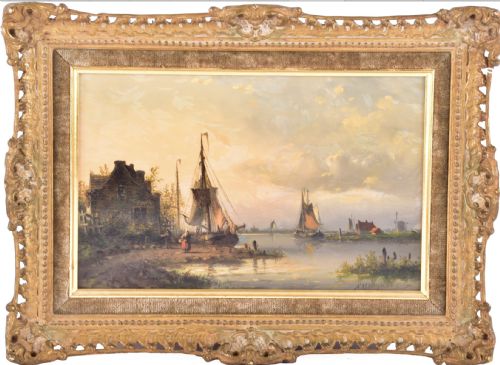
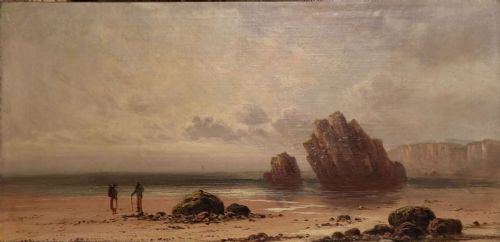
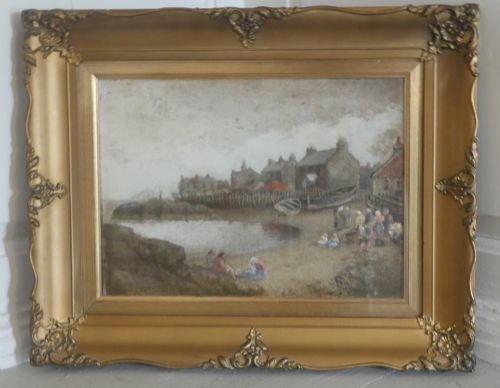
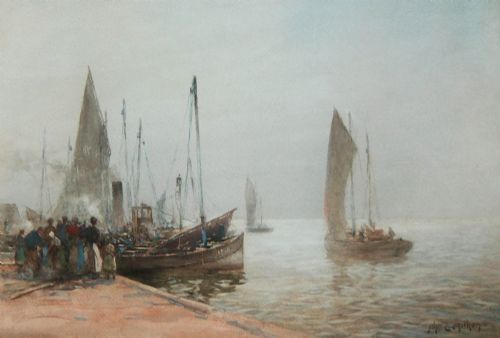
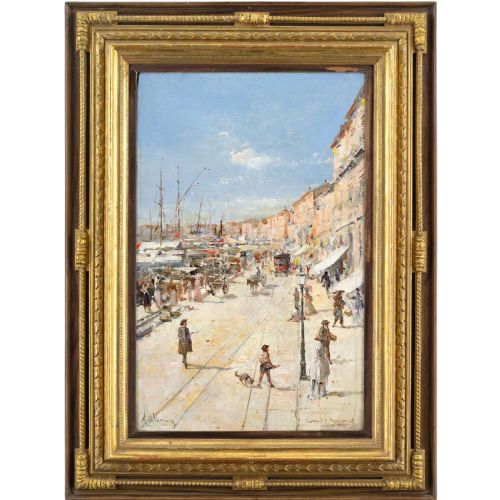
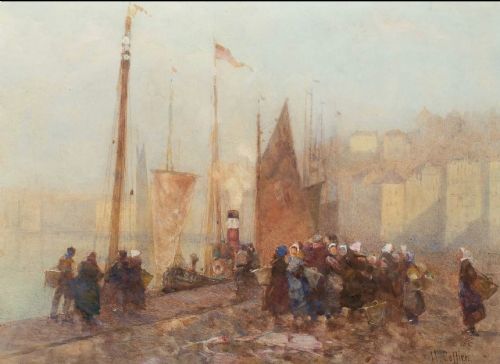
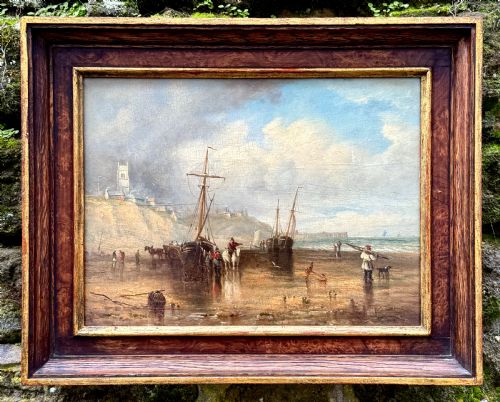
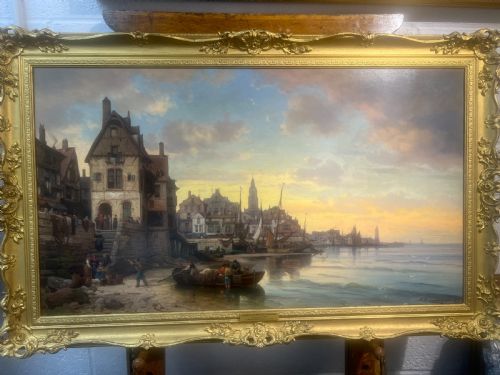
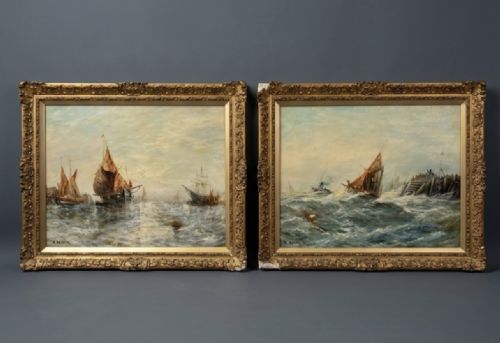
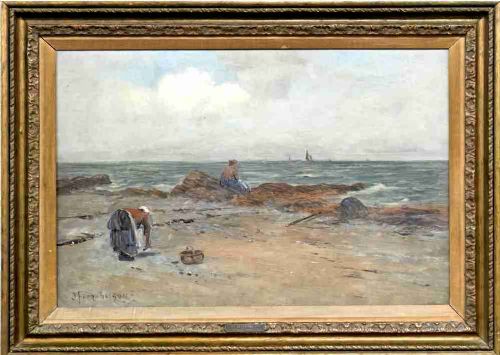
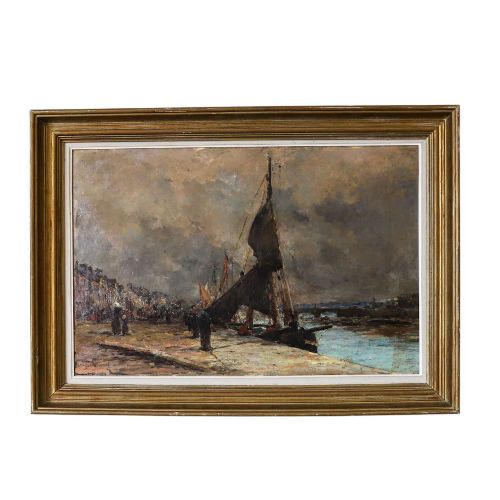
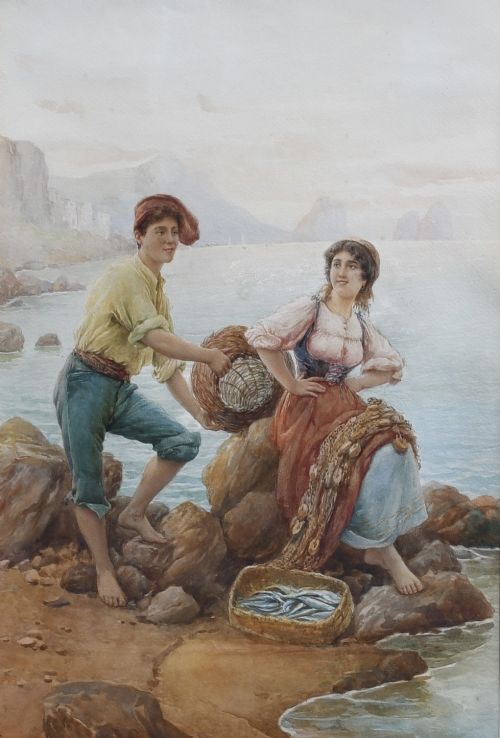
These works depict maritime life, fishing fleets, busy harbours and rugged shorelines across Britain and Europe during the Victorian era. The selection centres heavily on oil paintings on canvas and panel alongside detailed watercolours on paper.
Buyers will encounter specific regional views ranging from Cornish fishing ports and Yorkshire harbours to Scottish waters and continental European coasts. Many pieces include figures such as fisherfolk, boat builders and villagers engaged in daily coastal labour.
How they were made
Artists worked primarily with oil paint on canvas or board, and watercolour on paper, often framing their finished works in original gilt wood or giltwood frames with gold leaf details. The application ranges from smooth academic glazing to thick, textured brushwork suited to stormy seas.
Support materials include prepared wood panels, card, and stretched canvas housed within heavy decorative frames that reflect the period taste for ornate display.
Fisherfolk occasionally paused their daily chores just long enough for a Victorian artist with a portable easel to immortalise them.
What varies in quality
Quality rests upon the artist's handling of light, atmospheric perspective and the convincing movement of water against rocky shores or harbour walls. Finer examples demonstrate a sure command of proportion in marine architecture and human figures.
The preservation of the pigment, the stability of the canvas or panel, and the originality of the matching gilt frame contribute substantially to the standing of an individual painting.
James Orrock·William Banks Fortescue·Augusto Alberici·Hector Caffieri·Thomas Creswick·Charles Euphraisie Kuasseg·Joseph Farquharson·Carlo Ferranti·John Holland·Abraham Hulk I·William Edward Webb·Gustave De Bréanski·James Kyd·Arthur Tucker·Thomas Bush Hardy·Adrian Van Porten·T.S. Wallis·George Gregory·William Pitt·James Webb·Claude Thomas Stanfield Moore·James Thomas Watts·Kate E Booth
The 19th Century Coastal Scenes Glossary
- Seascape
- A work of art depicting the sea, coastal views, ships, or marine life. These compositions often focus on the interaction between human activity and the open water.
- Giltwood
- Wood that has been coated with gold leaf or a gold-coloured metallic finish. This material is standard for the ornate frames enclosing Victorian paintings.
- Watercolour
- A paint consisting of pigment suspended in a water-soluble binder, typically applied to paper. It allows for transparent washes of light and colour.
- Panel
- A rigid flat surface made of wood used as a support for oil painting. Panels were frequently utilised by artists for smaller cabinet-sized works.
19th Century Coastal Scenes: Frequently Asked Questions
What subjects appear in these paintings?
The compositions show fishing boats returning to harbour, figures sorting nets on the beach, dramatic sea stacks, and quiet coastal villages.
Many works document specific ports and landmarks across Britain, France, and Italy during the Victorian period.
Are these works painted on canvas or wood?
Artists used multiple supports including stretched canvas, wooden panels, card, and heavy paper for watercolours.
Oils appear frequently on both canvas and board, while watercolours are executed on paper supports.
How should I frame a Victorian painting?
These works are traditionally housed in ornate gilt wood or gold leaf frames that complement the aesthetic of the period.
Preserving the original frame helps maintain the historical integrity of the piece.
How can I identify the date of a work?
Dates are often established through artist signatures, biographical records, period framing styles, and inscriptions on the reverse of the canvas or panel.
Many listings specify the exact decade or active years of the painter.