



19th Century Cattle Painting
A 19th century cattle painting captures the pastoral charm and rural industry of the Victorian era, offering collectors timeless countryside scenery.
19th Century Cattle Painting
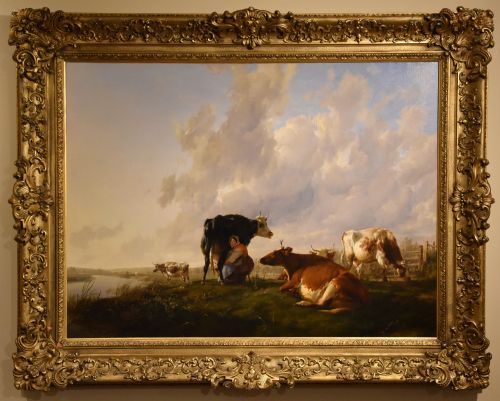
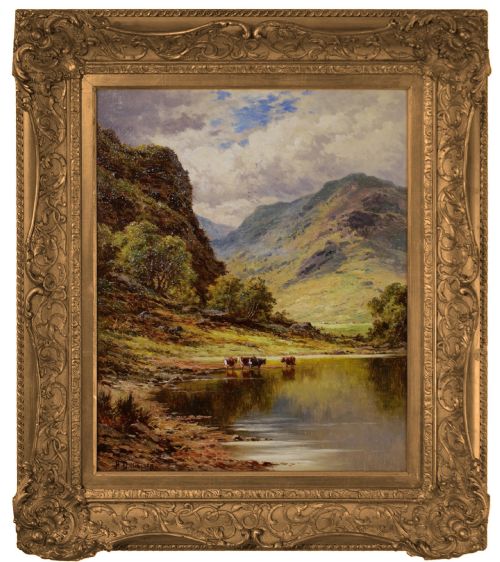
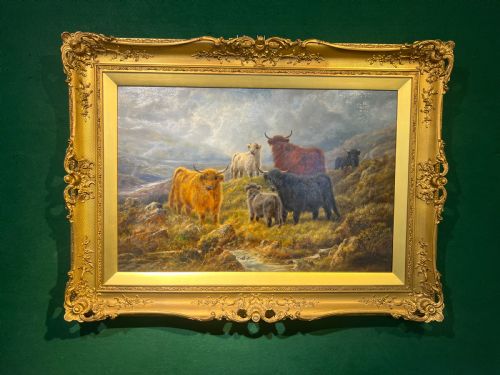
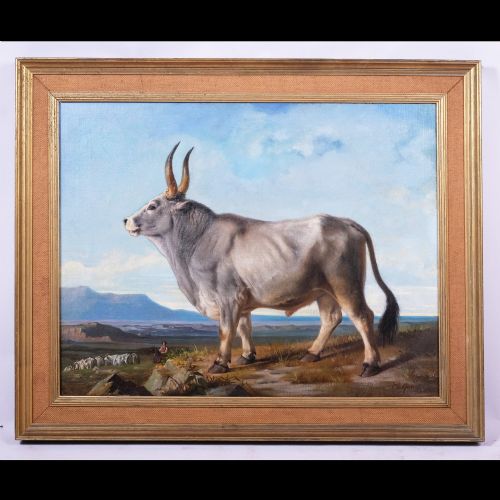
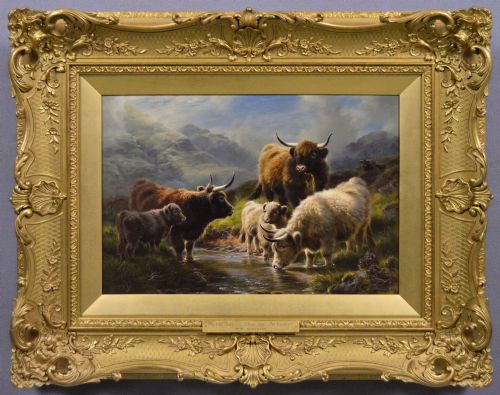
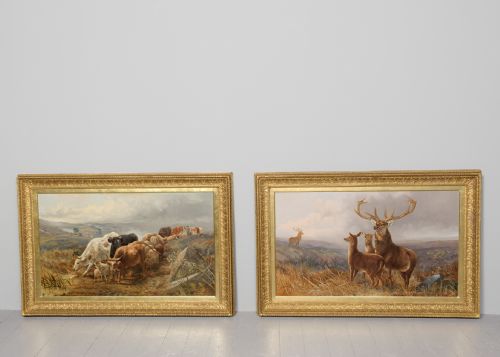
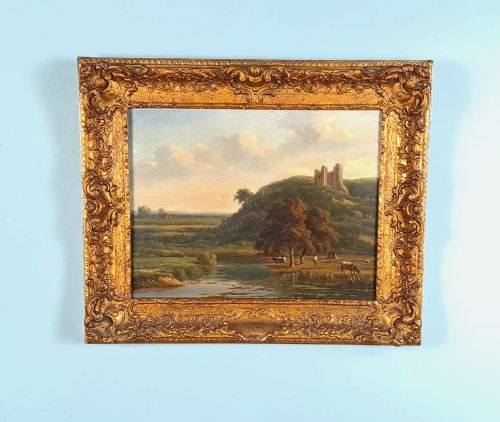
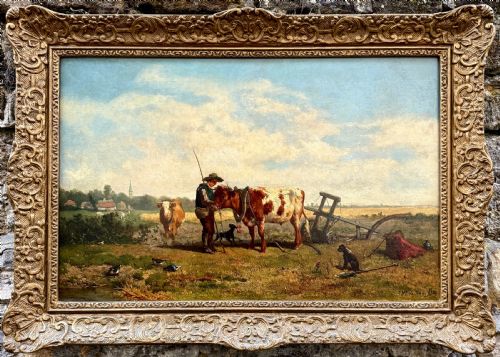
A 19th century cattle painting represents pastoral landscapes, agricultural life, and rural scenery centered around livestock. These works range from intimate depictions of milkmaids and grazing herds to dramatic Scottish Highland views featuring long-horned cattle.
Collectors encounter oil paintings on canvas and board alongside watercolours on paper. Many works feature detailed animal portraits set against riverbanks, valleys, and mountainous backgrounds.
The selections span British, Scottish, Dutch, and German schools from the Victorian and Edwardian periods. Works vary from signed pieces by established pastoral artists to atmospheric studies by anonymous regional painters.
How They Were Made
Artists primarily applied oil paint to stretched canvas, wooden panels, copper, milk glass, or heavy paper boards. Watercolours were frequently executed on paper to capture lighter, more luminous atmospheric effects in river valleys and mountain passes.
Finished works were typically housed in ornate frames constructed from wood, gesso, and gold leaf. Many of these period giltwood frames remain original to the paintings, enhancing the visual depth of the rural scenes.
Listings feature oil on canvas and watercolour works depicting rural farming scenes across the nineteenth century.
What Varies in Quality
Quality depends on the anatomical precision of the livestock and the atmospheric depth of the surrounding landscape. Master painters captured the texture of animal coats and the play of light across open fields with distinct confidence.
The prominence of the artist and the documentation of signature or provenance elevate certain works above standard school pieces. Elaborate original giltwood frames also indicate higher period investment.
David Bates·Thomas Sidney Cooper·Henry H Parker·Robert Watson·William Watson Jnr·Robert Cleminson·T C Hofland·Johannes de Haas·A M Gauci·Henry Robinson Hall·Ernest Pile Bucknall·Samuel Joseph Clark·William Sydney Cooper·Thomas Hunn·George Vicat Cole·Frederick James Knowles·Robert Thorne Waite·Heinrich Harder·James de Rijk·Eugene Verboeckhoven·C Lainé·Pierre Emmanuel Dielmans·Harold Lawes·George Cole·Thomas Baker
The 19th Century Cattle Painting Glossary
- Oil on Canvas
- A traditional painting technique where pigments bound in oil are applied to a woven fabric support stretched across a wooden frame. This method allows for rich colour blending and textured brushwork.
- Giltwood
- Wood that has been coated with a thin layer of gold leaf or gold paint for decorative effect. It was commonly used for framing fine art during the Victorian period.
- Pastoral
- A genre of art that idealises rural life, agriculture, and shepherd or farming scenes. These compositions typically feature peaceful landscapes with grazing animals.
- Gesso
- A white paint mixture consisting of a binder mixed with chalk, gypsum, or pigment. It served as a prepared base for wooden panels and frames before gilding or painting.
- Watercolour
- A painting method in which pigments are suspended in a water-based solution. Artists used this medium on paper to create translucent washes of light.
19th Century Cattle Painting: Frequently Asked Questions
What is a 19th century cattle painting?
A 19th century cattle painting is a work of fine art depicting cows, bulls, or sheep within rural landscapes. These pieces celebrate agricultural life and natural scenery.
Artists across Britain and Europe painted these rural scenes in oil and watercolour. They remain sought after for their tranquil depiction of the countryside.
How do I identify a Victorian oil painting?
Victorian oil paintings are typically identified through canvas stamps, artist signatures, and period framing techniques. Canvas supports often bear the marks of nineteenth-century colourmen.
Subject matter also provides strong clues, as pastoral scenes of farming and livestock dominated nineteenth-century exhibition taste.
Where were these pastoral scenes painted?
Artists painted these rural views across the British countryside, particularly in river valleys and the Scottish Highlands. Locations like the River Stour and Loch Alvie inspired many compositions.
Painters also travelled to continental Europe, recording farming life in France, Germany, and the Netherlands.