

19th Century Buttons
These 19th century buttons describe deeply upholstered seating rather than tiny fastenings, offering robust comfort across library armchairs and Chesterfield sofas.
19th Century Buttons
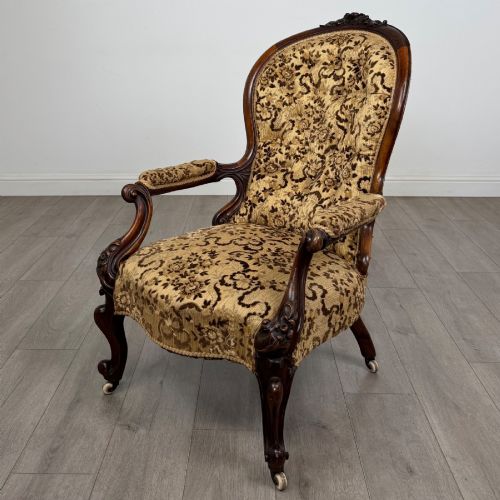
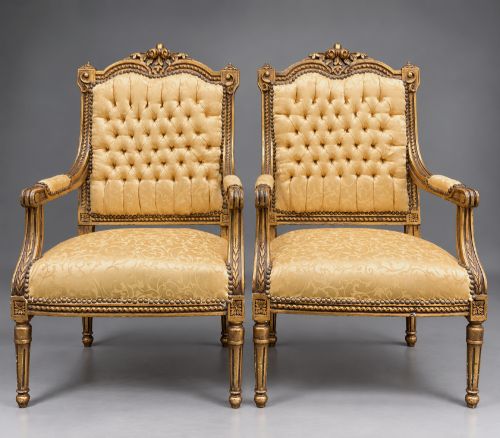
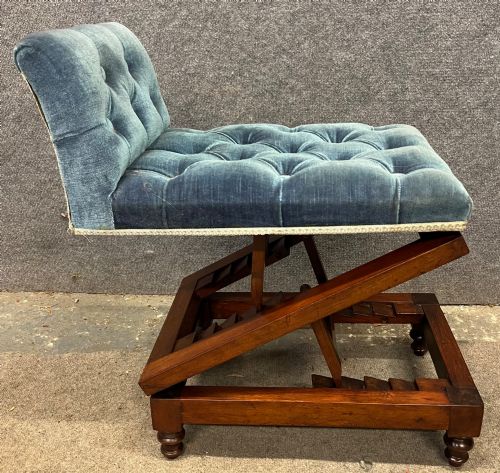
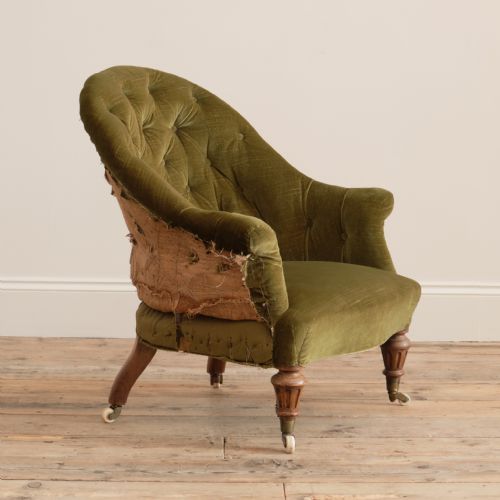
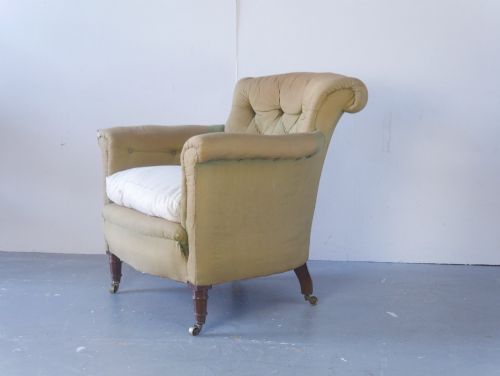
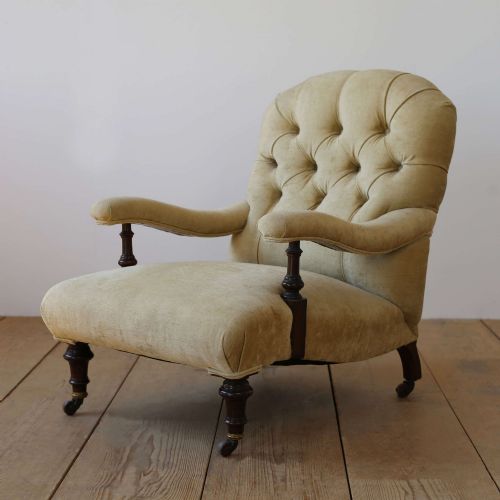
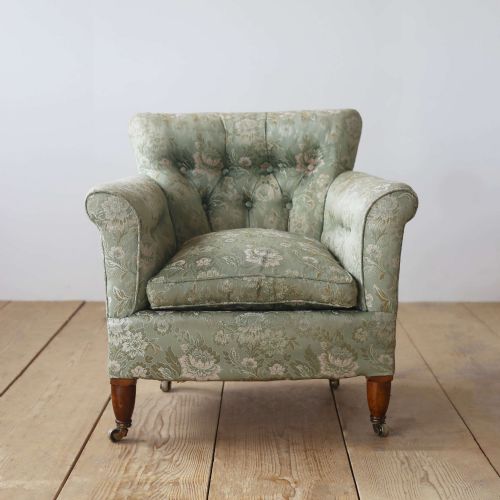
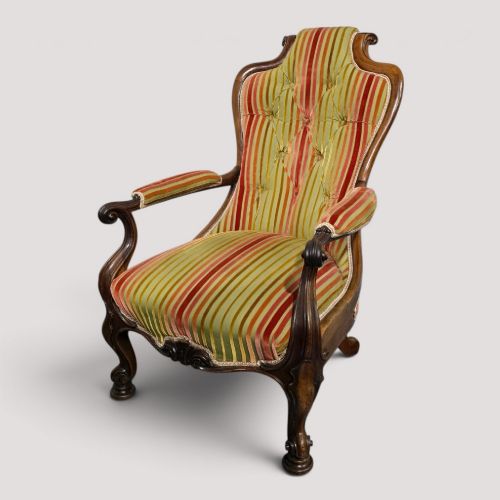
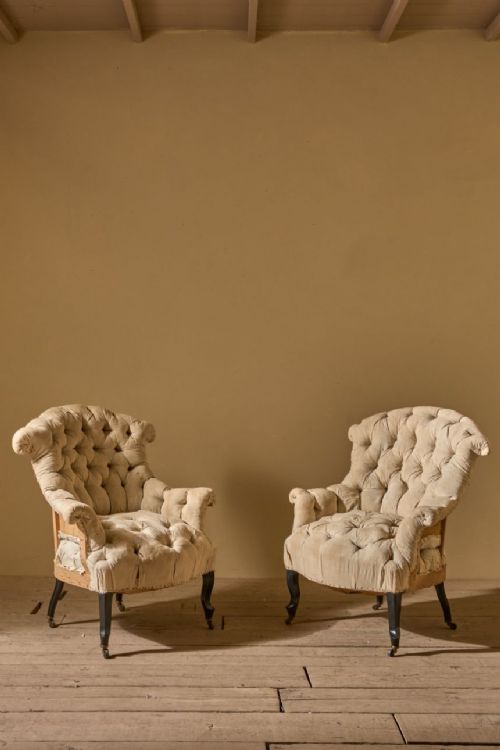
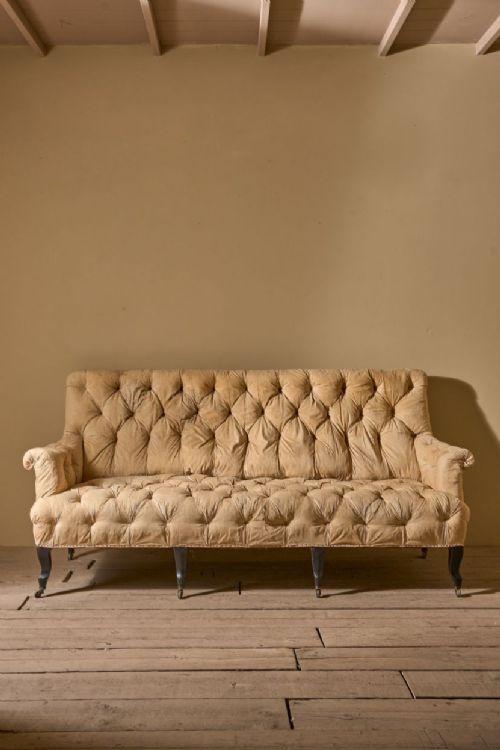
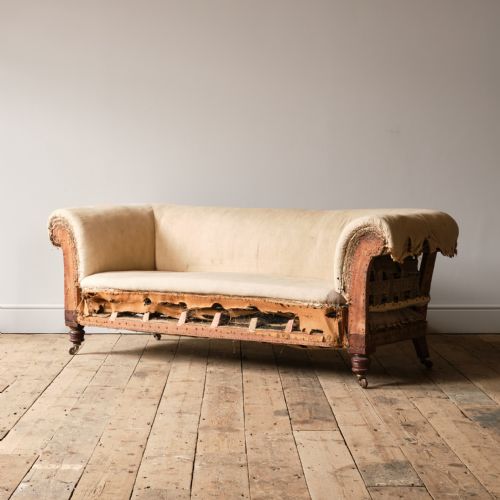
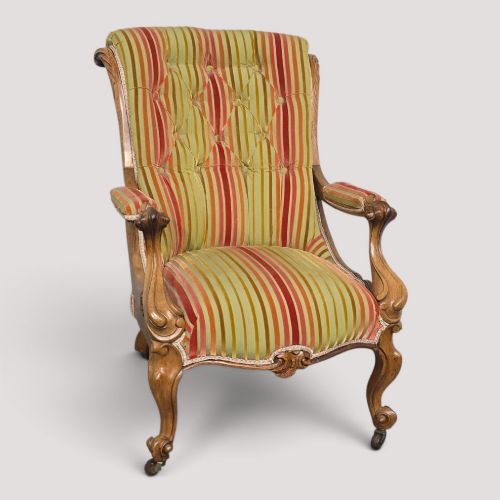
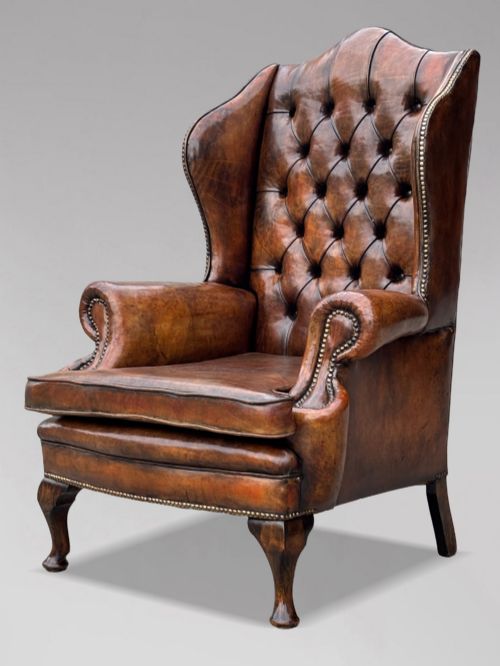
When searching for 19th century buttons, a buyer encounters heavily upholstered seating defined by deep tufting and buttoning rather than small garment fastenings. The selection on this page consists predominantly of substantial library armchairs, Chesterfield sofas, and chaise longues designed for nineteenth-century domestic comfort.
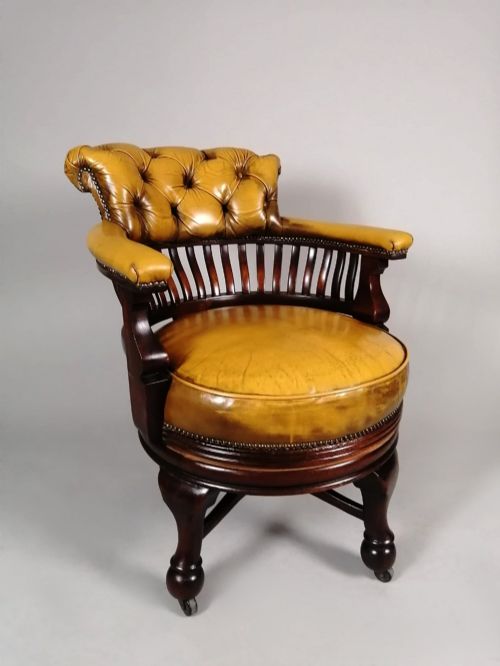
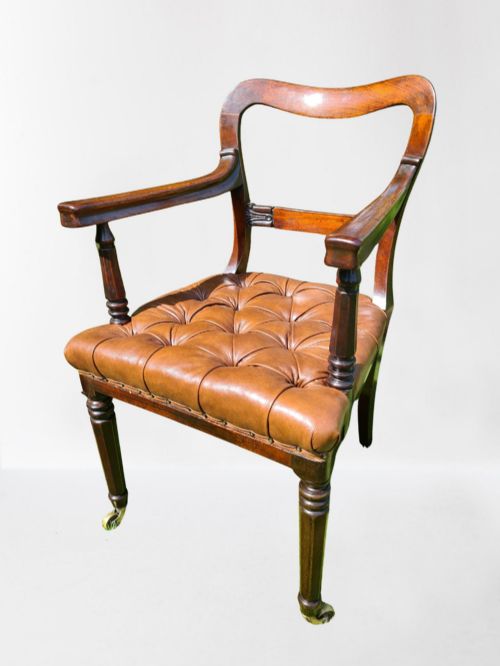
The most common forms met here include brown leather wing armchairs, mahogany desk chairs, and walnut nursing chairs dating from the Regency period through to the late Victorian era. These pieces reflect the heavy upholstery styles typical of English country houses and salons from the eighteen-fifties onwards.
How they were made
Frames rely upon timbers such as mahogany, oak, walnut, and rosewood, shaped into cabriole legs, open armrests, or sturdy structural supports. Upholsterers then applied traditional stuffing beneath coverings of leather, velvet, calico, or fabric, securing the interior padding with deep buttoning techniques.
Decorative elements involve ebonised finishes, inlaid walnut panels, and ormolu mounts, particularly on French Napoleon III models. Craftspeople built these frameworks to sustain heavy daily use while maintaining a formal silhouette.
Listings span from the Regency era through to the late Victorian period, featuring mahogany, walnut, oak, and leather.
What varies in quality
The standard of a piece depends largely on the integrity of its timber frame and the depth of its original upholstery work. Maker attribution plays a significant role, with pieces bearing workshop stamps commanding greater attention than unassigned vernacular furniture.
Materials dictate the character of the piece, where thick, patinated leather upholstery and substantial mahogany or walnut framing represent the higher tiers of nineteenth-century seating manufacture.
Howard and Sons·Gillows·C. Hindley and Sons·Jackson and Graham
The 19th Century Buttons Glossary
- Cabriole leg
- A furniture leg that bends outward and then tapers downward to a foot. This design appears frequently on Victorian walnut stools and chairs.
- Chaise longue
- An upholstered sofa shaped like a chair with a long seat for reclining. These often date from the Regency and Victorian periods.
- Ormolu
- Gilded bronze ornamentation applied to furniture frames. It appears on French Napoleon III pieces alongside inlaid walnut panels.
19th Century Buttons: Frequently Asked Questions
What are 19th century buttons?
The search phrase refers to deep button-tufted upholstery found on nineteenth-century seating rather than clothing accessories.
Buyers encounter armchairs, sofas, and chaises longues upholstered in leather and fabric.
How were these chairs used?
These pieces served in libraries, drawing rooms, and country houses for formal or relaxed reading.
Library armchairs and Chesterfield sofas provided heavy domestic comfort during the Victorian era.
How do I live with leather armchairs?
Leather button armchairs require regular conditioning to keep the hide supple and prevent cracking over time.
Positioning them away from direct heat sources preserves the nineteenth-century materials.
How do I spot a Regency armchair?
Regency seating often employs mahogany or rosewood with classical restraint and clean structural lines.
These pieces predate the heavier buttoned Victorian styles found later in the century.