




19th Century Brass Fireguard
A 19th century brass fireguard brings period character and hearth safety together, offering heavy gauge protection and decorative metalwork.
19th Century Brass Fireguard
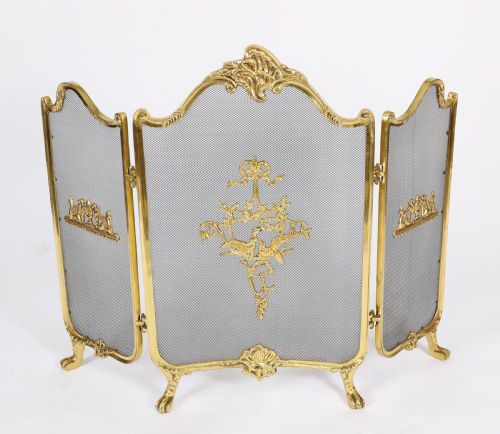
A 19th century brass fireguard encompasses a variety of hearth furnishings designed to contain stray embers and protect rooms from open flames. Buyers examining this category encounter a diverse mix of freestanding screens, folding triple panels, and low kerb fenders spanning the Victorian, Regency, and William IV eras.
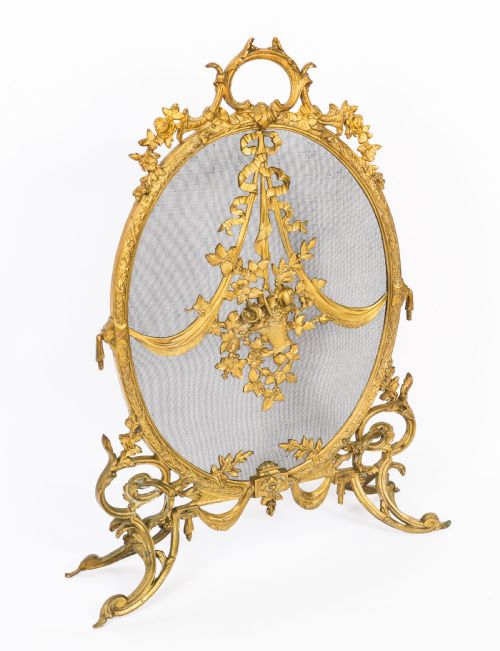
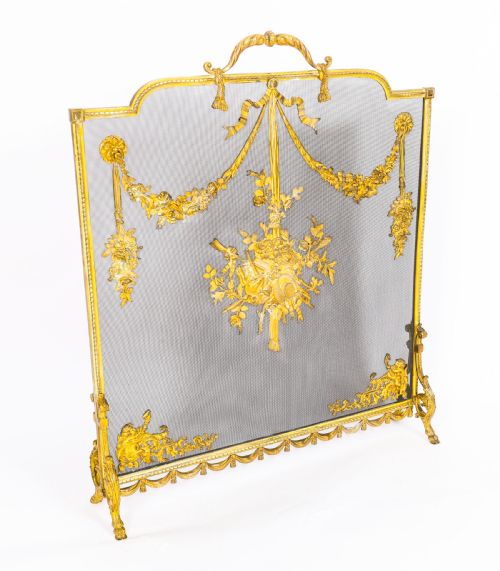
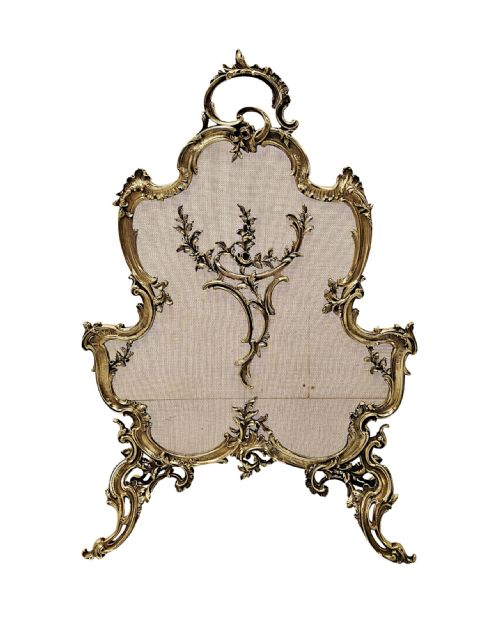
The selection on this page leans heavily toward French Rococo Revival designs and practical English nursery guards. Freestanding fire screens often incorporate intricate brass mesh, gilded bronze mounts, and textile panels, while fenders sit directly on the floor to frame the hearth opening.
How they were made
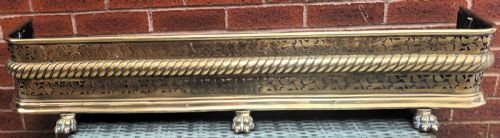
Construction relies heavily on cast and polished brass, frequently combined with iron frames and fine wire mesh to ensure structural stability near intense heat. Artisans utilised heavy gauge brass for kerb fenders, employing piercing and hammering techniques to create decorative borders and perforated ventilation patterns.
Many French pieces incorporate gilt bronze elements alongside ornate cast scrollwork, while pole screens feature mounted wool needlepoint or embroidered textiles supported on wooden or gilded standards.
Listings feature periods spanning from the Regency era through the Victorian period, utilising brass, wire mesh, iron, and textile panels.
What varies in quality
Quality in a 19th century brass fireguard is determined by the weight of the metal and the crispness of the casting. Heavy gauge brass and deeply chased or pierced decorative motifs separate substantial, long-lasting hearth accessories from lighter production pieces.
The integrity of the wire mesh and the precision of the joints also indicate superior manufacture. Artistry in the surface detail, particularly within French Rococo Revival or floral motifs, dictates the standing of an individual screen.
The 19th Century Brass Fireguard Glossary
- Fireguard
- A protective barrier placed in front of an open fireplace to contain sparks and ash. These guards range from low kerb fenders to tall mesh screens.
- Fender
- A low metal frame placed on the floor around the hearth. They are typically made of polished brass or iron to keep fuel contained.
- Pole screen
- An adjustable vertical screen mounted on a freestanding pole, designed to shield a person's face from the direct heat of a fire. They often feature embroidered textile panels.
- Gilt bronze
- Metal cast in bronze and treated with a gold finish or mercury gilding. This technique appears frequently on decorative French fireplace accessories.
- Rococo Revival
- A design style popular during the 19th century characterised by asymmetrical scrolls, C-curves, and naturalistic plant motifs.
19th Century Brass Fireguard: Frequently Asked Questions
What is the difference between a fender and a fire screen?
A fender sits low on the floor directly around the hearth opening to keep logs and embers from rolling onto the carpet. A fire screen stands upright to block the radiant heat and protect the room from stray sparks.
While fenders remain fixed at the base of the fireplace, screens are usually freestanding and can be moved closer or further away depending on the fire's intensity.
How do I clean antique brass hearth guards?
Cleaning requires a soft cloth and a mild metal polish designed for brass to remove surface tarnish without scrubbing away the historic patina. Avoid abrasive pads that can scratch the polished surface or damage wire mesh.
Regular dusting with a dry cloth is usually sufficient for day-to-day maintenance, keeping the metal bright without altering its age.
Were these guards used in nurseries?
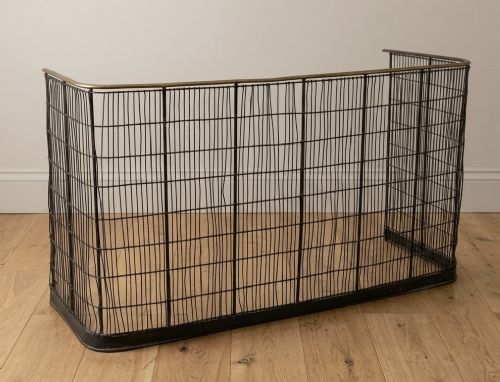
Tall nursery guards were specifically built with fine wire mesh and sturdy iron or brass frames to enclose the entire hearth area. This prevented children and pets from getting too close to the open fire.
These pieces tend to be taller and more utilitarian than decorative folding screens, prioritising safety and complete enclosure.
How can I tell a French style screen from an English one?
French screens from the 19th century frequently display Rococo Revival or Louis XVI style elements, featuring elaborate cast bronze mounts, musical trophies, and asymmetrical scrolls. English pieces often lean toward simpler polished brass fenders or standard pole screens.
The use of gilt bronze and floral castings typically points toward French workshops, whereas straightforward pierced brass work is often English in origin.